• About
    • Mission
    • Team
    • Boards
    • Mentions & Testimonials
    • Institutional Recognition
    • Annual Reports
    • Current & Past Sponsors
    • Contact Us
  • Resources
    • Article Collection
    • Podcast: Art in Brief
    • AML and the Art Market
    • AI and Art Authentication
    • Newsletter
      • Subscribe
      • Archives
      • In Brief
    • Art Law Library
    • Movies
    • Nazi-looted Art Restitution Database
    • Global Network
      • Courses and Programs
      • Artists’ Assistance
      • Bar Associations
      • Legal Sources
      • Law Firms
      • Student Societies
      • Research Institutions
    • Additional resources
      • The “Interview” Project
  • Events
    • Worldwide Calendar
    • Our Events
      • All Events
      • Annual Conferences
        • 2025 Art Law Conference
        • 2024 Art Law Conference
        • 2023 Art Law Conference
        • 2022 Art Law Conference
        • 2015 Art Law Conference
  • Programs
    • Visual Artists’ Legal Clinics
      • Art & Copyright Law Clinic
      • Artist-Dealer Relationships Clinic
      • Artist Legacy and Estate Planning Clinic
      • Visual Artists’ Immigration Clinic
    • Summer School
      • 2026
      • 2025
    • Internship and Fellowship
    • Judith Bresler Fellowship
  • Case Law Database
  • Log in
  • Become a Member
  • Donate
  • Log in
  • Become a Member
  • Donate
Center for Art Law
  • About
    About
    • Mission
    • Team
    • Boards
    • Mentions & Testimonials
    • Institutional Recognition
    • Annual Reports
    • Current & Past Sponsors
    • Contact Us
  • Resources
    Resources
    • Article Collection
    • Podcast: Art in Brief
    • AML and the Art Market
    • AI and Art Authentication
    • Newsletter
      Newsletter
      • Subscribe
      • Archives
      • In Brief
    • Art Law Library
    • Movies
    • Nazi-looted Art Restitution Database
    • Global Network
      Global Network
      • Courses and Programs
      • Artists’ Assistance
      • Bar Associations
      • Legal Sources
      • Law Firms
      • Student Societies
      • Research Institutions
    • Additional resources
      Additional resources
      • The “Interview” Project
  • Events
    Events
    • Worldwide Calendar
    • Our Events
      Our Events
      • All Events
      • Annual Conferences
        Annual Conferences
        • 2025 Art Law Conference
        • 2024 Art Law Conference
        • 2023 Art Law Conference
        • 2022 Art Law Conference
        • 2015 Art Law Conference
  • Programs
    Programs
    • Visual Artists’ Legal Clinics
      Visual Artists’ Legal Clinics
      • Art & Copyright Law Clinic
      • Artist-Dealer Relationships Clinic
      • Artist Legacy and Estate Planning Clinic
      • Visual Artists’ Immigration Clinic
    • Summer School
      Summer School
      • 2026
      • 2025
    • Internship and Fellowship
    • Judith Bresler Fellowship
  • Case Law Database
Home image/svg+xml 2021 Timothée Giet AL Clippings image/svg+xml 2021 Timothée Giet New York’s Southern District Court Rules that Artworks Consigned to Galleries May Be Reached By Creditors
Back

New York’s Southern District Court Rules that Artworks Consigned to Galleries May Be Reached By Creditors

July 19, 2012

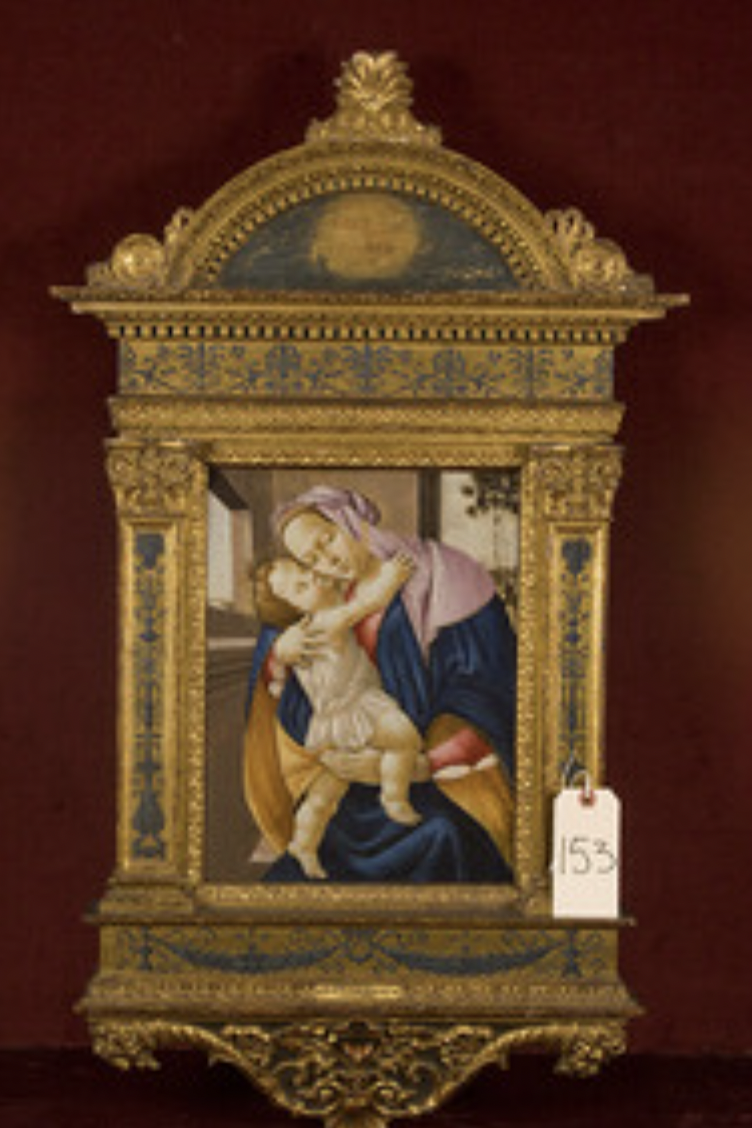
"Madonna and Child"

Last Tuesday, July 10, federal district judge Cathy Seibel ruled that New York state law may permit a bankrupt art gallery to sell an artwork to benefit its creditors, even if the piece was provided by a consignor. As a result of this ruling, “Madonna and Child” (c. 1500)–a painting attributed to Sandro Botticelli valued at $9.5 million–may provide relief to Salander-O’Reilly Gallery creditors, victims of one of the most infamous scams to rock the New York art world.

The painting at the heart of the controversy–“Madonna and Child”–originally sold at Christie’s New York in 1991 for $231,000, attributed only to the “workshop of Botticelli” at that time. However, it was later ascribed to the master himself, raising its value significantly.
The painting was consigned to Salander-O’Reilly by Kraken Investments in 2007 with an asking price of $9.5 million, according to a letter of agreement filed in federal court. The 14×10 inch work was to be displayed in an exhibition titled “Masterpieces of Art: Five Centuries of Painting and Sculpture,” which was to open in October, 2007. However, the Botticelli masterpiece became entangled in complex bankruptcy proceedings, as lawsuits began to mount from angry Salander-O’Reilly customers and partners and a state judge ordered the gallery closed in 2007.
 
The Salander-O’Reilly Galleries scandal was called “New York’s biggest ever art fraud,” leaving many creditors collectively defrauded of millions of dollars. In 2010, proprietor Lawrence Salander pleaded guilty to stealing more than $100 million from investors and customers, including high-profile celebrities such as Robert De Niro and John McEnroe. Salander, who is currently serving 6-18 years in state prison, admitted to taking proceeds from selling art he did not own and selling half-shares in the same work three or more times. The dealer used the funds to acquire dozens of Renaissance works, lavish homes, jewelry for his then-wife, rare books, furniture, and private jet rentals. Although some creditors were able to retrieve art through a claims process in bankruptcy court, only the lawyers, auctioneers, and others involved with the gallery’s bankruptcy filing have received money, leaving scores of creditors still to be compensated.
Kraken Investments initially sought that ownership of “Madonna and Child” be decided in the Channel Islands, in accordance with its Salander-O’Reilly consignment agreement stipulating that disputes be arbitrated there. However, U.S. Bankruptcy Judge Cecelia Morris in New York denied Kraken’s motion, ruling that bankruptcy court was the proper forum to determine ownership. Kraken appealed this ruling to U.S. district court, where last Tuesday, the bankruptcy court’s decision was affirmed.
 
Southern District Court Judge Cathy Seibel held that “a creditor could obtain a security interest in a consigned item senior to that of a consignee who does not file a UCC financing statement.” The law provides that when a consignor delivers goods to a gallery but does not file a financing statement, the consignor’s security interest is “unperfected,” which creates a security interest in a gallery’s creditors, provided the creditors filed a proper financing statement. In such a case, as here, the “creditor’s rights are senior to the consignor’s.”
 
“The court well understands why Kraken is perturbed, even outraged by the idea that Salander-O’Reilly creditors may enjoy the proceeds from the sale of a valuable painting concededly owned by Kraken,” wrote Judge Seibel. But the rationale of this rule is to protect gallery creditors, as undisclosed consignment agreements between consignors and galleries can create secret liens on a gallery’s inventory.
Petra Davenport, one of Kraken’s lawyers, declined to comment on whether Seibel’s decision will be appealed.
Source: Bloomberg Business Week, The Art Law Blog

Disclaimer: This article is for educational purposes only and is not meant to provide legal advice. Readers should not construe or rely on any comment or statement in this article as legal advice. For legal advice, readers should seek a consultation with an attorney.

Post navigation

Previous How to Remove the Curse of the Outcast Artifact
Next Cease-and-Desist Letter Instead of Jitters

Related Posts

Tribal Art Hunter, Esq. or not

March 2, 2011

Update: Helly Nahmad Keeps a Low Profile In the Weeks Following the Indictments

May 25, 2013
logo

Remix!

December 11, 2010
Center for Art Law
Center for Art Law

Follow us on Instagram for the latest in Art Law!

Make sure to check out our newest episode if you h Make sure to check out our newest episode if you haven’t yet!

Paris and Andrea get the change to speak with Patty Gerstenblith about how the role international courts, limits of accountability, and if law play to protect history in times of war.

🎙️ Click the link in our bio to listen anywhere you get your podcasts!
Alexander Butyagin, a Russian archaeologist, was a Alexander Butyagin, a Russian archaeologist, was arrested by Polish authorities in Warsaw. on December 4th. Butyagin is wanted by Ukraine for allegedly conducting illegal excavations of Myrmekion, an ancient city in Crimea. Located in present-day Crimea, Myrmekion was an Ancient Greek colony dating to the sixth century, BCE. 

According to Ukrainian officials, between 2014 and 2019 Butyagin destroyed parts of the Myrmekion archaeological site while serving as head of Ancient Archaeology of the Northern Black Sea region at St. Petersburg's Hermitage Museum. The resulting damages are estimated at $4.7 million. Notably, Russia's foreign ministry has denounced the arrest, describing Poland's cooperation with Ukraine's extradition order as "legal tyranny." Russia invaded and annexed Crimea in 2014.

🔗 Read more by clicking the link in our bio

#centerforartlaw #artlaw #artcrime #artlooting #ukraine #crimea
Join us on February 18th to learn about the proven Join us on February 18th to learn about the provenance and restitution of the Cranach painting at the North Carolina Museum of Art.

A beloved Cranach painting at the North Carolina Museum of Art was accused of being looted by the Nazis. Professor Deborah Gerhardt will describe the issues at stake and the evidentiary trail that led to an unusual model for resolving the dispute.

Grab your tickets today using the link in our bio!

#centerforartlaw #artlaw #legal #legalresearch #museumissues #artwork
“In the depth of winter, I finally learned that wi “In the depth of winter, I finally learned that within me there lay an invincible summer."
~ Albert Camus, "Return to Tipasa" (1952) 

Camus is on our reading list but for now, stay close to the ground to avoid the deorbit burn from the 2026 news and know that we all contain invincible summer. 

The Center for Art Law's January 2026 Newsletter is here—catch up on the latest in art law and start the year informed.
https://itsartlaw.org/newsletters/january-newsletter-which-way-is-up/ 

#centerforartlaw #artlaw #lawyer #artlawyer #legalresearch #legal #art #law #newsletter #january
Major corporations increasingly rely on original c Major corporations increasingly rely on original creative work to train AI models, often claiming a fair use defense. However, many have flagged this interpretation of copyright law as illegitimate and exploitative of artists. In July, the Senate Judiciary Committee on Crime and Counterterrorism addressed these issues in a hearing on copyright law and AI training. 

Read our recent article by Katelyn Wang to learn more about the connection between AI training, copyright protections, and national security. 

🔗 Click the link in our bio to read more!
Join the Center for Art Law for an in-person, all- Join the Center for Art Law for an in-person, all-day  CLE program to train lawyers to work with visual artists and their unique copyright needs. The bootcamp will be led by veteran art law attorneys specializing in copyright law.

This Bootcamp provides participants -- attorneys, law students, law graduates and legal professionals -- with foundational legal knowledge related to copyright law for art market clients. Through a combination of instructional presentations and mock consultations, participants will gain a solid foundation in copyright law and its specificities as applied to works of visual arts, such as the fair use doctrine and the use of generative artificial intelligence tools. 

🎟️ Grab tickets using the link in our bio!
Our interns do the most. Check out a day in the li Our interns do the most. Check out a day in the life of Lauren Stein, a 2L at Wake Forest, as she crushes everything in her path. 

Want to help us foster more great minds? Donate to Center for Art Law.

🔗 Click the link below to donate today!

https://itsartlaw.org/donations/new-years-giving-tree/ 

#centerforartlaw #artlaw #legal #legalresearch #caselaw #lawyer #art #lawstudent #internships #artlawinternship
Paul Cassier (1871-1926 was an influential Jewish Paul Cassier (1871-1926 was an influential Jewish art dealer. He owned and ran an art gallery called Kunstsalon Paul Cassirer along with his cousin. He is known for his role in promoting the work of impressionists and modernists like van Gogh and Cézanne. 

Cassier was seen as a visionary and risk-tasker. He gave many now famous artists their first showings in Germany including van Gogh, Manet, and Gaugin. Cassier was specifically influential to van Gogh's work as this first showing launched van Gogh's European career.

🔗 Learn more about the impact of his career by checking out the link in our bio!

#centerforartlaw #artlaw #legalresearch #law #lawyer #artlawyer #artgallery #vangogh
No strike designations for cultural heritage are o No strike designations for cultural heritage are one mechanism by which countries seek to uphold the requirements of the 1954 Hague Convention. As such, they are designed to be key instruments in protecting the listed sites from war crimes. Yet not all countries maintain such inventories of their own whether due to a lack of resources, political views about what should be represented, or the risk of misuse and abuse. This often places the onus on other governments to create lists about cultures other than their own during conflicts. Thus, there may be different lists compiled by different governments in a conflict, creating an unclear legal landscape for determining potential war crimes and raising significant questions about the effectiveness of no strikes as a protection mechanism. 

This presentation discusses current research seeking to empirically evaluate the effectiveness of no strike designations as a protection mechanism against war crimes in Syria. Using data on cultural heritage attacks from the height of the Syrian Conflict (2014-2017) compiled from open sources, a no strike list completed in approximately 2012, and measures of underlying risk, this research asks whether the designations served as a protective factor or a risk factor for a given site and the surrounding area. Results and implications for holding countries accountable for war crimes against cultural heritage are discussed. 

🎟️ Grab your tickets using the link in our bio!

#centerforartlaw #artlaw #artlawyer #legalresearch #lawyer #culturalheritage #art #protection
What happens when culture becomes collateral damag What happens when culture becomes collateral damage in war?
In this episode of Art in Brief, we speak with Patty Gerstenblith, a leading expert on cultural heritage law, about the destruction of cultural sites in recent armed conflicts.

We examine the role of international courts, the limits of accountability, and whether the law can truly protect history in times of war.

We would like to also thank Rebecca Bennett for all of her help on this episode. 

 🎙️ Click the link in our bio to listen anywhere you get your podcasts.

#centerforartlaw #artlaw #legalresearch #artlawyer #lawyer #podcast #artpodcast #culturalheritage #armedconflict #internationallaw
Where did you go to recharge your batteries? Where did you go to recharge your batteries?
Let there be light! Center for Art Law is pleased Let there be light! Center for Art Law is pleased to share with you a work of art by Sofia Tomilenko, an illustration artist from Kyiv, Ukraine. This is Sofia's second creation for us and as her Lady Liberty plays tourist in NYC, we wish all of you peace and joy in 2026! 

Light will overcome the darkness. Світло переможе темряву. Das Licht wird die Dunkelheit überwinden. La luz vencerá la oscuridad. 

#artlaw #peace #artpiece #12to12
  • About the Center
  • Contact Us
  • Newsletter
  • Upcoming Events
  • Internship
  • Case Law Database
  • Log in
  • Become a Member
  • Donate
DISCLAIMER

Center for Art Law is a New York State non-profit fully qualified under provision 501(c)(3)
of the Internal Revenue Code.

The Center does not provide legal representation. Information available on this website is
purely for educational purposes only and should not be construed as legal advice.

TERMS OF USE AND PRIVACY POLICY

Your use of the Site (as defined below) constitutes your consent to this Agreement. Please
read our Terms of Use and Privacy Policy carefully.

© 2026 Center for Art Law