
Treasures from the Middle Kingdom: China’s Hunt for Lost Antiquities
July 26, 2019
By Timothy Chung.
In 2018, GQ magazine published a piece on Chinese state efforts to repatriate looted antiquities, starting off by examining a series of daring art thefts that occurred across Europe.((Alex W. Palmer, The Great Chinese Art Heist, GQ, August 16, 2018. https://www.gq.com/story/the-great-chinese-art-heist)) Among the museums targeted were the Oriental Museum at Durham University, the Fitzwilliam Museum at Cambridge University, Drottningholm Palace in Sweden, the KODE Museum (twice) in Norway, and finally Château de Fontainebleau in France. The common thread: Chinese artifacts. Even more curious was the fact that a number of these stolen items made their way back to museums in China.((Id.)) Although GQ stopped short of an outright accusation, the question was obvious: was Beijing behind these heists, organizing, and financing clandestine heists to bring home what they believed was rightfully theirs?
No conclusive evidence emerged to answer in the affirmative. After all, it is rather difficult to imagine that a shadowy arm of the Chinese Communist Party (CCP) would send off squads of professional thieves to pilfer the museums and treasure houses of Europe. Yet the sentiment is not entirely unfounded. In 1982, China wrote into its Constitution the duty to protect its cultural heritage.((Zhengxin Huo, Legal Protection of Cultural Heritage in China: A Challenge to Keep History Alive, 4 International Journal of Cultural Policy, 497 (2015).)) Since then, Beijing has ramped up efforts commensurate with its growing position as a global authority to preserve culture heritage not only within its borders, but also campaigning for the restitution of looted antiquities held abroad, going as far as sending out delegations of Chinese antiquities “treasure hunting teams” to American institutions in 2009.((Andrew Jacobs, China Hunts for Art Treasures in U.S. Museums, NYT, Dec. 16, 2009. https://www.nytimes.com/2009/12/17/world/asia/17china.html.)) Keeping this background in mind, this article will examine the Chinese legal regime regarding cultural heritage protection, before analyzing Chinese initiatives, past and present, to recover looted antiquities from abroad.
The Century of Humiliation and the Sack of the Old Summer Palace

Stated simply, modern Chinese conceptions of cultural repatriation are informed by perceived historical injustices, particularly those inflicted by Western powers starting with the First Opium War in the 1840s. The era that followed is known today in China as bainian guochi (百年国耻), the “Century of Humiliation,” during which the nation was subjected to years of military defeats, imbalanced treaties, and territorial concessions mostly at the hands of imperial Western powers and Japan until 1945.((Erik Ringmar, Liberal Barbarism: The European Destruction of the Palace of the Emperor of China 160, 2013.)) Even decades after the rise of China as a major power, feelings of humiliation have scarcely abated in the minds of many Chinese citizens. Case in point, references to the infamous century were made by state-owned news outlets following trade talks in March 2019, when the US trade team presented Beijing with a list of aggressive economic demands.((Alan Rappeport, 19th-Century ‘Humiliation’ Haunts China-U.S. Trade Talks, NYT, Mar. 27, 2019. https://www.nytimes.com/2019/03/27/us/politics/china-opium-wars-trade-talks.html.))

In particular, one incident has festered in the Chinese consciousness as a deep, aching cultural wound: the sack of Yuanmingyuan (圆明园), the Old Summer Palace. Located in Beijing, the palace complex and gardens – covering the size of Central Park in New York – functioned as the residence of the Qing Qianlong Emperor and his successors for generations.((Ringmar, supra, at 37.)) During the Second Opium War in 1860, Anglo-French expeditionary forces scaled the palace walls and plundered the compounds, seized, as they were, with a “temporary insanity,” and taking everything from priceless ceramics to royal silken costumes.((Id. at 4.)) Thereafter, the British High Commissioner Lord Elgin ordered the complete destruction of the palace in three days time.((Id.))
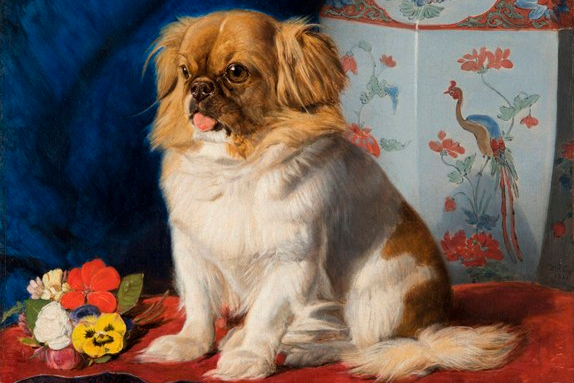
It has been estimated that over 1.6 million looted Chinese antiquities currently reside in museums across the world, with more than half originating from Yuanmingyuan.((Robert D. Weatherley and Ariane Rosen, Fanning the Flames of Popular Nationalism: The Debate in China over the Burning of the Old Summer Palace, 37.1 Asian Perspective 53, 62-63 2013. It is worth noting that much of the destruction of Chinese cultural heritage since the 19th century should also be attributed to the effects of the Mao Zedong-instigated Cultural Revolution, during which Red Guards sought to eliminate the “four olds” – customs, culture, ideas, and habits – of the past. See Tillman Durdin, China Transformed by Elimination of ‘Four Olds,’ NYT, May 19, 1971. Available at https://www.nytimes.com/2016/05/15/world/asia/china-cultural-revolution-explainer.html; but see Peter Neville-Hadley, China’s ‘stolen’ cultural relics: why the numbers just don’t add up, South China Morning Post, Jun. 9, 2017. https://www.scmp.com/print/magazines/post-magazine/long-reads/article/2097402/chinas-stolen-cultural-relics-why-numbers-just.)) Nevertheless, there is little dispute regarding the scale and nature of plundering that occurred during the burning of the palace. Indeed, many of the items taken were immediately sold upon the Anglo-French forces’ returns to Europe; among the plunder was a handsome imperial Pekingese dog, presented to Queen Victoria of England and ominously christened “Looty.”((Tiffany Jenkins, The loot from China’s old Summer Palace in Beijing that still rankles, Oxford Today, Mar. 7, 2016. http://www.oxfordtoday.ox.ac.uk/opinion/loot-chinas-old-summer-palace-beijing-still-rankles. Looty went on to live a long and lavish palatial life at Windsor Palace until her death in 1872. See “Looty,” the Pilfered Pekingese, National Purebreed Dog Day, Dec. 23, 2015. https://nationalpurebreddogday.com/looty-the-pilfered-pekingese/.))

To this day, the destruction of Yuanmingyuan remains a source of resentment for many in China, and has greatly fueled CCP-promoted nationalist narratives.((See Chris Bowlby, The palace of shame that makes China angry, BBC, Feb. 2, 2015. https://www.bbc.com/news/magazine-30810596; Sheila Melvin, China Remembers a Vast Crime, NYT, Oct. 21, 2010. https://www.nytimes.com/2010/10/22/arts/22iht-MELVIN.html Also for further discussion on the politicization of Yuanmingyuan, see Robert D. Weatherley and Ariane Rosen, Fanning the Flames of Popular Nationalism, supra.)) These sentiments, in turn, have had a significant hand in shaping Chinese cultural heritage legislation.
Cultural Heritage and Chinese Law
Since 1982, cultural heritage has been a constitutional obligation for the People’s Republic of China (the “PRC”). Article 22 of the Constitution provides that it is the State’s duty to protect scenic and historical sites, cultural monuments, and relics significant to China’s cultural heritage.(( Xianfa art. 22 (1982) (China).)) Pursuant to this provision, China has enacted several national statutes that now constitute the Chinese legal regime regarding cultural heritage. Most prominent among these statutes is the Law of the PRC on the Protection of Cultural Relics (the “Relics Protection Law”), which professes a strongly-worded and rather unambiguous nationalistic view to:
“[S]trengthening the protection of cultural relics, inheriting the splendid historical and cultural legacy of the Chinese nation, promoting scientific research, conducting education in patriotism and in the revolutionary tradition, and building a socialist society with cultural, ideological and material progress.”
Zhongua Renmin Gongheguo Wenwu Baohu Fa (中华人民共和国文物保护法) [Law of the People’s Republic of China on Protection of Cultural Relics] ((Adopted at the 25th Meeting of the Standing Committee of the Fifth National People’s Congress on November 19, 1982; amended in accordance with the Decision of the Standing Committee of the National People’s Congress Regarding the Revision of Articles 30 and 31 of the Law of the People’s Republic of China on Protection of Cultural Relics at the 20th Meeting of the Standing Committee of the Seventh National People’s Congress on June 29, 1991; revised at the 30th Meeting of the Standing Committee of the Ninth National People’s Congress on October 28, 2002 and promulgated by Order No.76 of the President of the People’s Republic of China on October 28, 2002), art. 1, available at http://www.npc.gov.cn/englishnpc/Law/2007-12/13/content_1384015.htm, (last visited July 3, 2019).))
The entire spectrum of duties and responsibilities established by the Relics Protection Law cannot possibly be covered by the limited scope of this article, though it is worth noting that Chapter 1 of the Relics Protection Law also requires that local governments include cultural heritage protection in their budget allocations, and that the government provides rewards to individuals or groups that work to protect and preserve cultural heritage. ((For further in-depth reading on the Relics Protection Law, see Phillip Newell, The PRC’s Law for the Protection of Cultural Relics, 13.1 Art, Antiquity and Law 1, 2008.))
The Relics Protection Law and the Cultural Relics Grading System
The Relics Protection Law is significant in the following ways: (1) it defines and categorizes the cultural objects, establishing the principles of conservation and the duties of the state to preserve cultural heritage; (2) it places all undiscovered cultural heritage under state ownership and prevents their exportation from the country; (3) it allows for both state ownership and private ownership of cultural heritage, even guaranteeing legal protections from the state regarding objects belonging to both “collectives or individuals.”((Huo, Legal Protection of Cultural Heritage in China, supra at 3. Objects that warrant protection from the Relics Protection Law include ancient sites of culture; tombs; cave temples; murals or carvings that have historical, scientific, or artistic value; works of art; important documents; manuscripts and books; and other materials or objects that demonstrate the way of life from different historical periods. Bruno Boesch and Massimo Sterpi, The Art Collecting Legal Handbook: Jurisdictional Comparisons 69, 2013.)) Since the law’s conception, it has been amended four times, most significantly in 2002, when Beijing, inter alia, (1) introduced a cultural-objects grading system and (2) permitted the movement of objects through private transactions.((Id. at 3-5.)) The grading system divided relics between valuable and ordinary cultural relics; valuable cultural relics were further separated into grades, with grade-one relics defined as objects that possess important historical, artistic, and scientific value and are “symbolic of Chinese culture.”((Boesch and Sterpi, The Art Collecting Legal Handbook, supra at 70.))
In 2002, Beijing also sought to aid the implementation of the Relics Protection Law by issuing the Regulations for the Implementation of the Law of the People’s Republic of China on Protection of Cultural Relics (the “Implementation Regulations”).((Id. at 69.)) Article 49 of the Implementation Regulations illustrates China’s fierce commitment against the exporting of its cultural heritage – perhaps remembering Yuanmingmyuan and the fact that between 1998 and 2002 over 220,000 Chinese tombs were broken into and their contents sold abroad –((See Hannah Beech, Spirited Away, TimeAsia, October 13, 2003. http://content.time.com/time/world/article/0,8599,2056101,00.html)) by strictly prohibiting the movement of certain “grade-one cultural relics” from its borders, even for purposes of exhibition.((Zhonghua Renmin Gongheguo Wenwu Baohu Fa Shisui Tiaoli (中华人民共和国文物保护法实施条例) [Regulations for the Implementation of the Law of the People’s Republic of China on Protection of Cultural Relics] (promulgated by Degree No. 377 of the State Council of the People’s Republic of China, May 18, 2003, effective July 1, 2003), art. 49, State Administration of Cultural Heritage.)) Article 28 of the Relics Protection Law similarly prohibits the export of relics that are deemed of “significant historical, artistic or scientific value,” although it provides exceptions for relics that are specifically approved by the State Council.((Zhongua Renmin Gongheguo Wenwu Baohu Fa (中华人民共和国文物保护法) [Law of the People’s Republic of China on Protection of Cultural Relics] (Adopted at the 25th Meeting of the Standing Committee of the Fifth National People’s Congress on November 19, 1982; amended in accordance with the Decision of the Standing Committee of the National People’s Congress Regarding the Revision of Articles 30 and 31 of the Law of the People’s Republic of China on Protection of Cultural Relics at the 20th Meeting of the Standing Committee of the Seventh National People’s Congress on June 29, 1991; revised at the 30th Meeting of the Standing Committee of the Ninth National People’s Congress on October 28, 2002 and promulgated by Order No.76 of the President of the People’s Republic of China on October 28, 2002), art. 28, available at http://www.npc.gov.cn/englishnpc/Law/2007-12/13/content_1384015.htm, (last visited July 3, 2019).)) Both articles reveal China’s retentionist inclinations, which come as no surprise given its deep memory of the Century of Humiliation. In its laws, Beijing sends a clear message: China wants its cultural heritage back.
Looking Outward: Chinese Recovery Efforts Abroad
In recent years, China has not been indolent nor silent about its desire to regain possession of its cultural heritage abroad. In 2009, China vehemently protested the sale of specific antiques in the art collection of Yves Saint-Laurent, which included several bronze zodiac heads taken from the gardens of Yuanmingyuan.((See Jaime FlorCruz, Chinese furious over Laurent sale of ‘treasures,’ CNN, Feb. 27, 2009. http://www.cnn.com/2009/WORLD/asiapcf/02/27/china.treasures.laurent.christies/index.html)) Despite moves by Chinese lawyers in French court to halt the sale, the objects were still put up on sale by Christie’s, much to the ire of Beijing.((See Davd Barboza, China Seeks to Stop Paris Sale of Bronzes, NYT, Feb. 16, 2009. https://www.nytimes.com/2009/02/17/arts/design/17auct.html The pieces in question were sold but never paid for after the sale. Mark McDonald, Top bid on disputed Yves Saint Laurent bronzes was a protest from China, NYT, Mar. 2, 2009. https://www.nytimes.com/2009/03/02/world/asia/02iht-auction.3.20539588.html.)) Beijing has nevertheless sought to foster international consensus regarding the repatriation of looted art and antiquities by ratifying four multilateral treaties, including the 1970 UNESCO Convention on the Means of Prohibiting and Preventing Illicit Import, Export and Transfer of Ownership of Cultural Property (the “1970 Convention”).((Other ratified treaties include the First Protocol of the 1954 Hague Convention for the Protection of Cultural Property in the Event of Armed Conflict, the 1972 UNESCO Convention Concerning the Protection of the World Cultural and Natural Heritage, and the 1995 UNIDROIT Convention on Stolen or Illegally Exported Cultural Objects.)) In addition to ratifying multilateral treaties and agreements, China has also pursued a policy of signing individualized and targeted treaties with nations willing to work with Beijing. In January 2009, China entered into a bilateral agreement with the US, pursuant to the US Cultural Property Implementation Act (CIPA) and the provisions of the 1970 Convention. In effect, the agreement strictly limited the import of illegally excavated objects taken from China into the US.((Judith A. Bresler, Art and cultural assets news – autumn: US Import restrictions imposed on certain archaeological material from the People’s Republic of China, Withers Worldwide, Oct. 26, 2009. https://www.withersworldwide.com/en-gb/insight/us-import-restrictions-imposed-on-certain-archaeological-material-from-the-people-s-republic-of-china.)) It would appear that the spirit of the agreement has prevailed thus far, as indicated by the US’ move in March 2019 to return over 361 stolen artifacts to China after receiving them from the controversial collections of an Indiana-based amateur collector.((Andrea Vega Yudico, U.S. returns stolen artifacts to China. ShareAmerica, Mar. 7, 2019. https://share.america.gov/u-s-returns-stolen-artifacts-to-china/)) To date, the move constitutes the largest repatriation of cultural heritage ever from the US to China.((Id.)) Beijing has also signed similar treaties with over 28 nations, including Peru, Chile, Philippines, Ethiopia, Egypt, Australia, Turkey, Venezuela, Italy, Greece, and Switzerland.((Report on the application of the 1970 Convention on the Means of Prohibiting and Preventing the Illicit Import, Export and Transfer of Ownership of Cultural Property; see also Huo, Legal Protection of Cultural Heritage in China, supra at 10.))
Despite these efforts, the effectiveness of these treaties for the purposes of Chinese cultural protection is limited, according to legal scholar Zhengxin Huo, for the following reasons: (1) the current state of international law renders it too weak to protect cultural heritage, particularly as major market nations refuse to ratify certain conventions or enter into bilateral agreements with China and (2) the Chinese Constitution does not provide avenues to resolve conflicts between its domestic law and international treaties.((Huo, Legal Protection of Cultural Heritage in China, supra at 11. )) Still, Beijing’s hands are by no means tied, as its status as a growing military and economic superpower places it in a unique position to incentivize other nations to aid in its repatriation efforts.
Money Talks, Wealth Whispers
In recent years, China has found great success in flexing its economic might and growing markets as a way to incentivize the return of its cultural heritage. One successful instance of this approach occurred on March 22, 2019, when the Italian cultural ministry agreed to repatriate nearly 800 cultural artifacts that were illegally taken from China.((See Naomi Rea, Amid Strengthening Political Ties with China, Italy Gives the Go-Ahead to Repatriate 800 Chinese Cultural Artifacts, ArtNet, Mar. 25, 2019. https://news.artnet.com/art-world/china-italy-repatriation-1497034.)) The agreement came at the heels of Italy – the first Western nation to do so – signing onto China’s controversial investment and infrastructure Belt and Road Initiative (BRI).((See Holly Ellyatt, Is Italy playing with fire when it comes to China? CNBC, Mar. 27, 2019. https://www.cnbc.com/2019/03/27/italys-joins-chinas-belt-and-road-initiative.html.)) The BRI project, unprecedented in scale and ambition, spans across three continents and massively extends China’s geopolitical influence; countries that sign onto the initiative benefit from the economic boons but also places them within the Chinese sphere of influence.((See Sam Ellis, China’s trillion-dollar plan to dominate global trade, Vox, Apr. 6, 2018. https://www.vox.com/2018/4/6/17206230/china-trade-belt-road-economy.)) Whilst this sequence of events could be chalked up to mere coincidence, it could also be indicative of a model of agreement in which China effectively trades dollars for relics. That is, Italy could only be the first in a line of many to exchange economic rewards for cooperation with China’s cultural repatriation efforts. In Beijing’s books, this most certainly would be counted as a win-win.
China has also taken up approaches that may appear comparatively underhanded. In response to Christie’s announcement that it would proceed with the infamous Yves Saint Laurent auction of the bronze zodiac heads in 2009, Beijing imposed sanctions on the international auction house, requiring Christie’s to onerously provide certificates of legal ownership for every item it sought to import or export.((China tightens control on Christie’s after auction, Xinhua, Feb. 26, 2009. http://www.chinadaily.com.cn/china/2009-02/26/content_7516227.htm.))

The Chinese State Administration of Cultural Heritage (SACH) also threatened “serious effects” on Christie’s future endeavors in China. Fortunately for China, the auction was eventually scuttled by Cai Minghao, a patriotic Chinese collector who placed the top bid but then refused to pay the promised $40 million.((Mark McDonald, Top bid on disputed Yves Saint Laurent bronzes was a protest from China, NYT, Mar. 2, 2009. https://www.nytimes.com/2009/03/02/world/asia/02iht-auction.3.20539588.html. Incidents like this have since prompted several auction houses to impose the requirement of deposits prior to sale from Asian bidders. See Scott Reybum, “Non-Payments By Chinese Buyers Prompt Auction House Clampdown,” Business Week, April 12, 2011. https://www.bloomberg.com/news/articles/2011-04-12/non-payments-by-chinese-buyers-prompt-auction-house-clampdown.)) The bronze heads were withdrawn from the sale and eventually returned to China in 2013 by billionaire François-Henri Pinault, a Christie’s board member, whose Kering group also owns Saint-Laurent and Gucci, both of which rely heavily on sales from the Chinese market.((Peter Neville-Hadley, China’s ‘stolen’ cultural relics, supra.)) Coincidentally, Christie’s soon thereafter became the first international auction house to score a license to operate independently in China.((Palmer, The Great Chinese Art Heist, supra.))
Private ventures have also found success through other avenues: wealthy corporations have taken up the route of simply purchasing looted artifacts at auction. In 2000, the China Poly Group Corporation – a massive state-owned enterprise whose subsidiaries include real estate, arms dealing, resource extraction, and entertainment firms – raised funds to purchase the Yuanmingyuan zodiac heads of the monkey, tiger, and ox at auction in Hong Kong, although it regarded the sale as a grave insult to China.((Richard Curt Kraus, The Repatriation of Plundered Chinese Art, 199 The China Quarterly 837, 839 (2009).)) Private citizens, too, have not been shying away from these endeavors. For example, Stanley Ho, Chairman of SJM Holdings, famously donated two of the bronze zodiac statues taken from Yuanmingyuan, a pig head and a horse head, to China after buying both items from two separate Sotheby’s auctions.((Johanna Devlin, Repatriation via the Art Market: A New Type of Recovery, New Trends Coming from China, 8 J. Art Crime 45, 47 (2012). Following his second donation, Mr. Ho stated that he hoped his act would encourage more people to “join efforts in preserving China’s cultural relics and nurture patriotic feelings.” Elliot Wilson, “China’s artifacts come home,” Financial Times, May 29, 2010.)) Avid collector and eccentric billionaire, Huang Nubo, Chairman of Beijing Zhongkun Investment Group, has also famously focused many of his efforts and resources into recovering lost artifacts through the government-affiliated foundation, National Treasures Coming Home.((Palmer, The Great Chinese Art Heist, supra.))
Final Words
In 1998, the state-owned Chinese Poly Group set up the two-room Poly Art Museum in their corporate headquarters in Beijing. The museum, becoming the first state enterprise-owned museum in China, had a simple and singular purpose: to receive and house repatriated art and antiquities.((Mark Sarkasian et al., Suspending the Limits, American Society of Civil Engineers, http://webarchive.loc.gov/all/20130406221920/http://www.asce.org/Publications/CE-Magazine/2007-Issues/11_November/Suspending-the-Limits/ (last visited July 3, 2019).)) Today, it houses four of the twelve zodiac heads from Yuanmingyuan alongside a myriad of other antiquities, including bronze wares and Buddhist stone-carvings.((Highlights of the Poly Museum, China Travel, https://www.chinatravel.com/beijing-attraction/poly-art-museum/ (last visited July 3, 2019).)) If nothing else, the creation and function of the Poly Art Museum makes one thing abundantly clear: Beijing is on the hunt.

The fact of the matter is that to China (or the CCP?), cultural heritage matters. However, avenues for repatriation are limited. International treaties and bilateral agreements are only effective insofar as to preventing the modern-day illicit export and import of antiquities; what about relics that are already housed abroad? Stealing them back from museums and collections across the world is neither a licit nor advisable approach by any means. Which is not to say those are the only two options. Current trends seem to suggest that China has also pursued an approach involving economic sticks and carrots to incentivize the return of its cultural heritage from sympathetic, or at least economically pliable, nations (see Italy).
A simpler and perhaps more effective solution may be simply to flaunt some cash. As an economic powerhouse, Beijing can buy back its cultural heritage at auctions via state-entities like China Poly Group (and it has). Private citizens as well have developed the taste and the means to acquire looted antiquities themselves. To Beijing’s credit, many of the antiquities acquired in this manner are slowly and quietly finding their way home to China, which seems to confirm this author’s suspicion that in the end, money talks.
The author would like to thank Professor Benjamin L. Liebman, Robert L. Lieff Professor of Law and Director of the Center for Chinese Legal Studies at Columbia Law School for his guidance and thoughtful feedback in writing this article.
Additional Readings:
- Qing Lin and Zheng Lian, On Protection of Intangible Cultural Heritage in China from the Intellectual Property Rights Perspective, 10.12 MDPI 1, 2012.
- Phillip Newell, The PRC’s Law for the Protection of Cultural Relics, 13.1 Art, Antiquity and Law 1, 2008.
- Lisa Bixenstine Safford, Cultural Heritage Preservation in Modern China: Problems, Perspectives, and Potentials, 21 ASIANetwork Exchange 1, 2013
- Jason M. Taylor, The Rape and Return of China’s Cultural Property: How Can Bilateral Agreements Stem the Bleeding of China’s Cultural Heritage in a Flawed System? 3.2 Loy. L. Rev. 233 (2006).
About the Author: Timothy Chung is a Summer 2019 Legal Intern for the Center for Art Law, J.D. candidate at Columbia Law School, Class of 2021, and an Editorial Staff Member of the Columbia Journal of Law and the Arts. In 2016, he graduated from Oberlin College with a double major in Latin and Creative Writing and a minor in Greek, before working as a paralegal at Fragomen, Del Rey, Bernsen & Loewy LLP. Timothy can be reached at timothy.chung@columbia.edu.
Disclaimer: This article is for educational purposes only and is not meant to provide legal advice. Readers should not construe or rely on any comment or statement in this article as legal advice. For legal advice, readers should seek a consultation with an attorney.


.jpg)
You must be logged in to post a comment.