
The New York Publicity Bill, Oh Boy: A Balanced Scale for the Entertainment Industry?
December 13, 2022
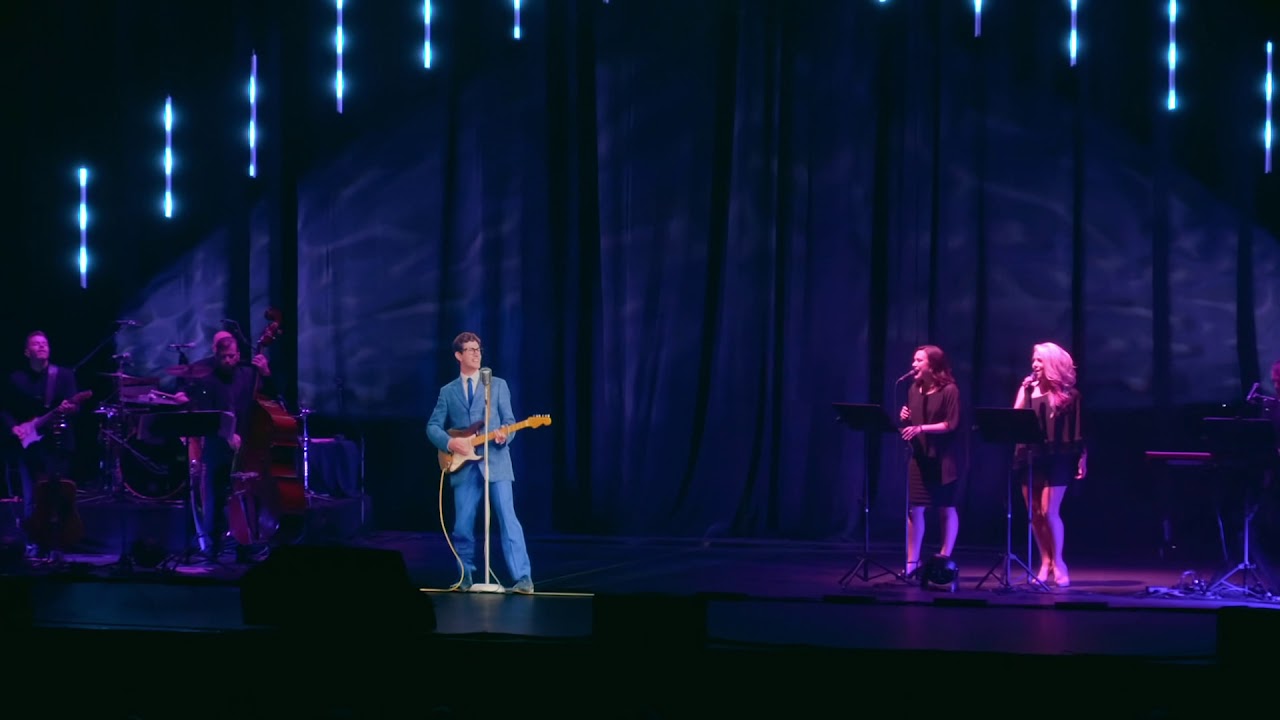
Hologram Buddy Holly performs with live musicians (thumbnail via BASE Hologram on YouTube.)
by Soleil Hawley
Have you ever wondered about the legality of performances by hologram Elvis and hologram Michael Jackson? Or that AI-generated Anthony Bourdain voice-over? How about this 2015 Audrey Hepburn commercial?
A host of legal and ethical questions are raised by cases like that of Whitney Houston, whose estate began looking for legal opinion in 2020 after a livestream hosted by record producer Scott Storch used her hologram likeness without permission. Developed in 2016 by Hologram USA, her hologram was initially intended to debut on The Voice in a duet with Christina Aguilera before going on a worldwide tour. The endeavor was shut down after Houston’s estate said “it didn’t look like Whitney.”[1] What determines fair usage and control of dead celebrities’ voices, images, and creations?
Legal Backdrop
Before December 2020, twenty-three states recognized a post-mortem right of publicity, including California, Florida, Nevada, and Texas, meaning that nearly half the country has common law or statutes that recognize the commercial property value of an individual’s image and likeness during their life and after their death. No right of publicity exists at the federal level, so this is wholly a state issue, and this balkanization leads to an extreme variance in right of publicity laws across the country. For example, the duration of the right to publicity after an artist’s death varies dramatically: 100 years in Indiana, 50 years in Texas, and 10 years in Tennessee.
Despite being the first state to enact a publicity law with the New York Civil Rights Law in 1903, New York was the 24th to implement a post-mortem component, a protection that many states have been working to include since the 1980s.[2] Former Governor Andrew Cuomo signed into law amendments to the New York Publicity Bill on November 30th, 2020, ensuring that performers who are New York residents at the time of their death can be protected from nonconsensual commercial post-mortem dissemination of their image.
This development comes after years of negotiations between the Motion Picture Association (MPA), SAG-AFTRA, and other interested entities. The MPA has served as an advocate for First Amendment rights, and SAG-AFTRA has argued for the rights of performers, celebrities, their families, and their estates in this matter. Because of this compromise, updates to the New York Publicity Bill are significantly narrower than other states’ statutes when it comes to protecting artists.
Amendments to the New York Publicity Bill were introduced by its sponsors, politicians Diane Savino, Brian A. Benjamin, David Carlucci, Pete Harckham, and Robert Jackson, on May 16, 2019. After a year and a half of negotiations, the bill was passed unanimously in the New York State Senate, and won with only one dissenting vote in the New York State Assembly.[3]
This bill adds to the existing Right of Publicity statute (§ 50-f) in Chapter 6, Article 5 of the New York State Civil Rights Code (CVR) “Right of Privacy.” It “establishes the right of publicity and provides for a private right of action for unlawful dissemination or publication of a sexually explicit depiction of an individual.”[4]. Contrary to California’s right of publicity, which is supported by statutes (Cal. Civ. Code § 3344) and common law (White v. Samsung, 971 F.2d 1395, 1397 (9th Cir. 1992)) New York only has one system of Right of Publicity law.[5][6] The NY statutory regime supports a right of publicity, yet the New York Court of Appeals has held that there is no common law right of publicity in Stephano v. News Group Publications, 474 N.E.2d 580 (N.Y. 1984).[7]
In addition to the New York right of publicity only being supported by statute, the bill specifies that it won’t operate retroactively. Unlike states with retroactive right of publicity laws, the post-mortem right of publicity for those domiciled in New York at the time of their death only applies after May 29, 2021. Furthermore, recent updates to the Right of Publicity in New York only apply to commercially valuable deceased personalities, or digital replicas of the state’s legislative definition of a performer: a person for whom “gain or livelihood was regularly engaged in acting, singing, dancing, or playing a musical instrument.”[8] For claims unrelated to sexually explicit deep fakes, the commercial value of an individual’s personality at the time of their death is of key importance.
Protecting Artists and Artists’ Estates
This bill protects artists, performers, and their estates by prohibiting unauthorized uses of performers’ images, such as commercialization after death, creation of digital replicas in movies and other content, and the dissemination of deepfakes throughout the internet. It operates in two ways:
- Establishes a post mortem right of publicity. The commercial property value of an artist or performer’s personality and likeness is recognized and protected. For nearly two decades, SAG-AFTRA has been arguing for legislation that protects entertainers living in one of the biggest entertainment cities in the world.[9] Performers residing in New York at the time of their death are now able to have their estate manage the commercial aspects of their likeness for forty years following their death. According to Tarter Kinsky & Drogin, “monetary remedies include the greater of $2000 or compensatory damages suffered by the injured party and profits from the unauthorized use that are not included in the compensatory damages.”[10] The usual first amendment protections apply for works that are literary, musical, parody, satire, commentary, or criticism, but in New York, the legality of creating the hologram of a deceased performer and selling tickets to its concert will depend on contracts signed by the performer during their life or their estates’ decision in cases where 40 years haven’t yet passed since the performer’s death.
- Provides for a private right of action for unlawful dissemination or publication of a sexually explicit depiction of an individual. Deep fakes can be understood as the video form of photoshop, and this technology was initially used in movie studios to better align actors’ lip motions with dubbed audio.[11] Since the development of deep fake technology, which often uses a hyper-realistic construction of an individual’s face or body to spread misinformation, many female celebrities have been victimized by malevolent pornographic material that maps their likeness onto sex workers.[12] According to Giorgio Patrini, CEO and co-founder of Sensity, a company that detects AI-manipulated content, “Reputation attacks by defamatory, derogatory, and pornographic fake videos still constitute the majority [of deepfake videos] by 93%.”[13] The increased accessibility of deepfake technology raises questions about the spread of misinformation and the way in which facts can be verified. With this technology, anyone who has shared photos of themselves online could be victimized by AI-generated revenge porn, so the New York Publicity Bill provides a private right of action to all individuals and not just performers. A less disputed issue than the post-mortem right of publicity, this new private right of action amendment speaks to the shared concerns of first amendment advocates and those invested in the civil rights of entertainers.
Protecting First Amendment Interests
While recent changes to the New York Publicity Bill make important strides in protecting the rights of performers, these amendments also have carveout protections for the first amendment. SAG-AFTRA’s website states: “It is important to note that content creators have critical First Amendment rights to use your likeness without permission, such as for the purpose of satire, parody, commentary, criticism, biographical films and documentaries or other newsworthy or educational purposes.”[14] The statutory language of the legislation makes it clear that there are exceptions for expressive works. This bill also creates a Right of Publicity Claim Registration where “any person claiming to be a successor in interest or a licensee thereof to the rights of a deceased personality may file a claim registration.”[15] This creates a barrier (with fees and other legal requirements) to filing a claim against someone who creates audiovisual works of a deceased person, and gives notice to those who intend to use another individual’s likeness for advertising. Another way this bill balances the interests of different parties is its lack of retroactive applicability. Marilyn Monroe’s estate, for example, doesn’t have a right of action for the use of her image in advertising campaigns and the like, and her image is considered public domain despite being domiciled in New York at the time of her death. Additionally, unlike the components of this legislation that address deep-fakes, this right of publicity for deceased individuals will only apply to individuals whose likeness, image, or voice has commercial value at the time of their death or because of their death.
Implications
There are a variety of questions raised by updates to this law. For instance: what are the parameters around “commercial value?” In § 50-f (2)(a), a right of action is created for “deceased personalities” for forty years after their death. According to the bill, a “deceased personality” is a person “whose name, voice, signature, photograph or likeness has commercial value at the time of his or her death or because of his or her death,” yet commercial value itself isn’t defined within the bill.
Another question might be: who is a “deceased performer?” The statutory language makes a distinction between those whose likenesses have commercial value at the time of their death and those who have commercialized themselves during their lives as performing artists. “Deceased personalities” receive a more traditional right of publicity protection that exists in many states. “Deceased performers,” on the other hand, are uniquely protected from having their “digital replicas” commercially exploited. Unlike “deceased personalities,” “deceased performers” are defined as a person who “for gain or livelihood was regularly engaged in acting, singing, dancing, or playing a musical instrument.” Legal experts are unsure where this definition leaves retired and amateur performers, and athletes are not considered “deceased performers.”[16]
Only time will reveal all the strengths, weaknesses, and implications of these updates to the New York Publicity law. Even so, this bill strikes an important balance between the creative interests of different categories of artists. After years of negotiations, legislators have created a bill that simultaneously aims to prevent the unauthorized, exploitative use of artists’ name, image, voice, and likeness without infringing on the First Amendment rights of others, a hard balancing act indeed.
About the Author:
Soleil Hawley (Center for Art Law Graduate Intern, Fall 2022) is an early graduate of the University of Pennsylvania, where she earned her BFA as an oil painter with a minor in Art History in 2019. Since her graduation, she has worked as a research assistant at the Penn Cultural Heritage Center and runs Mixbie, a marketing company she created with friends in 2020.
Sources/Suggested Readings:
- https://www.nysenate.gov/legislation/bills/2019/s5959
- Judith B. Bass, New York’s New Right of Publicity Law: Protecting Performers and Producers, New York State Bar Association, (Mar. 17, 2021), available at https://nysba.org/new-yorks-new-right-of-publicity-law-protecting-performers-and-producers/
- Jennifer E. Rothman, Right of Publicity State by State: New York, Rothman’s Roadmap to the Right of Publicity, available at https://rightofpublicityroadmap.com/state_page/new-york/, (last visited Dec. 11, 2022).
- Jonathan Faber, New York, Right of Publicity.com, available at https://rightofpublicity.com/statutes/new-york, (last visited Dec. 11, 2022).
- Cowan, DeBaets, Abrahams & Sheppard LLP, New York Enacts a Post-Mortem Right of Publicity Law and Addresses Deep Fakes, (Dec. 7, 2020), available at https://cdas.com/new-york-enacts-a-post-mortem-right-of-publicity-law-and-addresses-deep-fakes/
- Dorsey & Whitney LLP, New York Post-Mortem Statutory Right of Publicity Set to Take Effect, JD Supra, (Apr. 26, 2021), available at https://www.jdsupra.com/legalnews/new-york-post-mortem-statutory-right-of-8632490/
- Howard G. Zaharoff, IP News: Senate Bill S5959D: New York Extends Its Right of Publicity and Penalizes Sexually Explicit Deepfakes, Morse, Barnes-Brown & Pendleton, (Jan. 6, 2021), available at https://www.morse.law/news/new-york-extends-its-right-of-publicity-and-penalizes-sexually-explicit-deepfakes/
- Christian B. Ronald, Burdens of the Dead: Postmortem Right of Publicity Statutes and the Dormant Commerce Clause, 42 Colum. J.L. & Arts 123 (2018) Postmortem Right of Publicity Statutes and the Dormant … https://academiccommons.columbia.edu › download
- David Rowell, The Spectacular, Strange Rise of Music Holograms, The Washington Post, (Oct. 30, 2019), available at https://www.washingtonpost.com/magazine/2019/10/30/dead-musicians-are-taking-stage-again-hologram-form-is-this-kind-encore-we-really-want/
- Jana M. Moser, Tupac Lives! What Hologram Authors Should Know About Intellectual Property Law, American Bar Association, (Sep. 30, 2012), available at https://www.americanbar.org/groups/business_law/publications/blt/2012/09/02_moser/
- Paige Frankel, The King of Pop’s 2014 Hologram Performance Was Legal – But This Wasn’t a Green Light for All Postmortem Hologram Concerts: A Glimpse into the Various Intellectual Property Concerns Surrounding Hologram Performances, Cardozo Arts & Entertainment Law Journal, (Jan. 25, 2021), available at https://cardozoaelj.com/2021/01/25/the-king-of-pops-2014-hologram-performance-was-legal-but-this-wasnt-a-green-light-for-all-postmortem-hologram-concerts-a-glimpse-into-the-various-intellectual-property-con/
- Anna Rose, Whitney Houston hologram used without permission from estate, New Musical Express, (Sep. 30, 2020), available at https://www.nme.com/news/music/whitney-houston-hologram-used-without-permission-from-her-estate-2765256
- Peter Helman, Whitney Houston Hologram Is On The Loose, Stereogum, (Sep. 29, 2020), available at https://www.stereogum.com/2100422/whitney-houston-hologram-alki-david/news/
- Digital Media Law Project, California Right of Publicity Law, available at https://www.dmlp.org/legal-guide/california-right-publicity-law#:~:text=Generally%20speaking%2C%20the%20Right%20of,and%20a%20common%20law%20right, (last visited Dec. 11, 2022)
- New York State Department of State Division of Licensing Services, Right of Publicity Claim Registration DOS-2175-f, (last visited Dec. 11, 2022). https://dos.ny.gov/system/files/documents/2021/05/2175-f.pdf
- SAG-AFTRA, Digital Image Rights & Right of Publicity, available at https://www.sagaftra.org/get-involved/government-affairs-public-policy/digital-image-rights-right-publicity, (last visited Dec. 11, 2022)
- Vilius Petkauskas, Think you’ve spotted a deepfake? This tool allows you to know for sure, Cybernews.com, (Feb. 15, 2022), available at https://cybernews.com/news/think-youve-spotted-a-deepfake-this-tool-allows-you-to-know-for-sure/
- Ian Sample, What are deepfakes and how can you spot them?, The Guardian, (Jan. 13, 2020), available at https://www.theguardian.com/technology/2020/jan/13/what-are-deepfakes-and-how-can-you-spot-them
- Jeremy M. Norman, Video Rewrite, Origins of Deepfakes, HistoryofInformation.com, https://www.historyofinformation.com/detail.php?id=4792, (last visited Dec. 11, 2022)
- Amy B. Goldsmith, New York State Establishes Descendible Right of Publicity, Tarter Krinsky & Drogin LLP, (Dec. 2, 2020), available at https://www.tarterkrinsky.com/publications/new-york-state-establishes-descendible-right-of-publicity
- Jonathan Faber, A Concise History of the Right of Publicity, Right of Publicity.com, available at https://rightofpublicity.com/brief-history-of-rop, (last visited Dec. 11, 2022).
- California Code of Civil Procedure, Section 3344
- White v. Samsung, 971 F.2d 1395, 1397 (9th Cir. 1992)
- Stephano v. News Group Publications, 474 N.E.2d 580 (N.Y. 1984).
Citations:
- Peter Helman, Whitney Houston Hologram Is On The Loose, Stereogum, (Sep. 29, 2020), available at https://www.stereogum.com/2100422/whitney-houston-hologram-alki-david/news/ ↑
- Jonathan Faber, A Concise History of the Right of Publicity, Right of Publicity.com, available at https://rightofpublicity.com/brief-history-of-rop, (last visited Dec. 11, 2022). ↑
- Judith B. Bass, New York’s New Right of Publicity Law: Protecting Performers and Producers, New York State Bar Association, (Mar. 17, 2021), available at https://nysba.org/new-yorks-new-right-of-publicity-law-protecting-performers-and-producers/ ↑
- https://www.nysenate.gov/legislation/bills/2019/S5959 ↑
- California Code of Civil Procedure, Section 3344 ↑
- White v. Samsung, 971 F.2d 1395, 1397 (9th Cir. 1992) ↑
- Stephano v. News Group Publications, 474 N.E.2d 580 (N.Y. 1984). ↑
- Amy B. Goldsmith, New York State Establishes Descendible Right of Publicity, Tarter Krinsky & Drogin LLP, (Dec. 2, 2020), available at https://www.tarterkrinsky.com/publications/new-york-state-establishes-descendible-right-of-publicity ↑
- Judith B. Bass, New York’s New Right of Publicity Law: Protecting Performers and Producers, New York State Bar Association, (Mar. 17, 2021), available at https://nysba.org/new-yorks-new-right-of-publicity-law-protecting-performers-and-producers/ ↑
- Amy B. Goldsmith, New York State Establishes Descendible Right of Publicity, Tarter Krinsky & Drogin LLP, (Dec. 2, 2020), available at https://www.tarterkrinsky.com/publications/new-york-state-establishes-descendible-right-of-publicity ↑
- Jeremy M. Norman, Video Rewrite, Origins of Deepfakes, HistoryofInformation.com, https://www.historyofinformation.com/detail.php?id=4792, (last visited Dec. 11, 2022) ↑
- Ian Sample, What are deepfakes and how can you spot them?, The Guardian, (Jan. 13, 2020), available at https://www.theguardian.com/technology/2020/jan/13/what-are-deepfakes-and-how-can-you-spot-them ↑
- Vilius Petkauskas, Think you’ve spotted a deepfake? This tool allows you to know for sure, Cybernews.com, (Feb. 15, 2022), available at https://cybernews.com/news/think-youve-spotted-a-deepfake-this-tool-allows-you-to-know-for-sure/ ↑
- SAG-AFTRA, Digital Image Rights & Right of Publicity, available at https://www.sagaftra.org/get-involved/government-affairs-public-policy/digital-image-rights-right-publicity, (last visited Dec. 11, 2022) ↑
- New York State Department of State Division of Licensing Services, Right of Publicity Claim Registration DOS-2175-f, (last visited Dec. 11, 2022). https://dos.ny.gov/system/files/documents/2021/05/2175-f.pdf ↑
- Dorsey & Whitney LLP, New York Post-Mortem Statutory Right of Publicity Set to Take Effect, JD Supra, (Apr. 26, 2021), available at https://www.jdsupra.com/legalnews/new-york-post-mortem-statutory-right-of-8632490/ ↑
Disclaimer: This article is for educational purposes only and is not meant to provide legal advice. Readers should not construe or rely on any comment or statement in this article as legal advice. For legal advice, readers should seek a consultation with an attorney.


