• About
    • Mission
    • Team
    • Boards
    • Mentions & Testimonials
    • Institutional Recognition
    • Annual Reports
    • Current & Past Sponsors
    • Contact Us
  • Resources
    • Article Collection
    • Podcast: Art in Brief
    • AML and the Art Market
    • AI and Art Authentication
    • Newsletter
      • Subscribe
      • Archives
      • In Brief
    • Art Law Library
    • Movies
    • Nazi-looted Art Restitution Database
    • Global Network
      • Courses and Programs
      • Artists’ Assistance
      • Bar Associations
      • Legal Sources
      • Law Firms
      • Student Societies
      • Research Institutions
    • Additional resources
      • The “Interview” Project
  • Events
    • Worldwide Calendar
    • Our Events
      • All Events
      • Annual Conferences
        • 2025 Art Law Conference
        • 2024 Art Law Conference
        • 2023 Art Law Conference
        • 2022 Art Law Conference
        • 2015 Art Law Conference
  • Programs
    • Visual Artists’ Legal Clinics
      • Art & Copyright Law Clinic
      • Artist-Dealer Relationships Clinic
      • Artist Legacy and Estate Planning Clinic
      • Visual Artists’ Immigration Clinic
    • Summer School
      • 2025
    • Internship and Fellowship
    • Judith Bresler Fellowship
  • Case Law Database
  • 2025 Year-End Appeal
  • Log in
  • Become a Member
  • Donate
  • 2025 Year-End Appeal
  • Log in
  • Become a Member
  • Donate
Center for Art Law
  • About
    About
    • Mission
    • Team
    • Boards
    • Mentions & Testimonials
    • Institutional Recognition
    • Annual Reports
    • Current & Past Sponsors
    • Contact Us
  • Resources
    Resources
    • Article Collection
    • Podcast: Art in Brief
    • AML and the Art Market
    • AI and Art Authentication
    • Newsletter
      Newsletter
      • Subscribe
      • Archives
      • In Brief
    • Art Law Library
    • Movies
    • Nazi-looted Art Restitution Database
    • Global Network
      Global Network
      • Courses and Programs
      • Artists’ Assistance
      • Bar Associations
      • Legal Sources
      • Law Firms
      • Student Societies
      • Research Institutions
    • Additional resources
      Additional resources
      • The “Interview” Project
  • Events
    Events
    • Worldwide Calendar
    • Our Events
      Our Events
      • All Events
      • Annual Conferences
        Annual Conferences
        • 2025 Art Law Conference
        • 2024 Art Law Conference
        • 2023 Art Law Conference
        • 2022 Art Law Conference
        • 2015 Art Law Conference
  • Programs
    Programs
    • Visual Artists’ Legal Clinics
      Visual Artists’ Legal Clinics
      • Art & Copyright Law Clinic
      • Artist-Dealer Relationships Clinic
      • Artist Legacy and Estate Planning Clinic
      • Visual Artists’ Immigration Clinic
    • Summer School
      Summer School
      • 2025
    • Internship and Fellowship
    • Judith Bresler Fellowship
  • Case Law Database
Home image/svg+xml 2021 Timothée Giet Art law image/svg+xml 2021 Timothée Giet Creativity Under Constraint: Censorship of Art is on the Up
Back

Creativity Under Constraint: Censorship of Art is on the Up

September 6, 2023
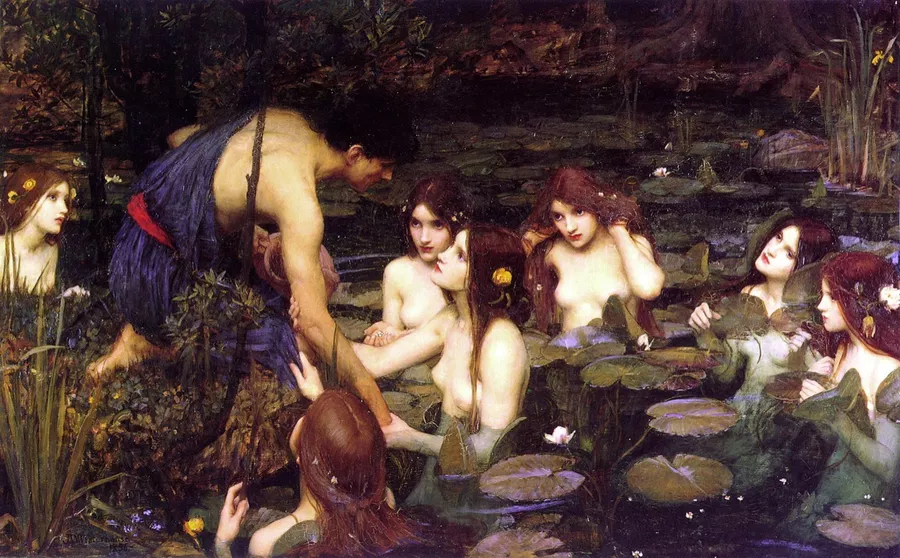
nymphs

John William Waterhouse, Hylas and the Nymphs, 1896. Image via Wikimedia Commons.

By Esther Neville

Censorship in the art world has sparked enormous debate, as it navigates the delicate balance between freedom of expression and cultural sensitivities. Internationally, art has long served as a reflection of human expression and cultural evolution; however, the clash between creative freedom and societal norms often ends in contentious debates and prison challenges. This article analyzes recent cases of art censorship in various forms.

Many have viewed recent museum censorship actions against well-known artists’ works or shows as evidence of political correctness and with complete disregard for the merit of the artworks. [1] [1] Recently, works by 19th and 20th-century painters were judged by institutions and were taken down from exhibitions.

Hylas and the Nymphs (1896) by John William Waterhouse. Photo by Britta Schultejans/Picture Alliance via Getty Images.
nymphs
John William Waterhouse, Hylas and the Nymphs, 1896. Image via Wikimedia Commons.

For instance, the Manchester Art Gallery removed John William Waterhouse´s Hylas and the Nymphs (1896) due to its nudity and portrayal of an erotic Victorian fantasy. However, the Gallery´s purpose for this was to “prompt conversation;” they asked the audience about their opinion on how this artwork should be interpreted.[2] Visitors then read this commentary on notes, which were attached to the place formerly reserved for Waterhouse’s painting. [3]

Michelangelo´s David

Cecilie Hollberg (left) and Hope Carrasquilla (right) standing in front of Michaelangelo’s David at the Accademia Gallery in Florence. Photo: Accademia Gallery

Additionally, one of the most recent cases of censorship occurred last March 2023. Hope Carrasquilla, a former principal at Tallahassee Classical School in Florida, was fired for presenting Michelangelo’s David in her art class.[4] Several parents complained about the nudity of the sculpture and did not agree with presenting such artwork to their children. As a result, the former Tallahassee principal was forced to resign. Other examples of “controversial” artworks containing nude bodies shown in the Renaissance art class include The Creation of Adam by Michelangelo and Botticelli´s Birth of Venus. [5] According to the case, a letter should have been sent out to the parents detailing what was going to be shown in the classroom. Carrasquilla stated that she assumed the letter went out and didn’t follow up. Even though many parents defined the sculpture as “pornographic” and thus inappropriate, there were others who did not think so. Similarly, Florida´s Department of Education declared that the David sculpture has artistic and historical value. [6]

After the news of this Florida censorship case came out, many were outraged and shocked. In particular, Italian politicians complained about the incident. The country´s deputy premier Matteo Salvini stated in a tweet that “obscuring and erasing history, art, and culture for girls and boys is absolutely crazy and there is nothing correct about it.” [7]The Florence mayor Dario Nardella also took it a step further and invited Carrasquilla to Florence to give her recognition. The Director of the Galleria dell´Accademia Cecilie Hollberg gave the teacher a tour around the gallery, as well, so she could admire and see the sculpture in real life. Hollberg later stated, “To think that David could be pornographic means truly not understanding the contents of the Bible, not understanding Western culture, and not understanding Renaissance art.” [8]

This dismissal raised the question of the depiction of nudity in artwork and whether it has instructional relevance and also demonstrated the implications of censorship in art schooling. [9] This makes us wonder what the limits on censorship are. Most of the classical sculptures that portray topics like history and myths have some sort of nudity. Will this part of history be erased and forgotten?

The Prophet Muhammad

The prophet Muhammad in the cave of Hira, a page from a Hamla-yi Haidari manuscript (ca. 1725). Asian Art Museum of San Francisco, gift of George Hopper Fitch.

Nudity in art is not the only theme facing censorship. Another case of censorship of artworks in the educational system occurred at Hamline University, a private liberal arts college in St. Paul. In 2022, a professor was terminated for showing several artworks depicting the Prophet Muhammad in an art history class. [10] The controversial dismissal stemmed from non-secular sensitivities, with opponents arguing that such depictions were blasphemous and offensive. The First Amendment of the American Constitution protects freedom of expression, however, it also recognizes that positive speech might also incite harm or disrupt societal concord. [11]

This case has raised important questions about censorship within the art world and the principle of academic freedom. While using such an image can have pedagogical value in certain courses, displaying an image of Muhammad can be deeply offensive to many individuals for religious reasons. [12] By firing the professor, Hamline University disregarded the mandate from the Higher Learning Commission, which requires accredited institutions to uphold academic freedom. [13] The Foundation for Individual Rights and Expression (FIRE) expressed concerns about this incident, they called for the professor’s reinstatement and have filed a formal complaint with Hamline’s accrediting body, citing the college’s failure to support faculty in their pursuit of educational freedom. [14] Many of the supporters of the professor argue that labelling the depiction as Islamophobic is inaccurate and diverts attention from genuine instances of hatred. They contend that the university’s response to the incident, which appears to prioritize appeasing a minority organization over defending academic freedom, has led to significant grievances within the community. This situation underscores the ongoing debate over how to balance academic freedom with sensitivity to religious beliefs and cultural sensitivities, posing a challenge for institutions of higher learning.

This incident prompts us to contemplate a series of important questions within the context of a liberal arts community. Specifically, it raises inquiries regarding the appropriateness of engaging in a comprehensive examination of certain subjects and whether a professor of art history should feel comfortable sharing substantial artworks with students without concerns about potential consequences, such as termination, stemming from objections raised by other students or external parties. Furthermore, it is crucial to mention that many of the artworks that were shown in this situation were created by Muslim artists with the explicit intention of resonating with a Muslim audience. These artistic expressions were born out of a deep sense of admiration and reverence for figures such as Muhammad and the Quran; they were not intended to be provocative or offensive in any way. However, what is notable is the stark contrast between this artistic intent and the characterization of these depictions by certain Hamline administrators; as they have labelled these Islamic portrayals of Muhammad as exhibiting traits of hate, intolerance, and Islamophobia, raising the question of whether this interpretation aligns with the intended message of the artists and the principles of academic freedom that liberal arts institutions hold dear. This juxtaposition of artistic intent and administrative perspective underscores the complexity of navigating sensitive cultural and religious subjects in an educational setting.[15]

CONCLUSION

All of these cases show us how critical their historical context is when comparing the legality of such censorship. Many artistic endeavours throughout history, especially from the Renaissance period, consist of nudity. Censoring those portions risks erasing an integral part of artwork records. Courts may not forget whether the paintings’ nudity serves a valid creative or instructional reason, and whether or not it qualifies as obscenity beneath the regulation. Additionally, institutions can be pressured to balance cultural sensitivities and the necessity of offering art in its ancient and inventive context.

Censorship inside the art world presents complicated demanding situations, intersecting with First Amendment rights, educational freedom, cultural sensitivity, and historical renovation. In both instances examined, courts ought to examine the quantity to which creative expression aligns with societal norms and values. It is vital to shield the academic cost of artwork, even if it every now and then conflicts with installed norms.

These cases underscore the necessity of open communication between instructional establishments, college students, artists, and groups. The regulation needs to provide a framework that encourages discussion and debate while respecting diverse perspectives. By doing so, we are able to ensure that art, as a reflection of human creativity and cultural evolution, enhances our society without compromising the essential concepts of freedom and respect.

Disclaimer: This and all articles are intended as general information, not legal advice, and offer no substitution for seeking representation.

About the author

Esther Neville (Summer 2023 legal intern at the Center for Art Law) is finishing her European Law Bachelor at Maastricht University, with a minor in Art, Law and Policy Making. She wishes to combine her academics with her passion for the arts. She works on the Anti-Money Laundering Study Project at the Center.

Further Reading

  • Gareth Harris, “Trigger Warning: a new column on censorship in art today, from must-read books to which algorithms are policing creative content,” The Art Newspaper (Sept. 5, 2022), available at   https://www.theartnewspaper.com/2022/09/05/an-experts-guide-to-censorship-four-must-read-books
  • “Is art censorship on the rise? How freedom of expression is being curbed across the globe” The Art Newspaper (Sept. 9, 2022), https://www.theartnewspaper.com/2022/09/09/is-art-censorship-on-the-rise-how-freedom-of-expression-is-being-curbed-across-the-globe
  • Kelly Grovier, “Michelangelo’s David and 10 artworks that caused a scandal,” BBC (Mar. 27, 2023), https://www.bbc.com/culture/article/20171018-the-works-too-scandalous-for-display

Bibliography

  1. Hencz, The Fear of Art: Contemporary Art Censorship, Artland Magazine (2023), https://magazine.artland.com/the-fear-of-art-contemporary-art-censorship/ ↑
  2. Brown, Gallery removes naked nymphs painting to “prompt conversation”, The Guardian (2018)https://www.theguardian.com/artanddesign/2018/jan/31/manchester-art-gallery-removes-waterhouse-naked-nymphs-painting-prompt-conversation ↑
  3. Millership, This Artwork Changed My Life: John William Waterhouse´s “Hylas and the Nymphs”, Artsy (2020), https://www.artsy.net/article/artsy-editorial-artwork-changed-life-john-william-waterhouses-hylas-nymphs ↑
  4. Whiddington, The Florida Principal Fired for Allowing a Lesson on Michelangelo’s ‘David’ Went to Italy to See the Sculpture Herself—and Was Rather Impressed, Artnet News (2023),https://news.artnet.com/art-world/fired-florida-principal-visited-michelangelo-david-2292636 ↑
  5. Ibid. ↑
  6. Cascone, Florida’s Department of Education Declares ‘David’ a Work of ‘Artistic Value’ After a Principal Was Fired Over a Lesson Showing the Nude, Artnet News (2023)https://news.artnet.com/art-world/florida-department-of-education-declares-david-art-not-porn-2280637 ↑
  7. Wanted in Rome, Florida school principal fired for showing students Michelangelo´s David, (2023)https://www.wantedinrome.com/news/florida-school-principal-fired-michelangelo-david.html ↑
  8. Mueller, Italian mayor defends Florida principal forced out over ‘David’ statue, The Hill (2023)https://thehill.com/homenews/3919221-italian-mayor-defends-florida-principal-forced-out-over-david-statue/ ↑
  9. Kim, A Florida principal who was fired after showing students ‘David’ is welcomed in Italy, NPR (2023)https://www.npr.org/2023/05/01/1173017248/florida-principal-david-michelangelo-visit-italy ↑
  10. Lawson- Tancred, Muslim Group Urges the Reinstatement of Fired U.S. Professor, Saying the Prophet Muhammad Painting She Showed to Students Was Not Islamophobic, ArtNet News (2023)https://news.artnet.com/art-world/fired-professor-hamline-not-islamophobic-2241214 ↑
  11. NY Times, A Lecturer Showed a Painting of the Prophet Muhammad. She Lost Her Job, (2023)https://www.nytimes.com/2023/01/08/us/hamline-university-islam-prophet-muhammad.html ↑
  12. Cascone, A Minnesota University Is Under Fire for Dismissing an Art History Professor Who Showed Medieval Paintings of the Prophet Muhammad, ArtNet News, (2023)https://news.artnet.com/art-world/professor-terminated-art-history-paintings-muhammad-2238922#:~:text=In%20a%20controversial%20move%2C%20an,founder%20of%20the%20Islamic%20religion. ↑
  13. Higher Learning Commission, HLC Policy, Policy Title: Criteria for Accreditation, Number: CRRT.B.10.010,(1992) ↑
  14. Fire, FIRE files accreditor complaint over Minnesota art history professor fired for showing Muhammad painting, (2023)https://www.thefire.org/news/fire-files-accreditor-complaint-over-minnesota-art-history-professor-fired-showing-muhammad ↑
  15. Cascone, A Minnesota University Is Under Fire for Dismissing an Art History Professor Who Showed Medieval Paintings of the Prophet Muhammad, ArtNet News, (2023)https://news.artnet.com/art-world/professor-terminated-art-history-paintings-muhammad-2238922#:~:text=In%20a%20controversial%20move%2C%20an,founder%20of%20the%20Islamic%20religion. ↑


Disclaimer: This article is for educational purposes only and is not meant to provide legal advice. Readers should not construe or rely on any comment or statement in this article as legal advice. For legal advice, readers should seek a consultation with an attorney.

Post navigation

Previous Secrecy in Museums Administration
Next Case Review: Free Holdings v. McCoy and Sotheby’s (2023)

Related Posts

emersive experience monet

The Public Domain and Immersive Art: How Copyright Law Impacts Interactive Art Experiences

March 23, 2023
logo

Court: Holocaust survivor can sue for painting

September 10, 2009
Source: ArtNet https://www.artnet.com/artists/john-baldessari/

Matters of Baldessari: Estate of the Artist Finds Itself on Both Sides of Litigation

May 16, 2024
Center for Art Law
Sofia Tomilenko Let there be light!

A Gift for Us

this Holiday Season

Thank you to Sofia Tomilenko (the artist from Kyiv, Ukraine who made this Lady Liberty for us) and ALL the artists who make our life more meaningful and vibrant this year! Let there be light in 2026!


Last Gift of 2025
Guidelines AI and Art Authentication

AI and Art Authentication

Explore the new Guidelines for AI and Art Authentication for the responsible, ethical, and transparent use of artificial intelligence.

Download here
Center for Art Law

Follow us on Instagram for the latest in Art Law!

Paul Cassier (1871-1926 was an influential Jewish Paul Cassier (1871-1926 was an influential Jewish art dealer. He owned and ran an art gallery called Kunstsalon Paul Cassirer along with his cousin. He is known for his role in promoting the work of impressionists and modernists like van Gogh and Cézanne. 

Cassier was seen as a visionary and risk-tasker. He gave many now famous artists their first showings in Germany including van Gogh, Manet, and Gaugin. Cassier was specifically influential to van Gogh's work as this first showing launched van Gogh's European career.

🔗 Learn more about the impact of his career by checking out the link in our bio!

#centerforartlaw #artlaw #legalresearch #law #lawyer #artlawyer #artgallery #vangogh
No strike designations for cultural heritage are o No strike designations for cultural heritage are one mechanism by which countries seek to uphold the requirements of the 1954 Hague Convention. As such, they are designed to be key instruments in protecting the listed sites from war crimes. Yet not all countries maintain such inventories of their own whether due to a lack of resources, political views about what should be represented, or the risk of misuse and abuse. This often places the onus on other governments to create lists about cultures other than their own during conflicts. Thus, there may be different lists compiled by different governments in a conflict, creating an unclear legal landscape for determining potential war crimes and raising significant questions about the effectiveness of no strikes as a protection mechanism. 

This presentation discusses current research seeking to empirically evaluate the effectiveness of no strike designations as a protection mechanism against war crimes in Syria. Using data on cultural heritage attacks from the height of the Syrian Conflict (2014-2017) compiled from open sources, a no strike list completed in approximately 2012, and measures of underlying risk, this research asks whether the designations served as a protective factor or a risk factor for a given site and the surrounding area. Results and implications for holding countries accountable for war crimes against cultural heritage are discussed. 

🎟️ Grab your tickets using the link in our bio!

#centerforartlaw #artlaw #artlawyer #legalresearch #lawyer #culturalheritage #art #protection
What happens when culture becomes collateral damag What happens when culture becomes collateral damage in war?
In this episode of Art in Brief, we speak with Patty Gerstenblith, a leading expert on cultural heritage law, about the destruction of cultural sites in recent armed conflicts.

We examine the role of international courts, the limits of accountability, and whether the law can truly protect history in times of war.

We would like to also thank Rebecca Bennett for all of her help on this episode. 

 🎙️ Click the link in our bio to listen anywhere you get your podcasts.

#centerforartlaw #artlaw #legalresearch #artlawyer #lawyer #podcast #artpodcast #culturalheritage #armedconflict #internationallaw
Where did you go to recharge your batteries? Where did you go to recharge your batteries?
Let there be light! Center for Art Law is pleased Let there be light! Center for Art Law is pleased to share with you a work of art by Sofia Tomilenko, an illustration artist from Kyiv, Ukraine. This is Sofia's second creation for us and as her Lady Liberty plays tourist in NYC, we wish all of you peace and joy in 2026! 

Light will overcome the darkness. Світло переможе темряву. Das Licht wird die Dunkelheit überwinden. La luz vencerá la oscuridad. 

#artlaw #peace #artpiece #12to12
Writing during the last days and hours of the year Writing during the last days and hours of the year is de rigueur for nonprofits and what do we get?

Subject: Automatic reply: Thanks to Art Law! 

"I am now on leave until January 5th. 
. . .
I will respond as soon as I can upon on my return. For anything urgent you may contact ..."

Well, dear Readers, Students, Artists and Attorneys, we see you when you're working, we know when you're away, and we promise that in 2026 Art Law is coming to Town (again)!

Best wishes for 2026, from your Friends at the Center for Art Law!

#fairenough #snowdays #2026ahead #puttingfunback #fundraising #EYO2025
Less than a week left in December and together we Less than a week left in December and together we have raised nearly $32,000 towards our EOY fundraising $35,000 goal. If we are ever camera shy to speak about our accomplishments or our goals, our work and our annual report speak for themselves. 

Don’t let the humor and the glossy pictures fool you, to reach our full potential and new heights in 2026, we need your vote of confidence. No contribution is too small. What matters most is knowing you are thinking of the Center this holiday season. Thank you, as always, for your support and for being part of this community! 

#artlaw #EOYfundraiser #growingin2026 #AML #restitution #research #artistsright #contracts #copyright #bringfriends
This summer, art dealer James White and appraiser This summer, art dealer James White and appraiser Paul Bremner pleaded guilty for their participation in the third forgery ring of Norval Morisseau works uncovered by Canadian authorities. Their convictions are a key juncture in Canda's largest art fraud scheme, a scandal that has spanned decades and illuminated deep systemic failures within the art market to protect against fraud. 

Both White and Bremner were part of what is referred to as the 'Cowan Group,' spearheaded by art dealer Jeffrey Cowan. Their enterprise relied on Cowan fabricating provenance for the forged works, which he claimed were difficult to authenticate. 

In June, White, 87, pleaded guilty to to creating forged documents and possessing property obtained by crime for the purpose of trafficking. Later, in July, Paul Bremner pleaded guilty to producing and using forged documents and possessing property obtained through crime with the intent of trafficking. While Bremner, White, and Cowan were all supposed to face trial in the Fall, Cowan was the only one to do so and was ultimately found guilty on four counts of fraud. 

🔗 Click the link in our bio to read more.

#centerforartlaw #artlaw #legalresearch #artfraud #artforgery #canada #artcrime #internationallaw
It's the season! It's the season!
In 2022, former art dealer Inigo Philbrick was sen In 2022, former art dealer Inigo Philbrick was sentenced to seven years in prison for committing what is considered one of the United States' most significant cases of art fraud. With access to Philbrick's personal correspondence, Orlando Whitfield chronicled his friendship with the disgraced dealer in a 2024 memoir, All that Glitters: A Story of Friendship, Fraud, and Fine Art. 

For more insights into the fascinating story of Inigo Philbrick, and those he defrauded, read our recent book review. 

🔗 Click the link in our bio to read more!

#centerforartlaw #legalresearch #artlaw #artlawyer #lawer #inigophilbrick #bookreview #artfraud
The highly publicized Louvre heist has shocked the The highly publicized Louvre heist has shocked the globe due to its brazen nature. However, beyond its sheer audacity, the heist has exposed systemic security weaknesses throughout the international art world. Since the theft took place on October 19th, the French police have identified the perpetrators, describing them as local Paris residents with records of petty theft. 

In our new article, Sarah Boxer explores parallels between the techniques used by the Louvre heists’ perpetrators and past major art heists, identifying how the theft reveals widespread institutional vulnerability to art crime. 

🔗 Click the link in our bio to read more!

#centerforartlaw #artlaw #legalresearch #artcrime #theft #louvre #france #arttheft #stolenart
In September 2025, 77-year old Pennsylvania reside In September 2025, 77-year old Pennsylvania resident Carter Reese made headlines not only for being Taylor Swift's former neighbor, but also for pleading guilty to selling forgeries of Picasso, Basquiat, Warhol, and others. This and other recent high profile forgery cases are evidence of the art market's ongoing vulnerability to fraudulent activity. Yet, new innovations in DNA and artificial intelligence (AI) may help defend against forgery. 

To learn more about how the art market's response to fraud and forgery is evolving, read our new article by Shaila Gray. 

🔗 Click the link in our bio to read more!

#centerforartlaw #artlaw #legalresearch #artlawyer #lawyer #AI #forgery #artforgery #artfakes #authenticity
  • About the Center
  • Contact Us
  • Newsletter
  • Upcoming Events
  • Internship
  • Case Law Database
  • Log in
  • Become a Member
  • Donate
DISCLAIMER

Center for Art Law is a New York State non-profit fully qualified under provision 501(c)(3)
of the Internal Revenue Code.

The Center does not provide legal representation. Information available on this website is
purely for educational purposes only and should not be construed as legal advice.

TERMS OF USE AND PRIVACY POLICY

Your use of the Site (as defined below) constitutes your consent to this Agreement. Please
read our Terms of Use and Privacy Policy carefully.

© 2026 Center for Art Law
 

Loading Comments...
 

You must be logged in to post a comment.