• About
    • Mission
    • Team
    • Boards
    • Mentions & Testimonials
    • Institutional Recognition
    • Annual Reports
    • Current & Past Sponsors
    • Contact Us
  • Resources
    • Article Collection
    • Podcast: Art in Brief
    • AML and the Art Market
    • AI and Art Authentication
    • Newsletter
      • Subscribe
      • Archives
      • In Brief
    • Art Law Library
    • Movies
    • Nazi-looted Art Restitution Database
    • Global Network
      • Courses and Programs
      • Artists’ Assistance
      • Bar Associations
      • Legal Sources
      • Law Firms
      • Student Societies
      • Research Institutions
    • Additional resources
      • The “Interview” Project
  • Events
    • Worldwide Calendar
    • Our Events
      • All Events
      • Annual Conferences
        • 2026 Art Law Conference
        • 2025 Art Law Conference
        • 2024 Art Law Conference
        • 2023 Art Law Conference
        • 2022 Art Law Conference
        • 2015 Art Law Conference
  • Programs
    • Visual Artists’ Legal Clinics
      • Art & Copyright Law Clinic
      • Artist-Dealer Relationships Clinic
      • Artist Legacy and Estate Planning Clinic
      • Visual Artists’ Immigration Clinic
    • Summer School
      • 2026
      • 2025
    • Internship and Fellowship
    • Judith Bresler Fellowship
  • Case Law Database
  • Log in
  • Become a Member
  • Donate
  • Log in
  • Become a Member
  • Donate
Center for Art Law
  • About
    About
    • Mission
    • Team
    • Boards
    • Mentions & Testimonials
    • Institutional Recognition
    • Annual Reports
    • Current & Past Sponsors
    • Contact Us
  • Resources
    Resources
    • Article Collection
    • Podcast: Art in Brief
    • AML and the Art Market
    • AI and Art Authentication
    • Newsletter
      Newsletter
      • Subscribe
      • Archives
      • In Brief
    • Art Law Library
    • Movies
    • Nazi-looted Art Restitution Database
    • Global Network
      Global Network
      • Courses and Programs
      • Artists’ Assistance
      • Bar Associations
      • Legal Sources
      • Law Firms
      • Student Societies
      • Research Institutions
    • Additional resources
      Additional resources
      • The “Interview” Project
  • Events
    Events
    • Worldwide Calendar
    • Our Events
      Our Events
      • All Events
      • Annual Conferences
        Annual Conferences
        • 2026 Art Law Conference
        • 2025 Art Law Conference
        • 2024 Art Law Conference
        • 2023 Art Law Conference
        • 2022 Art Law Conference
        • 2015 Art Law Conference
  • Programs
    Programs
    • Visual Artists’ Legal Clinics
      Visual Artists’ Legal Clinics
      • Art & Copyright Law Clinic
      • Artist-Dealer Relationships Clinic
      • Artist Legacy and Estate Planning Clinic
      • Visual Artists’ Immigration Clinic
    • Summer School
      Summer School
      • 2026
      • 2025
    • Internship and Fellowship
    • Judith Bresler Fellowship
  • Case Law Database
Home image/svg+xml 2021 Timothée Giet Art law image/svg+xml 2021 Timothée Giet A Plethora of Fakes and a Series of Thoughts: Where Has All The Real “Art” Gone?
Back

A Plethora of Fakes and a Series of Thoughts: Where Has All The Real “Art” Gone?

December 24, 2013

OP ED by Hanoch Sheps, J.D.*

With the New Year only days away, it is only natural to reflect on the year that is coming to an end. With that, a string of fake artworks exposed in reputable institutions as part of sales or extensive exhibitions brings pause.
pic

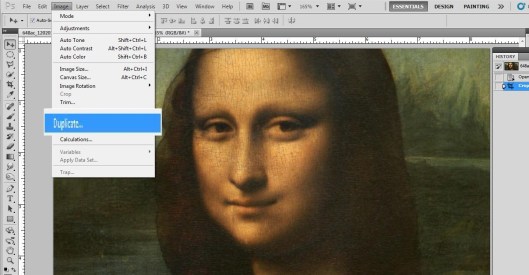
As recently as December 23, 2013, a piece of Chinese calligraphy attributed to a poet who lived over a thousand years ago was flagged as a possible 19th century copy. [NYT] This discovery is just one of many in 2013, soon to be dubbed the “Year of the Fake,” which seems appropriate given that the Chinese year’s presiding animal zodiac was the snake.  However, the exposure of the fake calligraphy that was consigned to Sotheby’s and sold for $8.2 million at a September auction in New York is not the first (not even the first this week), and assuredly not the last. A gallery in Turkey cited the discovery of fakes as a reason for the premature closing of an exhibit of 60 works by the Spanish surrealist painter, Joan Miró, that were initially expected to be displayed until January 19, 2014. And of course, little more than the name Knoedler is needed to rehash the story of the famous and now defunct gallery exposed for selling fakes, a hackneyed story nearly impossible to escape this year.

Are the fakes the result of rising art prices, is it a systemic problem of attribution or has the fear of exposure to expert liability silenced those who might otherwise have spoken up?  Increasingly stories emerge of experts issuing false reports, such as the scandal surrounding the renowned expert on the works of Max Ernst found liable by a French tribunal in July for an “incorrect authentication,” resulting in €652,883 in damages. [See Center for Art Law’s, Art Historian Found Liable for Incorrect Authentication]. In light of the increasing fears of litigation and closing of many authentication boards, will the art expert become extinct? [Read other Center for Art Law pieces on disbanding authentication boards].

To protect art experts and promote ongoing authentication, at least in New York State, the New York City Bar Association is drafting legislation to address the concern that authenticators have in continuing to provide their opinion on works’ authorship. Art Lawyer Judith Bresler, also General Counsel for the Appraisers Association of America, made a presentation of the draft bill at the annual meeting of the Association in November. Essentially, the bill would set a higher threshold and burden of proof for presenting authentication-based claims, amongst other features. Whether the legislation is likely to reinvigorate the academics, appraisers and other experts to opine remains unclear.

Setting aside liabilities momentarily, why do fakes draw the ire of the art market and society at large? This question can be addressed by examining what constitutes art. As a parallel to the now-closed Miró exhibition mentioned earlier, what are the lessons learned from the recent exhibition of over 123 replicas of works by Frida Kahlo? [Huffington Post, Bizarre Exhibition Presents All Of Frida Kahlo’s Paintings… Copied By Anonymous Chinese Artists]. It seems antithetical, or at best confusing, to praise works consciously made as replicas yet criticize the deceitful efforts of those who produce works of equal skill. How does one distinguish “fake” from “imitation,” is bad faith a prerequisite? One need only consider a point made in an interview on December 19 with the artist behind the Knoedler fakes, Pei-Shen Qian who posited, “I made a knife to cut fruit, but if others use it to kill, blaming me is unfair.” [Bloomberg]. Taking that argument one-step further, Qian claims he had no knowledge that his works were sold as fakes, therefore the difficulty in reconciling “fakes” with “imitations” persists.

So, what is art? Assume we are conducting the Pepsi Challenge but with paintings. On one side is an authentic Van Gogh (suspending your inclination to believe it is fake given the subject of the article), the other a near perfect 21st century knockoff. To the naked eye, they are identical. Each inspires the viewer, has great aesthetic appeal, and make you wonder how an artist like Van Gogh barely sold an artwork in his life yet today his works garner millions of dollars.  Are the prices for art realized in a sale the sole indicator of value? What then should be said about exorbitant prices paid for works later exposed as fakes? Do they lose their aesthetic appeal, their ability to inspire simply because we cannot attribute them to a master?

In the New Year we should resolve to reflect on just a few more thoughts. An artwork is a creature of evolution, what once seemed vulgar now may be enlightened, and perhaps what once was decried as fake might become merely an imitation. After all, a wise man once said, “imitations are the sincerest form of flattery.” But if flattery is like talk, and talk is cheap, it is no wonder that exposed fakes are priced differently from the real thing.

*About the Author

Hanoch Sheps, J.D. is a recent graduate of New York Law School. He may be reached at Hanoch.sheps2@gmail.com or 201-696-6881.

Disclaimer: This and all articles are intended as general information, not legal advice, and offer no substitute for seeking representation.

Disclaimer: This article is for educational purposes only and is not meant to provide legal advice. Readers should not construe or rely on any comment or statement in this article as legal advice. For legal advice, readers should seek a consultation with an attorney.

Post navigation

Previous NOW you see it… Legalese of Street Art
Next Calder Estate Fraud Claim Dismissed: Judge Finds Allegations “An Incoherent Stew of Irrelevance and Innuendo”

Related Art Law Articles

The Legal and Economic Landscape of Federal Arts Funding Lauren Stein
Art lawNEA

Endowments for the Arts: Shrinking Legal and Economic Landscape of Federal Arts Funding

May 4, 2026
Center for Art Law Canada Pledges Resale Royalty
Art lawCanadaresale royalty

Canada pledges an artist’s resale royalty—can the United States follow “suite”?

April 9, 2026
Abraham and Isaac Returned Home Center for Art Law
Art law

Abraham and Isaac: Sculptures returned home after Spanish Supreme Court decision

April 8, 2026
Center for Art Law
What the Heck is Copyright (2)

What is Copy, Right?

2026 Annual Conference

Let’s explore Visual Art, AI, and the Law in the 21st Century together.


Reserve Your Ticket TODAY
Guidelines AI and Art Authentication

AI and Art Authentication

Explore the Guidelines for AI and Art Authentication for the responsible, ethical, and transparent use of artificial intelligence.

Download here
Center for Art Law

Follow us on Instagram for the latest in Art Law!

Join us on May 27th at Brooklyn Law School for our Join us on May 27th at Brooklyn Law School for our Annual Art Law Conference 2026: What is Copy, Right? 

We are very excited to introduce you to the topic and speakers for, Panel 1: So Inappropriate — Lessons About Copyright Law and Art: First There Was Art, Then Copyright, Then Fair Use… and Now AI?

From early copyright doctrines to contemporary fair use debates, this panel examines how artists and lawyers have navigated questions of ownership, appropriation, and originality in visual art. Panelists will explore key developments in copyright law affecting traditional artistic practices, from borrowing and remixing to transformative use, while also considering how emerging technologies, including AI, are beginning to reshape long‑standing legal frameworks and artistic norms.

Moderator: Irina Tarsis, Founder, Center for Art Law
Speakers: Vivek Jayaram, Founder, Jayaram Law; Vincent Wilcke, Pace Gallery; Greg Allen, Artist and writer 

Reserve your tickets using the link in our bio or by visiting our website itsartlaw.org 🎟️ 
See you soon!
Next stop: Venice. The 61st Biennale has been maki Next stop: Venice. The 61st Biennale has been making waves and headlines for weeks and the doors have not even opened yet. The jury refused to award prizes and resigned nine days before the opening over geopolitical controversies. Some artists boycott while others show up even if unwelcome. Some pavilions will be empty, some will not be open to the public… Sources of funds, sources of inspiration, so many questions, so much on display for critical eyes. Meanwhile the boats are waiting for anyone lucky enough to find themselves in the floating world.

Help us reflect on the Biennale by sharing your art law stories.

#ArtLaw #Venice #Biennale2026 #ArtWorld #BiennaleofDissent #LaSerenissima #GoldenLion #SeeArtThinkArtLaw
Center for Art Law is very pleased to welcome Prof Center for Art Law is very pleased to welcome Professor Ben Zhao as the Keynote Speaker for our Annual Art Law Conference 2026! 

Ben Zhao is the Neubauer Professor of Computer Science at the University of Chicago where he, and a team of researchers at the university, developed NightShade & Glaze, two data-poisoning tools which protects artists' work from being scraped for AI data training. 

Professor Zhao will discuss tools, such as NightShade, which can assist in defending art in the age of AI. 

The 2026 conference will focus on copyright law as it relates to visual art, artificial intelligence, and the rapidly evolving legal landscape of the 21st century. The program will begin with Professor Zhao's keynote address, followed by three substantive panels designed to build on one another throughout the afternoon. In addition, we will host a curated group of exhibitors featuring databases, legal tools, and technology platforms relevant to artists’ rights, copyright, and AI. The program will conclude with a reception, providing time for continued discussion, networking, and engagement among speakers, exhibitors, and attendees. 

We hope you join us! Reserve your tickets now using the link in our bio 🎟️ 

#centerforartlaw #artlaw #copyrightlaw
A huge thank you to our hosts and incredible speak A huge thank you to our hosts and incredible speakers who made this London panel discussion truly special! 🙏✨ 🇬🇧 🇺🇦 

We were so fortunate to hear from:

🎤 Rakhi Talwar | RTalwar Compliance
🎤 Raminta Dereskeviciute | McDermott Will & Schulte
🎤 Daryna Pidhorna, Lawyer & Analyst | The Raphael Lemkin Society
🎤 Timothy Kompancheko | Bernard, Inc.
🎤 Yuliia Hnat | Museum of Contemporary Art NGO
🎤 Irina Tarsis | Center for Art Law

Your insights, expertise, and passion made this a conversation we won't forget. Thank you for sharing your time and knowledge with us! 💫

Bottom Line: the art market has power and responsibility. Our panel "Art, Money, and the Law: Sanctions & AML Enforcement in 2026" tackled the hard questions around money laundering, sanctions compliance, and what's at stake for art market participants in today's regulatory landscape.

⚠️ Regulators are watching and "history has it's eyes on you..." too We don't have to navigate the legal waters alone. Let's keep the conversation going.

What was your biggest takeaway? 

#ArtLaw #AMLCompliance #Sanctions #ArtMarket #ArtAndMoney #Enforcement2026
At the Center for Art Law we are preparing for our At the Center for Art Law we are preparing for our Annual Art Law Conference 2026, "What is Copy, Right? Visual Art, AI, and the Law in the 21st Century", and we hope you are as excited as we are! The event will take place on May 27th at Brooklyn Law School. 

In addition to the panels throughout the day, which will offer insights into the rapidly shifting landscape of art and copyright law, our conference will feature exhibitors showcasing resources for promoting artists' rights, and a silent auction aimed at bolstering the Center's efforts. 

We would like to invite you to take part in and support this year's Annual Art Law Conference by being an exhibitor or sponsor. We express our sincere appreciation to all of our sponsors, exhibitors and you! 

Find more information and reserve your tickets using the link in our bio! See you soon!
In this episode, we speak with art market expert D In this episode, we speak with art market expert Doug Woodham to unpack how Jean-Michel Basquiat became one of the most enduring cultural icons of our time.

Moving beyond his rise in 1980s New York, this episode focuses on what happened after his death. We explore how his estate, led by his father, shaped his legacy through control of supply, copyright, and narrative; how early collectors and market forces drove the value of his work; and how museums and media cemented his place in art history.

Together, we explore the bigger question: is creating great art enough, or does becoming an icon require an entire ecosystem working behind the scenes?

🎙️ Check out the podcast anywhere you get your podcasts using the link in our bio!

Also, please join us on May 27  for the highly anticipated Art Law Conference 2026, held at Brooklyn Law School and Online (Hybrid). Entitled “What is Copy, Right? Visual Art, AI, and the Law in the 21st Century,” this year’s conference explores the evolving relationship between visual art, copyright law, and artificial intelligence!

#centerforartlaw #artlaw #artlawyer #podcast #legal #research #legalresearch #newepisode #artmarket #basquiat
Amy Sherald cancelled her mid-career retrospective Amy Sherald cancelled her mid-career retrospective, scheduled at the National Portrait Gallery (NPG) in D.C., after a curatorial controversy over the potential removal of her recent work, "Trans Forming Liberty" (2024). Sherald denounced the attempt to remove this work as a blatant and intentional erasure of trans lives. 

This is one of the best examples and the most illustrative examples of the current administration's growing efforts to control the Smithsonian Institution's programming. In this climate of political tension, how do cultural institutions defend themselves against censorship and keep their curatorial independence?

📚 Click the link in our bio to read more!

#centerforartlaw #artlaw #legal #artlawyer #legalreserach #artcuration #curatorialindependance #censorship
Grab 15% off tickets the upcoming bootcamp on Arti Grab 15% off tickets the upcoming bootcamp on Artist-Dealer Relations, now available online!! 

Center for Art Law’s Art Lawyering Bootcamp: Artist-Dealer Relationships is an in-person, full-day training aimed at preparing lawyers for working with visual artists and dealers, in the unique aspects of their relationship. The bootcamp will be led by veteran attorneys specializing in art law.

This Bootcamp provides participants -- attorneys, law students, law graduates and legal professionals -- with foundational legal knowledge related to the main contracts and regulations governing dealers' and artists' businesses. Through a combination of instructional presentations and mock consultations, participants will gain a solid foundation in the specificities of the law as applied to the visual arts.

Bootcamp participants will be provided with training materials, including presentation slides and an Art Lawyering Bootcamp handbook with additional reading resources.

Art Lawyering Bootcamp participants with CLE tickets will receive New York CLE credits upon successful completion of the training modules. CLE credits pending board approval.

🎟️ Grab tickets using the link in our bio!

Get 15% off using the code: Final15 

#centerforartlaw #artlaw #legal #research #lawyer #artlawyer #bootcamp #artistdealer #CLE #trainingprogram
On the night of April 15–16, 2026 alone, Russia se On the night of April 15–16, 2026 alone, Russia sent hundreds of drones and missiles on sleeping cities across Ukraine, killing and injuring dozens of civilians. War is funded in part by individuals who have important artworks in their personal collections. This full-scale invasion of Ukraine, now in its fifth year, daily exacts a grave toll on Ukrainian lives and cultural heritage, while fundamentally disrupting European commerce. In response, art market participants have adapted their practices, most have accepted, if not always embraced, the need to scrutinize the source of funds and the ultimate beneficiaries of their transactions. Yet there is a growing sense that parts of the trade are holding their breath, waiting to see when they might safely return to dealing with the oligarchs who continue to fund the Russian war machine.

For art market participants operating in the UK, compliance is no longer a peripheral concern, it is a legal imperative. Regulators are watching, the consequences of non-compliance increasingly extend beyond administrative penalties into criminal liability, and private-public partnerships offer the most credible path toward a more resilient and trustworthy market. 

Join us on April 24th for a panel discussion in London on the current state of AML enforcement and sanctions.

🎟️ Grab your tickets using the link in our bio!

#centerforartlaw #artlaw #artlawyer #lawyer #artcrime #london #artissues #museumissues
Sotheby's sold Modigliani’s Portrait de Leopold Zb Sotheby's sold Modigliani’s Portrait de Leopold Zborowski to Cahn in 2003 for the low price of about $1.55 million. In 2016, Cahn claimed he was verbally informed about authenticity issues with the painting by Sotheby's. The parties did make an agreement regarding Cahn reselling with Sotheby's for a guaranteed price in exchange for releasing the auction house from all claims related to the painting. Cahn claims that he attempted to set this process in motion in June 2025, but he received no response. Cahn now seeks damages totaling $2.67 million, plus interest and attorneys’ fees, for breach of contract. 

Through this dispute, Vivianne Diaz's article highlights a bigger issue in the art market by explaining how forgeries negatively affect both collectors and auction houses, and how auction houses need to be more careful, but most importantly, proactive in their authentication determinations.

📚 Click the link in our bio to read more!

#centerforartlaw #artlaw #artlawyer #legalresearch #art #Modigliani #LeopoldZborowski #sothebys
Don't miss our upcoming April 20th bootcamp on Art Don't miss our upcoming April 20th bootcamp on Artist-Dealer Relations, now available online!!

Center for Art Law’s Art Lawyering Bootcamp: Artist-Dealer Relationships is an in-person, full-day training aimed at preparing lawyers for working with visual artists and dealers, in the unique aspects of their relationship. The bootcamp will be led by veteran attorneys specializing in art law.

This Bootcamp provides participants -- attorneys, law students, law graduates and legal professionals -- with foundational legal knowledge related to the main contracts and regulations governing dealers' and artists' businesses. Through a combination of instructional presentations and mock consultations, participants will gain a solid foundation in the specificities of the law as applied to the visual arts.

Bootcamp participants will be provided with training materials, including presentation slides and an Art Lawyering Bootcamp handbook with additional reading resources.

Art Lawyering Bootcamp participants with CLE tickets will receive New York CLE credits upon successful completion of the training modules. CLE credits pending board approval.

🎟️ Grab tickets using the link in our bio!

#centerforartlaw #artlaw #legal #research #lawyer #artlawyer #bootcamp #artistdealer #CLE #trainingprogram
The historic Bayeux Tapestry, conserved in Normand The historic Bayeux Tapestry, conserved in Normandy, France, is scheduled to be loaned from the Bayeux Museum to the British Museum for ten months beginning in the fall of 2026. This is the first time the tapestry will have returned to the UK in over 900 years. 

This loan, authorized by France, has raised multiple controversies, particularly over conservation concerns. Nevertheless, it has been made possible through a combination of factors, including improved conservation techniques, enhanced transport precautions, comprehensive loan agreements, insurance, and the application of relevant protective laws. 

Check out our recent article by Josie Goettel to read more about this historic loan regarding not only in its symbolic significance, but also in its technical complexity.

📚 Click the link in our bio to read more!

#centerforartlaw #artlaw #artlawyer #lawyer #legalresearch #legal #museumissues #bayeuxtapisserie #bayeuxtapestry #britishmuseum #bayeuxmuseum
  • About the Center
  • Contact Us
  • Newsletter
  • Upcoming Events
  • Internship
  • Case Law Database
  • Log in
  • Become a Member
  • Donate
DISCLAIMER

Center for Art Law is a New York State non-profit fully qualified under provision 501(c)(3)
of the Internal Revenue Code.

The Center does not provide legal representation. Information available on this website is
purely for educational purposes only and should not be construed as legal advice.

TERMS OF USE AND PRIVACY POLICY

Your use of the Site (as defined below) constitutes your consent to this Agreement. Please
read our Terms of Use and Privacy Policy carefully.

© 2026 Center for Art Law

Loading Comments...

You must be logged in to post a comment.