

 |
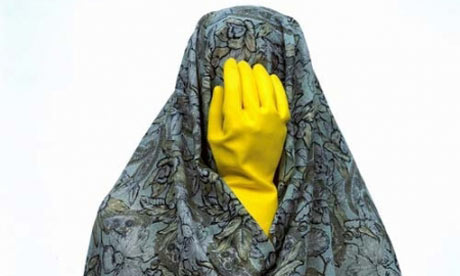
| Shadi Ghadirian, "Untitled," 2000-2001. Now represented by the Saatchi Gallery. |
In the midst of international sanctions, social and political upheaval, and a failing economy, contemporary art in Iran in flourishing. The cause of this surge is multi-dimensional.
In a country where it is estimated that half the population is under 25, modern young people are increasingly involved in the art scene. Gallery openings attract crowds since they are one of the only social environments not regulated by government authorities. The under 30s flock to galleries, not to buy art, but instead to mingle in a free public space. This change in audience has transformed contemporary art, and conseqentialy its prices.
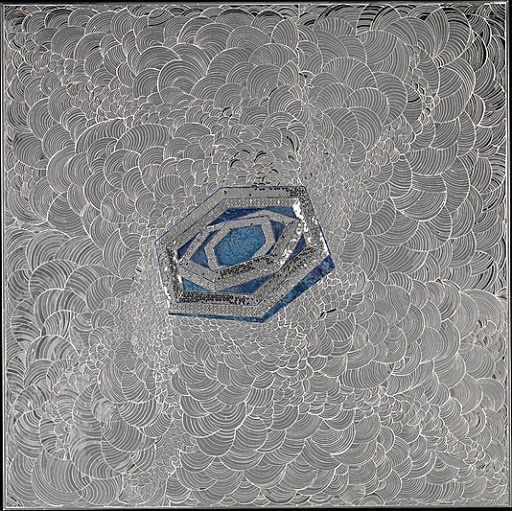 |
| Moir Shahroudy Farmanfarmaian, "Flight of the Dolphin," Mirror Mosaic, 2010. Metropolitan Museum of Art permanent collection. |
In order to bring in some revenue, galleries are lowering prices and encouraging the sale of small time artists. Iranian art is purchased not at huge auctions or brand name galleries, but simply out of pocket by small time collectors.
The lower prices have, however, attracted new international collectors who would would not normally invest in art. The Guardian reports that "the economy provides ground for young creatives willing to settle for smaller profits." Works that focus on the political and social climate following the 2009 election of president Mahmoud Ahmadinejad are particularly attractive to international buyers.
Contemporary Iranian art is now drawing international attention, culminating in 2012 with an exhibition at the Metropolitan Museum of Art. The Met exhibit, "Contemporary Iranian Art from the Permanent Collection," highlighted works that addressed "issues of identity, political and social concerns, gender, nostalgia, and cultural pride."
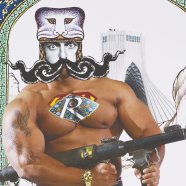 |
| Siamak Filideh, "Untitled" from series Rotsam 2- Return, 2009. Now in the LACMA permanent collection. |
In Iran, younger artists who focus on contemporary culture are the winners. Suddenly the roles are reversed and small time artists, the "little man," have become the "big man." This leads to the question: Is political, economic, and social turmoil beneficial to contemporary art?
Sources: Metropolitan Museum of Art "Contemporary Iranian Art from the Permanent Collection," Sune Engel Rasmussen, "Iranian Artists Hit by Sanctions," The Guardian, January 22, 2013. Images from LACMA, The Metropolitan Museum of Art, and The Saatchi Gallery.
