• About
    • Mission
    • Team
    • Boards
    • Mentions & Testimonials
    • Institutional Recognition
    • Annual Reports
    • Current & Past Sponsors
    • Contact Us
  • Resources
    • Article Collection
    • Podcast: Art in Brief
    • AML and the Art Market
    • AI and Art Authentication
    • Newsletter
      • Subscribe
      • Archives
      • In Brief
    • Art Law Library
    • Movies
    • Nazi-looted Art Restitution Database
    • Global Network
      • Courses and Programs
      • Artists’ Assistance
      • Bar Associations
      • Legal Sources
      • Law Firms
      • Student Societies
      • Research Institutions
    • Additional resources
      • The “Interview” Project
  • Events
    • Worldwide Calendar
    • Our Events
      • All Events
      • Annual Conferences
        • 2025 Art Law Conference
        • 2024 Art Law Conference
        • 2023 Art Law Conference
        • 2022 Art Law Conference
        • 2015 Art Law Conference
  • Programs
    • Visual Artists’ Legal Clinics
      • Art & Copyright Law Clinic
      • Artist-Dealer Relationships Clinic
      • Artist Legacy and Estate Planning Clinic
      • Visual Artists’ Immigration Clinic
    • Summer School
      • 2025
    • Internship and Fellowship
    • Judith Bresler Fellowship
  • Case Law Database
  • 2025 Year-End Appeal
  • Log in
  • Become a Member
  • Donate
  • 2025 Year-End Appeal
  • Log in
  • Become a Member
  • Donate
Center for Art Law
  • About
    About
    • Mission
    • Team
    • Boards
    • Mentions & Testimonials
    • Institutional Recognition
    • Annual Reports
    • Current & Past Sponsors
    • Contact Us
  • Resources
    Resources
    • Article Collection
    • Podcast: Art in Brief
    • AML and the Art Market
    • AI and Art Authentication
    • Newsletter
      Newsletter
      • Subscribe
      • Archives
      • In Brief
    • Art Law Library
    • Movies
    • Nazi-looted Art Restitution Database
    • Global Network
      Global Network
      • Courses and Programs
      • Artists’ Assistance
      • Bar Associations
      • Legal Sources
      • Law Firms
      • Student Societies
      • Research Institutions
    • Additional resources
      Additional resources
      • The “Interview” Project
  • Events
    Events
    • Worldwide Calendar
    • Our Events
      Our Events
      • All Events
      • Annual Conferences
        Annual Conferences
        • 2025 Art Law Conference
        • 2024 Art Law Conference
        • 2023 Art Law Conference
        • 2022 Art Law Conference
        • 2015 Art Law Conference
  • Programs
    Programs
    • Visual Artists’ Legal Clinics
      Visual Artists’ Legal Clinics
      • Art & Copyright Law Clinic
      • Artist-Dealer Relationships Clinic
      • Artist Legacy and Estate Planning Clinic
      • Visual Artists’ Immigration Clinic
    • Summer School
      Summer School
      • 2025
    • Internship and Fellowship
    • Judith Bresler Fellowship
  • Case Law Database
Home image/svg+xml 2021 Timothée Giet Art law image/svg+xml 2021 Timothée Giet Case Review: Free Holdings v. McCoy and Sotheby’s (2023)
Back

Case Review: Free Holdings v. McCoy and Sotheby’s (2023)

September 12, 2023
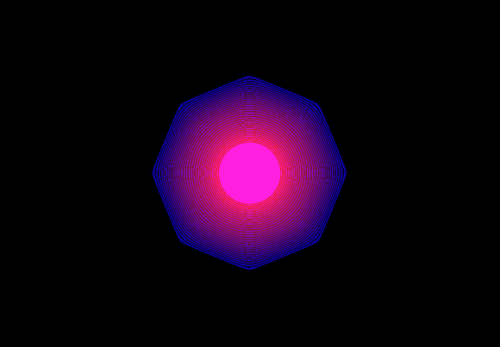
Kevin McCoy, Quantum, 2014

By Natalie Grumhaus

In 2014, Kevin McCoy and Anil Dash created what is widely considered to be the world’s first non-fungible token (NFT), titled Quantum (2014). Recently, however, McCoy’s ownership of Quantum has been called into question. In Free Holdings v. McCoy and Sotheby’s, the NFT ownership dispute was brought as a case of first impression. The court held that the original creator, Kevin McCoy, did retain all ownership rights because plaintiff neither alleged an injury sufficient for standing nor made a claim for which relief could be granted.

Free Holdings, the plaintiff, was an anonymous Canadian holding company that took advantage of an ownership loophole in minting NFTs and coined a replica of McCoy’s Quantum, in the same space that had been previously occupied by McCoy’s original NFT. The original had been transferred to a different blockchain by McCoy, shortly before it was sold at auction by Sotheby’s to Alex Amsel for $1.47 million in an online auction called Natively Digital: A Curated NFT Sale.[1] Following the Sotheby’s sale in 2021, Free Holdings brought this suit against McCoy, Sotheby’s, and Amsel, attempting to invalidate the sale and potentially cash in on some of the fame that Quantum garnered.

Facts of the Case

As discussed in this case, an NFT is a unique identifier that exists in a “blockchain,” which is a “a digital public ledger maintained on a decentralized computer system and consisting of records called blocks.”[2] These records are used for authentication and often have digital media, such as photographs, art, videos, or written records, attached to them. There is only one owner of an NFT, and there must be exactly one owner at all times.[3] The record of ownership of an NFT is easy to trace throughout the blockchain, and indeed, that is the purpose of the blockchain’s existence: a block is added to the chain with every transaction.[4]

However, Quantum was minted on an early blockchain, a spin-off of Bitcoin called Namecoin, that required users to periodically re-register the “names” of their NFT in order to retain ownership – if the original owner did not renew the name, any user was allowed to re-register it.[5] As Magistrate Judge James Cott stated, “‘there is an ongoing debate” about the status of names that expire and are then re-registered: namely, whether re-registered names become new NFTs or are the same NFTs that were previously claimed.”[6] When a name is re-registered by a new user, the name is assigned to a new blockchain, effectively “breaking” the previous chain.

According to the court and evidence in the record, there are three primary interpretations of ownership when a new user renews a domain name on Namecoin:

  1. the token is synonymous with its blockchain history and thus the re-registered name is a new token/asset and cannot claim any value of the original token;
  2. the token is not the blockchain, but rather the token’s value lies in the domain name, and therefore it is considered the same as any previous token of the same name; and
  3. the re-registration does create a new token, but it retains the history and provenance of the original new token of the same name.[7]

McCoy registered Quantum on Namecoin under the name “d41b8540cbacdf1467cdc5d17316dcb672c8b43235fa16cde98e79825b68709a” on May 2, 2014.[8] The registration included a notable disclaimer with it, distinguishing property from deed to property:

. . . A UTXO, the thing that transfers ownership [between] holders of public/private key pairs, is a DEED to property but NOT property itself. The property that the Namecoin blockchain was built to cryptographically secure ownership of, provided all recurring fees have been paid to the protocol, is a unique plot of digital space known as a Name. As such, Names, along with the history of Values associated to them, are the NFT property.[9]

This would seem to align with the first theory of ownership described above. In accordance with Namecoin’s policy, the name providing a digital record for Quantum expired in January 2015.[10] Although McCoy moved the chain data from Namecoin to Ethereum, to “bring this early work back into the present day” on May 28, 2021,[11] Free Holdings had already taken advantage of the lapsed, but not destroyed, original location of Quantum and “asserted title” to the file and the accompanying chain on April 5, 2021.[12] Free Holdings showed multiple records of attempting to contact McCoy about the ownership status of Quantum via Twitter, and Caroline Moustakis, Sotheby’s Senior Vice President, via email, but Free Holdings received no response.[13]

Holding and Reasoning

After further extensive and careful background and discussion of technological nuances in the burgeoning field of NFTs and other digital art, the court held that Free Holdings lacked standing to bring the claims of lost opportunity and damages to the value of its property in the Namecoin title discussed.[14] This was because the court espoused the first theory of ownership discussed above and outlined in the disclaimer attached to the NFT name. Under this theory, when Free Holdings took advantage of the lapsed name on Namecoin to “re-register” what it believed to be the original Quantum NFT, it simply created a new NFT that happened to protect the same image as McCoy’s original NFT. In short, the court held that Free Holdings simply had no proprietary interest in Quantum.[15]

The court then considered whether, if Free Holdings had had standing, it could have alleged a sufficient claim in its complaint.[16] Although a lack of standing precludes any need to examine the sufficiency of a claim, the court determined that here it would be beneficial to continue the analysis as this was such a novel matter. Free Holdings asserted several claims: unjust enrichment;[17] slander of title and commercial disparagement,[18] which require falsity in the statements made Sotheby’s and McCoy,[19] malicious intent,[20] and damages;[21] deceptive and unlawful trade practices;[22] and damages under the Lanham Act for misrepresentation.[23] After extensive analysis, the court found that none of these claims by Free Holdings had any merit.

In its analysis of Free Holdings’ unjust enrichment claim, the court stated that it had “demonstrated nothing more than an attempt to exploit open questions of ownership in the still-developing NFT field to lay claim to the profits of a legitimate artist and creator. It does not allege that it took any part in the creation of Quantum or the blockchains used to record it.”[24]

Conclusion

Judge Cott upheld the traditional notions of ownership in this case. Although McCoy could have avoided this litigation by properly maintaining the original blockchain on which he coined the Quantum NFT, his mistake when utilizing a new and trailblazing medium did not deprive him of the rights to the work simply because someone else was more “tech savvy”. Artists can certainly rest easier knowing that they need not be technological experts in order to maintain legal ownership over their works and contributions to society and progress, as long as they can show that they did the work and did their best to maintain ownership of it. By dismissing Free Holdings’ entire suit, Judge Cott set an important precedent for digital artists and those who may try to take advantage of loopholes in the technology to exploit them: a new millennium does not make for a new law of property.

Read Free Holdings Inc. v. McCoy et al. HERE.

About the Author

Natalie Glitz Grumhaus graduated from Michigan State University College of Law in May 2023, and previously received her B.A. in Philosophy and Fine Art from Hillsdale College in 2020. Natalie was a Spring 2023 legal intern with the Center for Art Law, and now works as the Director of Audit and Compliance with Tri-Merit LLC.

Sources and References

  1. See Abby Schultz, Sotheby’s Offers Curated NFT Sale Featuring First in the Genre, Penta (May 6, 2021) https://www.barrons.com/articles/sothebys-offers-curated-nft-sale-featuring-first-in-the-genre-01620322895. ↑
  2. Free Holdings, Inc. v. McCoy et al, No. 22-CV-881, 2 (S.D.N.Y. 2023). ↑
  3. Ethereum, Non-Fungible Tokens (NFT), https://ethereum.org/en/nft, last visited Apr. 2, 2023. ↑
  4. Id. ↑
  5. See Monolithbrah.eth, et al., Defining “NFT” in Historical Context (“Defining NFT”) (Jun. 27, 2022) https://mirror.xyz/chainleft.eth/MzPWRsesC9mQflxlLo-N29oF4iwCgX3lacrvaG9Kjko. (cited in Free Holdings memorandums of law, and therefore considered “part of the record.” See Free Holdings, at fn. 1.) ↑
  6. Free Holdings, at 3. ↑
  7. Free Holdings, at 4-5. ↑
  8. Free Holdings, at 6. ↑
  9. Free Holdings, at 7. ↑
  10. Id. ↑
  11. Free Holdings, at 7, 13. ↑
  12. Free Holdings, at 7. ↑
  13. Free Holdings, at 9-11, 14. ↑
  14. Free Holdings, at 24-27. ↑
  15. Free Holdings, at 24. ↑
  16. Free Holdings, at 27. ↑
  17. Free Holdings, at 28. ↑
  18. Free Holdings, at 31. ↑
  19. Free Holdings, at 32. ↑
  20. Free Holdings, at 35. ↑
  21. Free Holdings, at 36. ↑
  22. Free Holdings, at 37. ↑
  23. Free Holdings, at 40. ↑
  24. Free Holdings, at 30. ↑


Disclaimer: This article is for educational purposes only and is not meant to provide legal advice. Readers should not construe or rely on any comment or statement in this article as legal advice. For legal advice, readers should seek a consultation with an attorney.

Post navigation

Previous Creativity Under Constraint: Censorship of Art is on the Up
Next Why Estate Planning is Important for Artists and Art Collectors

Related Posts

The Conundrum of Olfactory Art

September 20, 2018

It’s A Risky Business: Why Insurance Matters In The Art Industry

March 24, 2020
an image of a Jeff Koons like puppy sculpture on a loan or Central Park in NYC

Guerrilla Hacking the Art World: Legal Issues in Unsanctioned Augmented Reality in Museums and Public Art

September 15, 2022
Center for Art Law
A Gift for You

A Gift for You

this Holiday Season

Celebrate the holidays with 20% off your annual subscription — claim your gift now!


Get your Subscription Today!
Guidelines AI and Art Authentication

AI and Art Authentication

Explore the new Guidelines for AI and Art Authentication for the responsible, ethical, and transparent use of artificial intelligence.

Download here
Center for Art Law

Follow us on Instagram for the latest in Art Law!

Did you know that Charles Dickens visited America Did you know that Charles Dickens visited America twice, in 1842 and in 1867? In between, he wrote his famous “A Tale of Two Cities,” foreshadowing upheavals and revolutions and suggesting that individual acts of compassion, love, and sacrifice can break cycles of injustice. With competing demands and obligations, finding time to read books in the second quarter of the 21st century might get increasingly harder. As we live in the best and worst of times again, try to enjoy the season of light and a good book (or a good newsletter).

From all of us at the Center for Art Law, we wish you peace, love, and understanding this holiday season. 

🔗 Read more by clicking the link in our bio!

#centerforartlaw #artlaw #legalresearch #artlawyer #december #newsletter #lawyer
Is it, or isn’t it, Vermeer? Trouble spotting fake Is it, or isn’t it, Vermeer? Trouble spotting fakes? You are not alone. Donate to the Center for Art Law, we are the real deal. 

🔗 Click the link in our bio to donate today!

#centerforartlaw #artlaw #legalresearch #endofyear #givingtuesday #donate #notacrime #framingartlaw
Whether legal systems are ready or not, artificial Whether legal systems are ready or not, artificial intelligence is making its way into the courtroom. AI-generated evidence is becoming increasingly common, but many legal professionals are concerned that existing legal frameworks aren't sufficient to account for ethical dilemmas arising from the technology. 

To learn more about the ethical arguments surrounding AI-generated evidence, and what measures the US judiciary is taking to respond, read our new article by Rebecca Bennett. 

🔗 Click the link in our bio to read more!

#centerforartlaw #artlaw #legalresearch #artlawyer #lawyer #aiart #courtissues #courts #generativeai #aievidence
Interested in the world of art restitution? Hear f Interested in the world of art restitution? Hear from our Lead Researcher of the Nazi-Era Looted Art Database, Amanda Buonaiuto, about the many accomplishments this year and our continuing goals in this space. We would love the chance to do even more amazing work, your donations can give us this opportunity! 

Please check out the database and the many recordings of online events we have regarding the showcase on our website.

Help us reach our end of year fundraising goal of $35K.

🔗 Click the link in our bio to donate ❤️🖤
Make sure to grab your tickets for our discussion Make sure to grab your tickets for our discussion on the legal challenges and considerations facing General Counsels at leading museums, auction houses, and galleries on December 17. Tune in to get insight into how legal departments navigate the complex and evolving art world.

The panel, featuring Cindy Caplan, General Counsel, The Jewish Museum, Jason Pollack, Senior Vice President, General Counsel, Americas, Christie’s and Halie Klein, General Counsel, Pace Gallery, will address a range of pressing issues, from the balancing of legal risk management with institutional missions, combined with the need to supervise a variety of legal issues, from employment law to real estate law. The conversation will also explore the unique role General Counsels play in shaping institutional policy.

This is a CLE Event. 1 Credit for Professional Practice Pending Approval.

🎟️ Make sure to grab your tickets using the link in our bio! 

#centerforartlaw #artlaw #legalresearch #generalcounsel #museumissues #artauctions #artgallery #artlawyer #CLE
While arts funding is perpetually scarce, cultural While arts funding is perpetually scarce, cultural heritage institutions particularly struggle during and after armed conflict. In such circumstances, funds from a variety of sources including NGOs, international organizations, national and regional institutions, and private funds all play a crucial role in protecting cultural heritage. 

Read our new article by Andrew Dearman to learn more about the organizations funding emergency cultural heritage protection in the face of armed conflict, as well as the factors hindering effective responses. 

🔗 Click the link in our bio to read more! 

#centerforartlaw #artlaw #legalresearch #lawyer #artlawyer #culturalheritage #armedconflict #UNESCO
Join the Center for Art Law in welcoming Attorney Join the Center for Art Law in welcoming Attorney and Art Business Consultant Richard Lehun as our keynote speaker for our upcoming Artist Dealer Relationships Clinic. 

The Artist-Dealer Relationships Clinic helps artists and gallerists negotiate effective and mutually-beneficial contracts. By connecting artists and dealers to attorneys, this Clinic looks to forge meaningful relations and to provide a platform for artists and dealers to learn about the laws that govern their relationship, as well as have their questions addressed by experts in the field.

After a short lecture, attendees with consultation tickets will be paired with a volunteer attorney for a confidential 20-minute consultation. Limited slots are available for the consultation sessions.
Today we held our last advisory meeting of the yea Today we held our last advisory meeting of the year, a hybrid, and a good wrap to a busy season. What do you think we discussed?
We are incredibly grateful to our network of attor We are incredibly grateful to our network of attorneys who generously volunteer for our clinics! We could not do it without them! 

Next week, join the Center for Art Law for our Artist-Dealer Relationships Clinic. This clinic is focused on helping artists navigate and understand contracts with galleries and art dealers. After a short lecture, attendees with consultation tickets will be paired with one of the Center's volunteer attorneys for a confidential 20-minute consultation. Limited slots are available for the consultation sessions.
'twas cold and still in Brooklyn last night and no 'twas cold and still in Brooklyn last night and not a creature was stirring except for dog walkers and their walkees... And then we reached 7,000 followers!
Don't miss this chance to learn more about the lat Don't miss this chance to learn more about the latest developments in the restitution of Nazi-looted art. Tune in on December 15th at noon ET to hear from our panel members Amanda Buonaiuto, Peter J. Toren, Olaf S. Ossmann, Laurel Zuckerman, and Lilah Aubrey. The will be discussing updates from the HEAR act, it's implications in the U.S., modifications from the German Commission, and the use of digital tools and data to advance restitution research and claims. 

🎟️ Click the link in our bio to get tickets!
Making news is easy. Solving art crimes is hard. R Making news is easy. Solving art crimes is hard. Running a nonprofit is even harder.

Donate to the Center for Art Law to help us meet our year end goal! 

🔗 Click the link in our bio to donate today!
  • About the Center
  • Contact Us
  • Newsletter
  • Upcoming Events
  • Internship
  • Case Law Database
  • Log in
  • Become a Member
  • Donate
DISCLAIMER

Center for Art Law is a New York State non-profit fully qualified under provision 501(c)(3)
of the Internal Revenue Code.

The Center does not provide legal representation. Information available on this website is
purely for educational purposes only and should not be construed as legal advice.

TERMS OF USE AND PRIVACY POLICY

Your use of the Site (as defined below) constitutes your consent to this Agreement. Please
read our Terms of Use and Privacy Policy carefully.

© 2025 Center for Art Law