
Protection of Cultural Icons: Implications of the Galleria dell’Accademia v. Edizioni Conde Nast Decision
August 30, 2023
By Kouros Sadeghi-Nejad
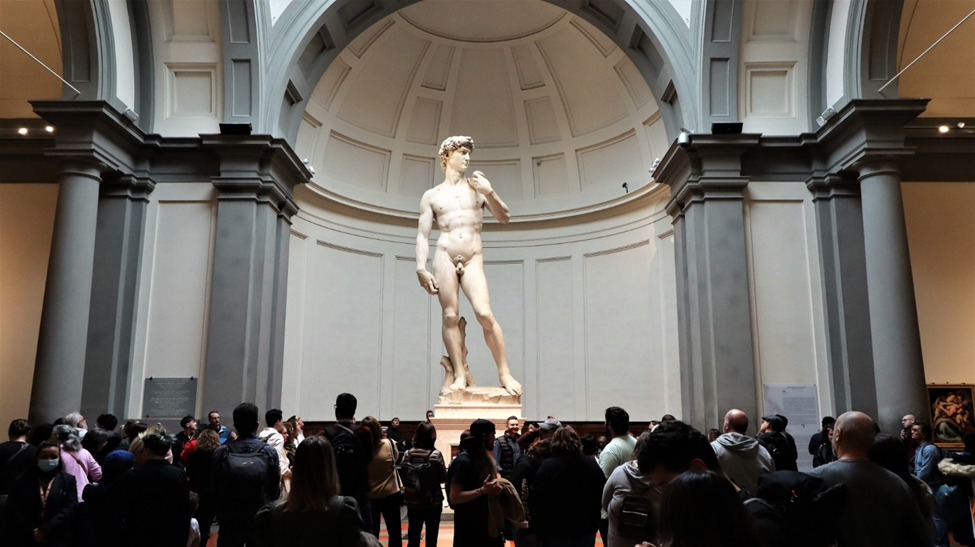
On May 15, 2023, in a landmark decision for Italy’s cultural heritage property protection, Florence’s Gallerie dell’Accademia prevailed in its legal battle to secure its image rights to Michelangelo’s iconic David sculpture.[1] The Gallerie initiated the lawsuit against the publishing house Edizioni Conde Nast, who appropriated the 16th-century sculpture’s likeness three years prior for the cover of GQ Italia in an “openly advertising key” and without acquiring a permit from the museum.[2], [3] The lawsuit raised questions over the ability of museums to legally claim image rights on artworks belonging to the public domain and whether commercial use of such images may undermine the preservation of collective identity through cultural heritage.

The image under scrutiny utilized a ‘lenticular cartotecnica’ mechanism to superimpose an image of the model Pietro Boselli onto that of David. This mechanism creates an illusion where, based on the viewer’s perspective, the image can seem to shift or morph from one to the other, thereby enabling both images to coexist in the same physical face.
Historical Background
In the 19th-century, the Gallerie dell’Academia underwent a progressive expansion, welcoming the addition of numerous artworks and paintings from monasteries and convents. To accommodate this growing collection of Renaissance art and to ensure better preservation, several renovations were carried out during this period. The crowning moment came in 1873 when the city decided to move Michelangelo’s David from the Piazza Della Signoria to the Gallerie dell’Academia to better preserve the work.[4] With this transfer, the Gallerie acquired the image rights to David, rights which did not exist at the time of the work’s creation in 1504. The Gallerie maintains the rights to David today regardless of the sculpture belonging to the cultural commons as part of the public domain.
A seeming paradox emerges when considering the notions of private ownership and public domain. Generally, a private body cannot claim exclusive rights over an image in the public domain; however, while they may not hold copyright over the original image, museums, galleries, and other art institutions do indeed possess and display physical copies of public domain images as part of their collections. Therefore, for commercial purposes such as advertising, usage of the image of Michelangelo’s David must be authorized.
This is not the first instance of the Gallerie dell’Accademia taking legal measures against the unauthorized use of images in its collection. Earlier in May, the gallery blocked the German toy company Ravensburger from creating puzzles featuring Leonardo da Vinci’s Vitruvian Man, imposing a fine of €1,500 per day from the start of the puzzle production in November of the previous year.[5]
Significance of the Ruling
The unprecedented significance of the David ruling is that it is the first of its kind to affirm the right to the image of cultural property as a reflection of the constitutional right to the protection of the collective identity of citizens.[6] Cecilie Hollberg, director of the Gallerie, praised the ruling as a “great achievement” for the institution, stating that it has affirmed a principle extending beyond the individual case. Italy’s Minister of Culture Gennaro Sangiuliano echoed this sentiment, expressing appreciation for the ruling and stating that “[i]t must be said that the use for commercial purposes for cultural goods must be paid while it must be free for images for educational and study purposes.”[7]
Understanding Italian Cultural Heritage Law
The Florence Court ruled that this unauthorized usage resulted in dual harm to the museum. The first harm was patrimonial, given that the museum was not paid the required usage fee for the asset. The court calculated the financial damage at 20,000 euros, based on the museum’s standard fees for similar uses. The second harm was non-pecuniary, pertaining to the manner in which David was depicted. This harm was quantified at 30,000 euros.[8] According to Finestra sull’Arte, the court found that the publisher “insidiously and maliciously” overlaid David’s visage with that of a Boselli, “thus debasing, obfuscating, mortifying, and humiliating the high symbolic and identity value of the work of art and enslaving it for advertising and editorial promotion purposes.” [9]
The court cited Article 2 of the Italian Constitution, which protects personal identity through the “inviolable rights of the person, both as an individual and in the social groups where human personality is expressed.” The article aims to ensure that the “fundamental duties of political, economic, and social solidarity” are fulfilled. The court then went on to cite Article 9, which safeguards the “artistic heritage of the nation,” in turn recognizing the importance of cultural heritage to Italian collective identity.
This ruling is in line with the Italian Cultural Heritage Code (Legislative Decree n. 42/204), formulated to underscore the significance of Italy’s cultural heritage to its national identity. This heritage spans various domains, including art, history, archeology, anthropology, archives, bibliographical libraries, museums, picture galleries, and art galleries (Id. arts. 2(2) & 10(2)(a)).[10] The code also closely regulates commercial activities in areas with archaeological, historical, artistic, or landscape value and forbids the disposition of certain properties from specified cultural domains (Id. art. 52).[11] Article 107 stipulates that public administrations in possession of cultural assets “may permit reproduction”; however, reproduction is not a guaranteed “right” for citizens but is instead a “gracious allowance” at the discretion of the owning body.[12] If reproduction rights are granted, the authority responsible for the cultural property determines the concession fees and payments associated with their property’s use (Id. art. 108).[13] Thereafter, the applicant must declare their intended use of the reproduction and contractually agree not to exceed certain conditions of use. Interpreting these regulations, it is apparent that despite the supposed establishment of a principle of free reproduction for cultural heritage that has entered the public domain, actual reproduction in Italy is far more stringent. It is invariably subject to prior authorization as well as the advance payment of a fee.[14]
Conclusion
The implications of the David decision reach far beyond the walls of museums and galleries, impacting the personal identity and collective consciousness of Italy. The Italian Constitution and Cultural Heritage Code emphasize the profound significance of Italy’s artistic history. Alongside the recognition of cultural heritage property’s significance comes the challenge of balancing public access and creative expression with the preservation and respect of these invaluable cultural assets. The David decision seems that the courts are continually taking on a more conservative stance on the ways in which cultural assets may be utilized. For the time being, the perspective of Italy’s Ministry of Culture is that these regulations set boundaries on commercial exploitation, ensure the appropriate use of culturally significant artworks, and facilitate the maintenance and preservation of cultural assets through revenues that the authoritative body receives.
About the Author
Kouros is a recent graduate from New York University’s College of Arts and Science with a BA in Art History and Political Science. Through his studies, Kouros has developed a keen interest in the intersection of law, politics, culture, and the arts. His current research interests focus on international art market regulations and copyright protection. Kouros is deeply committed to advancing legal education and advocacy for artists and art professionals so that those within the art world are adequately equipped and empowered to make well-informed decisions in an ever-evolving global landscape.
Suggested Readings
– Elaine Vekue, “Florence Museum Wins Copyright Lawsuit Over Image of ‘David,’” Hyperallergic (2023)
– Simone Aliprandi, “The Controversial Rules for the Reproduction of Cultural Heritage in Italian Law,” Medium (2022)
– Redazione, “David Image Must Be Authorized: Academy Gallery Wins Lawsuit against Publishing House,” Finestra sull’Arte (2023)
Bibliography:
Accademia Gallery. “Accademia Gallery History | From 1784 to Today.” https://www.accademia-tickets.com/accademia-gallery-history/.
Aliprandi, Simone. “The Controversial Rules for the Reproduction of Cultural Heritage in Italian Law.” Open GLAM (blog), June 17, 2022. https://medium.com/open-glam/the-controversial-rules-for-the-reproduction-of-cultural-heritage-in-italian-law-9ee552bc49ce.
Bandara, Pesala. “Museum Wins Lawsuit Over Photo of Michelangelo’s David.” PetaPixel, June 5, 2023. https://petapixel.com/2023/06/05/museum-wins-lawsuit-over-photo-of-500-year-old-sculpture-of-david/.
Cassady, Daniel. “Gallerie Dell’Accademia Wins Image Rights to Michelangelo’s ‘David’ – ARTnews.Com.” https://www.artnews.com/art-news/news/michelangelos-image-rights-1234670119/.
Dafoe, Taylor. “A Florence Museum Won Its Lawsuit Against a Publisher That Used a ‘Mortifying and Humiliating’ Image of Michelangelo’s ‘David.’” Artnet News, June 1, 2023. https://news.artnet.com/art-world/florence-gallerie-dellaccademia-wins-david-lawsuit-2313262.
Heah, Alexa. “Michelangelo’s ‘David’ Image Rights Belong To Gallery, Italian Court Rules – DesignTAXI.Com.” Design Taxi, June 1, 2023 https://designtaxi.com/news/423697/Michelangelo-s-David-Image-Rights-Belong-To-Gallery-Italian-Court-Rules/.
Libarary of Congress. “Italy: New Code of Cultural Heritage and Landscape.” Web page. Library of Congress, Washington, D.C. 20540 USA. https://www.loc.gov/item/global-legal-monitor/2016-05-20/italy-new-code-of-cultural-heritage-and-landscape/.
Redazione. “David Image Must Be Authorized: Academy Gallery Wins Lawsuit against Publishing House.” https://www.finestresullarte.info/en/news/david-image-must-be-authorized-academy-gallery-wins-lawsuit-against-publishing-house.
Redazione. “Florence Court OKs Image Rights for Works of Art – English.” ANSA.it, May 15, 2023. https://www.ansa.it/english/news/2023/05/15/florence-court-oks-image-rights-for-works-of-art_a35f25b1-6eef-4bd7-ac05-b7723b961b03.html.
Velie, Elaine. “Florence Museum Wins Copyright Lawsuit Over Image of ‘David.’” Hyperalergic, June 4, 2023. https://hyperallergic.com/826046/florence-museum-wins-copyright-lawsuit-over-image-of-david/.
Vézina, Brigitte, Deborah De Angelis. “The Vitruvian Man: A Puzzling Case for the Public Domain.” COMMUNIA Association (blog), March 1, 2023. https://communia-association.org/2023/03/01/the-vitruvian-man-a-puzzling-case-for-the-public-domain/.
Citations
- Redazione, David image must be authorized: Academy Gallery wins lawsuit against publishing house, https://www.finestresullarte.info/en/news/david-image-must-be-authorized-academy-gallery-wins-lawsuit-against-publishing-house. ↑
- Redazione, Florence court OKs image rights for works of art – English, ANSA.it (2023), https://www.ansa.it/english/news/2023/05/15/florence-court-oks-image-rights-for-works-of-art_a35f25b1-6eef-4bd7-ac05-b7723b961b03.html. ↑
- Elaine Velie, Florence Museum Wins Copyright Lawsuit Over Image of “David,” https://hyperallergic.com/826046/florence-museum-wins-copyright-lawsuit-over-image-of-david/. ↑
- Accademia Gallery, Accademia Gallery History | From 1784 to Today, https://www.accademia-tickets.com/accademia-gallery-history/. ↑
- Alexa Heah, Michelangelo’s ‘David’ Image Rights Belong To Gallery, Italian Court Rules – DesignTAXI.com, https://designtaxi.com/news/423697/Michelangelo-s-David-Image-Rights-Belong-To-Gallery-Italian-Court-Rules/. ↑
- Redazione, David image must be authorized: Academy Gallery wins lawsuit against publishing house, https://www.finestresullarte.info/en/news/david-image-must-be-authorized-academy-gallery-wins-lawsuit-against-publishing-house . ↑
- Taylor Dafoe, A Florence Museum Won Its Lawsuit Against a Publisher That Used a “Mortifying and Humiliating” Image of Michelangelo’s ‘David,’ Artnet News (2023), https://news.artnet.com/art-world/florence-gallerie-dellaccademia-wins-david-lawsuit-2313262 . ↑
- Pesala Bandara, Museum Wins Lawsuit Over Photo of Michelangelo’s David, PetaPixel (2023), https://petapixel.com/2023/06/05/museum-wins-lawsuit-over-photo-of-500-year-old-sculpture-of-david/. ↑
- Velie, supra note 3. ↑
- Library of Congress, Italy: New Code of Cultural Heritage and Landscape, Library of Congress, Washington, D.C. 20540 USA, https://www.loc.gov/item/global-legal-monitor/2016-05-20/italy-new-code-of-cultural-heritage-and-landscape/. ↑
- Id. ↑
- Simone Aliprandi, The controversial rules for the reproduction of cultural heritage in Italian law, Open GLAM (2022), https://medium.com/open-glam/the-controversial-rules-for-the-reproduction-of-cultural-heritage-in-italian-law-9ee552bc49ce. ↑
- De Angelis & Brigitte Vézina, The Vitruvian Man: A Puzzling Case for the Public Domain, COMMUNIA Association (2023), https://communia-association.org/2023/03/01/the-vitruvian-man-a-puzzling-case-for-the-public-domain/. ↑
- Aliprandi, supra note 12. ↑
Disclaimer: This article is for educational purposes only and is not meant to provide legal advice. Readers should not construe or rely on any comment or statement in this article as legal advice. For legal advice, readers should seek a consultation with an attorney.


You must be logged in to post a comment.