
Celestial Art Law: An Exploration of the Artistic Landscape and Laws Governing Art in Space
November 15, 2023
By Nikki Vafai[1]
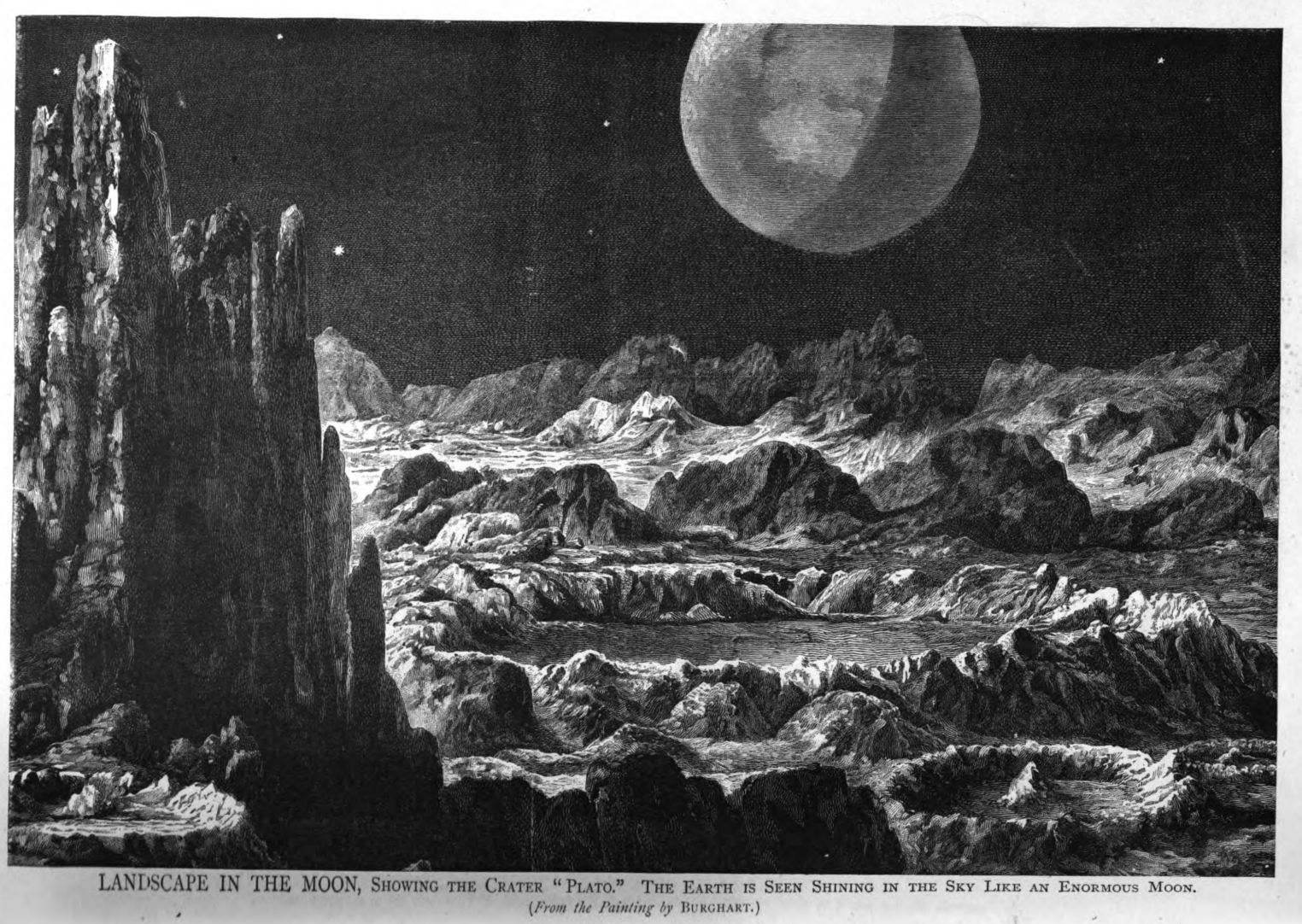
Since time immemorial, space has been a point of inspiration and perplexity to those who glance upon it. Artists have gazed up and depicted the removed yet piercingly luminous stars and enigmatic celestial bodies. With the advancement of technology, and as man entered this uncharted space, so too did art follow. If art exists everywhere in the public realm, from street art to the metaverse, why can there not be art in space? And there is. You might just not know about it yet.
How does art come to occupy space?[2] While space art exists on Earth and depicts space, there is also celestial art that exists beyond Earth, whether that be on other planets or modular systems.[3] As of present, the art beyond Earth has included art that is designed to be realized or fully formed in space, art that is sent to space attached to space hardware[4], art that is released into space, and art that is made in space.
We can categorize the types of art beyond Earth into three broader categories: art that is sent to modular systems beyond Earth, art that is destined for celestial bodies and their orbits, and art that is sent into interstellar space.[5] The law that governs art in space, artists’ intellectual property rights, and cultural heritage protection is quite ambiguous and many of the international principles were developed half a century ago. Therefore, the rules that attach are usually agreed upon in more narrow bilateral agreements called Memorandums of Understanding (MOUs) between states and parties. Meanwhile, the laws that do govern this space are continuously developing as more artists inspired by this frontier begin to explore innovative ways to incorporate art into scientific exploration and pursuits.
Art that is Sent to Modular Systems Beyond Earth
Modular systems are systems composed of detachable self-contained units. The International Space Station (the ISS) in use since 1998 is the principle modular space system and consists of many different modules called nodes that are shaped like canisters and spheres and which connect parts of the station. Astronauts live and work in the modules.[6] The ISS is a “co-operative programme” between Europe, the United States, Russia, Canada, and Japan.[7] The station, which is intended to remain in orbit until 2030, orbits around the earth every 90 minutes, as the member nations collaborate towards furthering scientific knowledge.[8]

Along with the more than 250 people who have been hosted on the ISS since its start, the ISS has also hosted numerous artworks as it has made its way to space. For example, part of the first private mission to the ISS, in an innovative enterprise, physicist Dr. Yasmin Maroz and artist Liat Segal collaborated in 2022 to create an artwork that was formed and could only exist in space.[9] Other artists who have sent their works aboard the ISS include the anonymous French street artist known as “Invader,” who in 2012 launched his first work called “Space 1” into the stratosphere on a high-altitude balloon. In 2015, Invader sent his second work into space—a mosaic piece entitled “Space2” which depicts a character from the 1970s arcade game Space Invader. Artist and former major league baseball player Micah Johnson, also made headlines
in 2021 after sending his digital work (and later NFT) “Why Not Me” into space.[10]
Moon Gallery
As astronauts explore new frontiers and beginnings, artists and galleries are contributing to forming this new culture by challenging concepts of identity, values, and existence. Another project that has garnered much attention is Moon Gallery. The gallery is expected to launch on the ISS in 2025 and is set to be the first permanent museum on the Moon.[11] The gallery will send 100 artifacts to the Moon in compact petri-dish like format.[12] Each of the 100 artifacts will be created by a different artist (list available here, including 14 American artists), the works being donated to the gallery and often made by the artists specifically for the gallery.
![Jessica Hunnicutt, “The Earth: Our Floating Gem.” Image via Moon Gallery. “... Showcase[s] the concept of stars surrounding a beautiful gem, just like Earth.”](https://i0.wp.com/itsartlaw.org/wp-content/uploads/2023/11/word-image-61334-2.jpeg?resize=600%2C600&ssl=1)
Modular systems usually have their own rules governed by the jurisdiction the parties agree to in the MoUs. The Intergovernmental Agreement extends jurisdiction to partner states over the elements they provide or register on the ISS.[14] This means that for American artists sending their work on the ISS, US intellectual property protections apply. However, given that this is a fairly new and continuously developing area, specific procedures to protect data and goods sent into space are still in progress and will be determined by the Space Station Multilateral Coordination Board.[15] The board is a cooperative body that comprises members from each of the ISS partner states.[16]
Art Destined for Celestial Bodies and their Orbits
Another instance of art and cultural heritage law in space is art on celestial bodies or art that is in transit in orbit. One of the most iconic and well-recognized memorabilia of American endeavors in space is the first footprint on the moon, left by astronaut and American hero Neil Armstrong. Current technology is not advanced enough to get close to the footprint and other heritage sites on the moon without compromising them, making cultural heritage protection laws on the moon and in space extremely vital.[17] However, footprints as well as other cultural heritage sites on the moon are provided limited legal protection under American law, particularly the One Small Step to Protect Human Heritage in Space (OSS2PHH) Act.[18] OSS2PHH passed in 2020 and it requires companies that are working with NASA on lunar missions to agree to be bound by otherwise unenforceable guidelines intended to protect American landing sites on the moon.[19] The act sets a protective perimeter around the Apollo lander, Neil Armstrong’s boot print, rover tracks, and other artifacts, labeling them as ‘keep out zones.’ OSS2PHH is a feat in the sense that it is the first law enacted by any nation that recognizes human heritage in space and protects historical sites on the moon’s surface. However, it does not specify penalties for violators, which leaves enforcement gaps, and it only applies to the U.S.[20] Additionally, heritage in space receives no protection under the current international cultural heritage framework, although OSS2PHH does include a non-binding suggestion for an international agreement protecting cultural heritage in space.[21] Fortunately, the Moon is not yet commonly traversed and thus, the footprints are for now at risk mainly from other space bodies, like asteroids, buying some time until international protections are hopefully drafted and imposed.
Artists’ Rights in Space
Van Hoeydonck’s Fallen Astronaut statue, the first official ‘art’ on the moon created in 1971, brings contemporary issues of art law and artist rights into sharp focus. Artist Van Hoeydonck was asked by Astronaut Dave Scott to create the sculpture to commemorate the deaths of fourteen U.S. astronauts and Soviet cosmonauts. According to Scott, he and Hoeydonck had agreed that the name of the sculptor would remain anonymous, in order to adhere to NASA’s policies on commercial exploitation of the space program.[22] Hoeydonck on the other hand, denied the existence of such an agreement and planned to sell replicas of the statue.[23] Van Hoeydonck ultimately forewent selling the replicas due to legal pressure; however, the sculpture, which should have been a symbol of artistic and human feat, became a token of the scandal. To this date, the Fallen Astronaut statue remains the only sculpture on the moon.[24] The incident raises concerns regarding the rights of artists who rely on scientific agencies and organizations to send their work to celestial bodies.

Laws that apply to celestial bodies most likely also apply to their orbit. Art that goes into orbit is among the most debated forms of celestial art. One controversy involved artist Trevor Paglen’s Orbital Reflector, a reflective and nonfunctional satellite that launched on SpaceX in 2018.[25] The satellite was intended to be the first satellite sent into orbit as solely an “artistic gesture.”[26] Astronomers claimed that the reflectiveness of the sculpture would obstruct scientific observation.[27] On the other hand, many artists defended Paglan’s artistic venture into orbit. One such artist who voiced his favor for the venture was a Berlin-based Mexican celestial artist who goes by the name Nahum. Nahum is also the founder of KOSMICA institute (Germany, 2011) —a space organization dedicated to the cultural and poetic aspects of space exploration. Nahum defended Paglan’s art, asking why scientists should have “unlimited reign” in space and why artists and others can’t “have equal access to this new frontier.”[28] This dispute points out the occasional clash between scientists and artists regarding access to space and whether art that lacks functional or scientific purpose has inherent value.
Who controls space traffic and which objects are allowed to orbit Earth?
There are a number of treaties that govern space traffic. The Treaty on Principles Governing the Activities of States in the Exploration and Use of Outer Space, including the Moon and other Celestial Bodies declares space to be “free for exploration and use by all States without discrimination of any kind…on a basis of equality and in accordance with international law.”[29] Signed by 126 signatories, this treaty is one of the most significant treaties forming international space law and it provides a framework regarding international activity and state liability in space. However, due to the development of technology and the increasing frequency with which art is exported or created beyond earth, the international regime does not necessarily govern the complexities that may come from launching art into space. Instead, the rules that attach are usually created under agreement with the country that is launching art into space and under such agreements, the launching country is typically liable for any damages that occur. The Convention on International Liability for Damages Caused by Space Objects expands international state liability to include damage resulting from space objects.[30] The rapid velocity in the orbit means that “even a tiny fleck of paint, broken off from a space object, can cause damage.”[31]
Art that is Sent into Interstellar Space
Interstellar space is the area between the stars. In 2012 … as part of the groundbreaking Voyager Interstellar Mission, NASA spacecraft Voyager 1 launched into interstellar space—a territory previously uncharted—in August of 2012.[32] In an attempt to share the diversity and culture of Earth with extraterrestrials, the Golden Record, curated by a team directed by Dr. Carl Sagan, was sent off on Voyager 1. The Golden Record is a 12-inch gold-plated copper disk that includes audio greetings in 55 languages, pictures of people and places, and the music of Beethoven and Chuck Berry.[33] A second spacecraft, Voyager 2, was launched into interstellar space in November of 2018 and carried with it an identical, but 2nd edition Golden Record.[34] Both Voyager 1 and Voyager 2 continue to fly in space.

The Outer Space Treaty of 1967 established that States are responsible for supervising citizens’ actions and that nongovernmental entities in space require authorisation from the relevant State. Space is considered to be outside of the U.S. and so “goods manufactured, property owned, and activities conducted in space” are subject to U.S. export laws.[35] Therefore, art traveling in space may require an export license issued by the U.S. Department of Commerce.[36]
Similar to art that orbits celestial bodies, should debris from art in interstellar space cause damage, the implication of the Convention on International Liability for Damages Caused by Space Objects is that the launching state is liable for damages.
Conclusion
The legal landscape of art law in space is avant guard and currently neither addresses the rights of artists nor protects cultural heritage sufficiently. With all that is going on on Earth, we are certainly not there yet on many levels. As scientific exploration in space unfolds, artists eye the space and contribute their perspective to discussions regarding ownership rights in space, human heritage, our values and identity, and the ethics of exploration. Predictably such PR magnates like Jeff Koons have thought of sending their art into space perhaps leading to the beginnings of the commodification of space and celestial art.
Suggested Readings and Sources
- Agreement Governing the Activities of States on the Moon and other Celestial Bodies, United Nations Office for Outer Space Affairs, available at https://www.unoosa.org/pdf/gares/ARES_34_68E.pdf.
- Arthur Woods, Art to the Stars, Ars Astronautica (March 2019), available at https://www.arsastronautica.com/art_to_the_stars.php#link8.
- Convention on International Liability for Damage Caused by Space Objects, United Nations Office for Outer Space Affairs, available at https://www.unoosa.org/pdf/gares/ARES_26_2777E.pdf.
- Convention on Registration of Objects Launched into Outer Space, United Nations Office for Outer Space Affairs, available at https://www.unoosa.org/pdf/gares/ARES_29_3235E.pdf.
- Greg Uyeno, Moon exploration site preservation remains uncertain as Artemis era begins, Space.com (August 2022), available at https://www.space.com/moon-heritage-preservation-artemis-accords.
Hannah Hotovy, NASA and Art: A Collaboration Colored with History, NASA (April 2017), available at https://www.nasa.gov/feature/nasa-and-art-a-collaboration-colored-with-history.
- International Space Station legal framework, The European Space Agency, available at https://www.esa.int/Science_Exploration/Human_and_Robotic_Exploration/International_Space_Station/International_Space_Station_legal_framework.
- Justin St. P. Walsh, ‘Protection of humanity’s cultural and historic heritage in space’, 28 Space Policy 234 (2012), available at https://digitalcommons.chapman.edu/cgi/viewcontent.cgi?article=1000&context=art_articles.
- Lucas Lixinski, MM Losier and Hanna Schreiber, ‘Envisioning a Legal Framework for Outer Space Cultural Heritage’, 45(1) Journal of Space Law 1 (2021), available at https://deliverypdf.ssrn.com/delivery.php?ID=061081024013117027067021118009108014032053053031010004101023100030126020026092072124054054025045018036026021070126094112116015018000070045050023007071108081004006093050076009017076070028004070102068126083103091117022027064106096067001028001026024093031&EXT=pdf&INDEX=TRUE.
- Space Law, United Nations Office for Outer Space Affairs, available at https://www.unoosa.org/oosa/en/ourwork/spacelaw/index.html.
- The Archive of Astronautical Art, available at https://www.astronautical.art/group.
- Treaty on Principles Governing the Activities of States in the Exploration and Use of Outer Space, including the Moon and Other Celestial Bodies, United Nations Office for Outer Space Affairs, available at https://www.unoosa.org/oosa/en/ourwork/spacelaw/treaties/outerspacetreaty.html.
- United Nations Treaties and Principles on Outer Space, United Nations Office for Outer Space Affairs, available at https://www.unoosa.org/pdf/publications/STSPACE11E.pdf.
About the Author
Nikki Vafai is a law student at the University of Maryland Carey School of Law and holds a B.A. in International Affairs and Art History from the George Washington University. Nikki was a 2022 fall legal intern at the Center for Art Law.
This article has been written under the review and guidance of Dr. Marlène Michèle Losier, Attorney at Law and Principal at Losier Gonzalez, PLLC. Dr. Losier is a legal expert in international law and has extensive experience advising private and public clients on laws relating to culture and space policies. She is Director and Chair of the International Space Law Committee of IAF Member Organization Space Renaissance International, Inc., as well as Lead Heritage Counsel for IAF Member Organization For All Moonkind, Inc. Most recently, Dr. Losier served on the 62nd session of the Legal Subcommittee of the United Nations Committee on the Peaceful Uses of Outer Space.
Sources:
- The author would like to thank attorney Marlène Michèle Losier for inspiring and consulting on this article. ↑
- The article will use the term ‘space’ to refer to outer space, not space in the metaphysical sense. ↑
- The article will use the term ‘space art’ to refer to art that exists on Earth but depicts space, while the term ‘celestial art’ will be used to distinguish art that is specifically in space. ↑
- Space hardware are the tools, equipment, and machinery used in space, including satellites and rocket launchers ↑
- Arthur Woods, Art to the Stars, Ars Astronautica (Mar. 2019), https://www.arsastronautica.com/art_to_the_stars.php#link8. ↑
- What is the International Space Station?, NASA (Oct. 2020), https://www.nasa.gov/audience/forstudents/5-8/features/nasa-knows/what-is-the-iss-58.html. ↑
- Elizabeth Howell, International Space Station: Facts about the orbital laboratory, space.com (Aug. 24, 2022), https://www.space.com/16748-international-space-station.html. ↑
- Id. ↑
- Impossible Object, Rakia Mission, available at https://www.eng.rakiamission.co.il/arts/impossible-object (last visited Mar. 23, 2022). ↑
- See Lori Grisham, Street art ‘invades’ International Space Station, USA TODAY (Mar. 12, 2015), https://www.usatoday.com/story/tech/2015/03/12/invader-artist-space-station/70221962/ (explaining that Johnson’s work, ‘Why Not Me,’ depicts a young black boy named Aku who dreams of becoming an astronaut on the ISS). See also Taiyler S. Mitchell, From the big league to the big screen: Former MLB player talks about his transition to digital art and film, Insider (Aug. 6, 2021) https://www.insider.com/former-mlb-player-tells-us-about-transition-digital-art-film-2021-8 (discussing Johnson’s desire to create representation and inspire a new generation through ‘Why Not Me’). ↑
- Moon Gallery: the first museum in space, Next Nature (Mar. 7, 2022), https://nextnature.net/magazine/story/2022/moon-gallery. ↑
- Id. ↑
- The European Space Agency, International Space Station legal framework, available at https://www.esa.int/Science_Exploration/Human_and_Robotic_Exploration/International_Space_Station/International_Space_Station_legal_framework (last visited Mar. 23, 2022). ↑
- International Space Station Intergovernmental Agreement Art. 5, Jan. 29, 1998, 1998 U.S.T. LEXIS 303. ↑
- The European Space Agency, International Space Station legal framework, available at https://www.esa.int/Science_Exploration/Human_and_Robotic_Exploration/International_Space_Station/International_Space_Station_legal_framework (last visited Mar. 23, 2022). ↑
- The Space Station Multilateral Coordination Board holds its meetings in various countries including Japan and the U.S. ↑
- Greg Uyeno, Moon exploration site preservation remains uncertain as Artemis era begins, Space.com (Aug. 26, 2022), https://www.space.com/moon-heritage-preservation-artemis-accords. ↑
- Michelle L.D. Hanlon, ‘One Small Step’ Act Encourages Protection of Human Heritage in Space, HowStuffWorks (Jan. 12, 2021), https://science.howstuffworks.com/us-law-protect-lunar-landing-sites.htm. ↑
- 116 P.L. 275, 134 Stat. 3358. ↑
- See 116 P.L. 275, 134 Stat. 3358. ↑
- Dr. Marlène Michèle Losier, Defining Heritage in the Space Age, The United Nations Office for Outer Space Affairs https://www.unoosa.org/documents/pdf/copuos/lsc/2019/tech-10E.pdf. ↑
- Corey S. Powell and Laurie Gwen Shapiro, The Sculpture on the Moon, Slate (Dec. 16, 2013), https://www.slate.com/articles/health_and_science/science/2013/12/sculpture_on_the_moon_paul_van_hoeydonck_s_fallen_astronaut.html. ↑
- Id. ↑
- Id. ↑
- Nicole Miller, Trevor Paglen’s ‘Orbital Reflector’ Asks Who Gets to Exercise Power Over our Planetary Commons, Frieze (Jan. 24, 2019) https://www.frieze.com/article/trevor-paglens-orbital-reflector-asks-who-gets-exercise-power-over-our-planetary-commons. ↑
- Marina Koren, Space Art Is Causing a Ruckus Among Astronomers, The Atlantic (Aug. 29, 2018), https://www.theatlantic.com/science/archive/2018/08/orbital-reflector-trevor-paglen-space-art-humanity-star/568858/. ↑
- Id. ↑
- Devon Van Houten Maldonado, The artworks floating above the Earth, BBC (Dec. 14, 2018), https://www.bbc.com/culture/article/20181214-the-artworks-floating-above-the-earth. ↑
- Treaty on Principles Governing the Activities of States in the Exploration and Use of Outer Space, including the Moon and other Celestial Bodies, Art. 3, 1967 U.S.T. LEXIS 613. ↑
- Joel A Dennerley, State Liability for Space Object Collisions: The Proper Interpretation of ‘Fault’ for the Purposes of International Space Law, 29 European Journal of International Law 281. ↑
- Id. ↑
- Solar System Exploration, Voyager 1, available at https://solarsystem.nasa.gov/missions/voyager-1/in-depth/ (last visited Jul. 15, 2023). ↑
- Jet Propulsion Laboratory, The Golden Record, available at https://voyager.jpl.nasa.gov/golden-record/ (last visited Jul. 15, 2023). ↑
- Id. ↑
- Arthur M. Dula, Export Controls Affecting Space Operations, 51 J. Air L. & Com. 927, 935 (1986). ↑
- Bureau of Industry and Security Office of Exporter Services, Frequently Asked Questions to Export Licensing Requirements, available at https://www.bis.doc.gov/index.php/documents/pdfs/286-licensing-faq/file (last visited Aug. 5, 2023). ↑
Disclaimer: This article is for educational purposes only and is not meant to provide legal advice. Readers should not construe or rely on any comment or statement in this article as legal advice. For legal advice, readers should seek a consultation with an attorney.


You must be logged in to post a comment.