• About
    • Mission
    • Team
    • Boards
    • Mentions & Testimonials
    • Institutional Recognition
    • Annual Reports
    • Current & Past Sponsors
    • Contact Us
  • Resources
    • Article Collection
    • Podcast: Art in Brief
    • AML and the Art Market
    • AI and Art Authentication
    • Newsletter
      • Subscribe
      • Archives
      • In Brief
    • Art Law Library
    • Movies
    • Nazi-looted Art Restitution Database
    • Global Network
      • Courses and Programs
      • Artists’ Assistance
      • Bar Associations
      • Legal Sources
      • Law Firms
      • Student Societies
      • Research Institutions
    • Additional resources
      • The “Interview” Project
  • Events
    • Worldwide Calendar
    • Our Events
      • All Events
      • Annual Conferences
        • 2026 Art Law Conference
        • 2025 Art Law Conference
        • 2024 Art Law Conference
        • 2023 Art Law Conference
        • 2022 Art Law Conference
        • 2015 Art Law Conference
  • Programs
    • Visual Artists’ Legal Clinics
      • Art & Copyright Law Clinic
      • Artist-Dealer Relationships Clinic
      • Artist Legacy and Estate Planning Clinic
      • Visual Artists’ Immigration Clinic
    • Summer School
      • 2026
      • 2025
    • Internship and Fellowship
    • Judith Bresler Fellowship
  • Case Law Database
  • Log in
  • Become a Member
  • Donate
  • Log in
  • Become a Member
  • Donate
Center for Art Law
  • About
    About
    • Mission
    • Team
    • Boards
    • Mentions & Testimonials
    • Institutional Recognition
    • Annual Reports
    • Current & Past Sponsors
    • Contact Us
  • Resources
    Resources
    • Article Collection
    • Podcast: Art in Brief
    • AML and the Art Market
    • AI and Art Authentication
    • Newsletter
      Newsletter
      • Subscribe
      • Archives
      • In Brief
    • Art Law Library
    • Movies
    • Nazi-looted Art Restitution Database
    • Global Network
      Global Network
      • Courses and Programs
      • Artists’ Assistance
      • Bar Associations
      • Legal Sources
      • Law Firms
      • Student Societies
      • Research Institutions
    • Additional resources
      Additional resources
      • The “Interview” Project
  • Events
    Events
    • Worldwide Calendar
    • Our Events
      Our Events
      • All Events
      • Annual Conferences
        Annual Conferences
        • 2026 Art Law Conference
        • 2025 Art Law Conference
        • 2024 Art Law Conference
        • 2023 Art Law Conference
        • 2022 Art Law Conference
        • 2015 Art Law Conference
  • Programs
    Programs
    • Visual Artists’ Legal Clinics
      Visual Artists’ Legal Clinics
      • Art & Copyright Law Clinic
      • Artist-Dealer Relationships Clinic
      • Artist Legacy and Estate Planning Clinic
      • Visual Artists’ Immigration Clinic
    • Summer School
      Summer School
      • 2026
      • 2025
    • Internship and Fellowship
    • Judith Bresler Fellowship
  • Case Law Database
Home image/svg+xml 2021 Timothée Giet Our articles image/svg+xml 2021 Timothée Giet Art law image/svg+xml 2021 Timothée Giet Confessions of an Artist and a Lawyer: Practicing Art Law, One Trial and Painting at a Time
Back

Confessions of an Artist and a Lawyer: Practicing Art Law, One Trial and Painting at a Time

June 19, 2018

By Stephanie Drawdy 

When I chose the legal profession as a career, it was so that I could feed a burning intellectual interest in the law. An introductory political science course in high school piqued my interest in the process of government and politics. From that time, I felt a strong pull towards being a law school graduate; I believed (rightly or not) that I would then have earned a “legitimate” voice in our society by virtue of being, not just a creative thinker, but also a critical thinker.

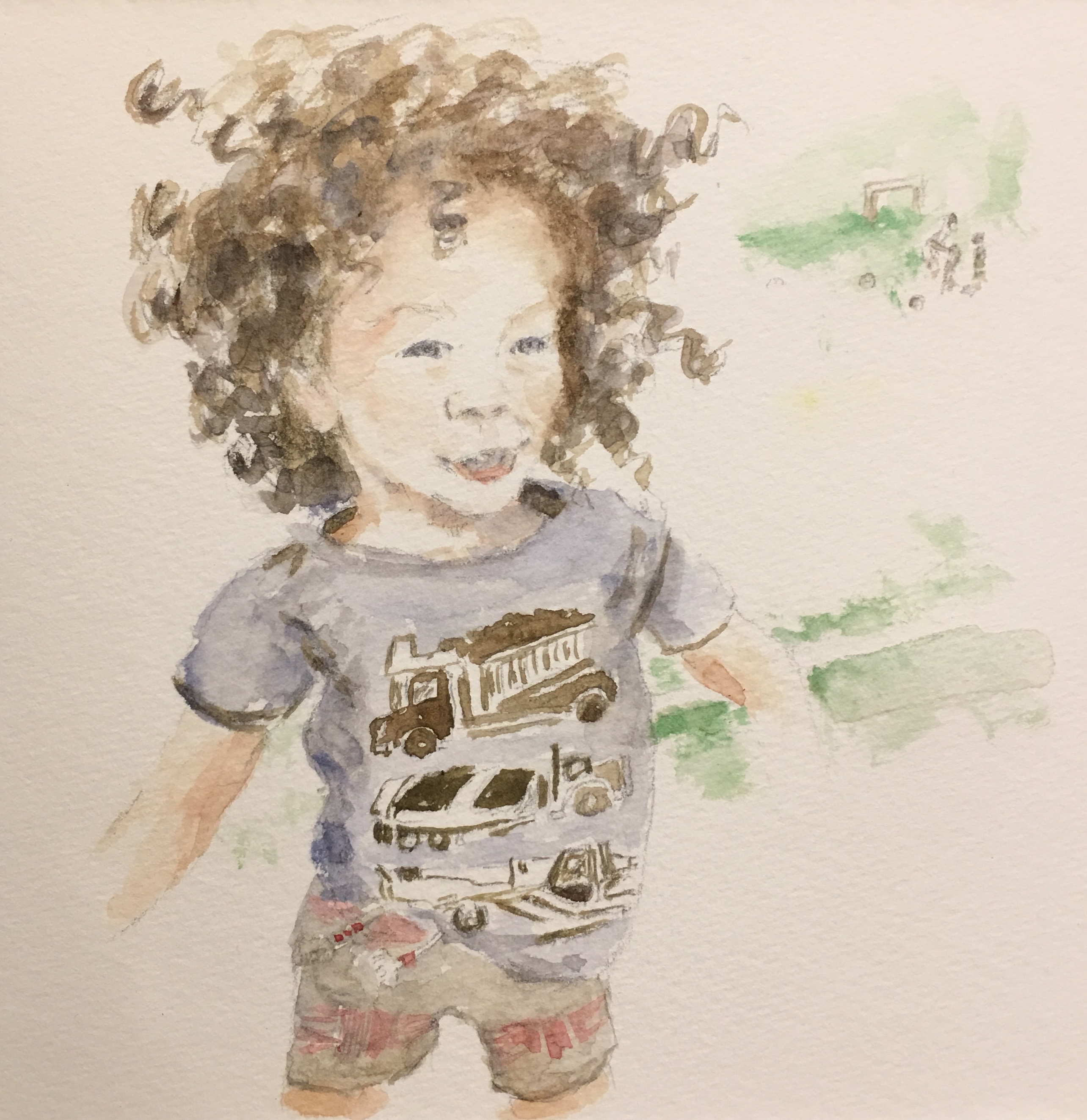
I also became a lawyer so that I could afford to be a self-sufficient painter. My “Grand Plan”: practice law to pay the bills, practice painting to feed my soul. To my mind, I had stumbled upon a treasure trove when I learned during my time at New York Law School that an art law course was offered, taught by Judith Bressler; it was one of the best courses in my law school experience. Up to that point, my adoration of art and my interest in law were segregated; now, I saw the potential for both interests to live in harmony.
IMG_1027

The ecosystem of art law has many facets. It includes some topics that can be rather dry, contracts for example; others drip with intrigue, Nazi-looted art being the most obvious. During my studies at London’s Institute of Art and Law (IAL), I was introduced to a fuller breadth of the topics residing under the umbrella of art law: restitution and repatriation, de-accessioning of art, protection, and censorship of street art, and the list goes on.  

I am often impressed by the multitude and magnitude of art law topics that present themselves if you are looking for them. At an IAL Study Form in March, IAL Assistant Director, Alexander Herman, discussed a recent news item about an 18th-Century Panini painting that went missing from London’s Orleans House Gallery fifty years ago. The Gallery hired a painter, Fred Fordham, to re-create the painting from a black-and-white photograph and existing versions of the painting.  The issue raised was whether Fordham would have a right to copyright in this derivative work under UK law. To be eligible, Fordham would need to show his painting was an “original work of skill, labour and judgement; minor alterations that do not substantially alter the original would not qualify.” Since the composition of both paintings is the same, did Fordham merely re-create the Panini with “minor alterations”? Or did Fordham make choices that “substantially” altered from the original? Would his choice of palette be deemed a substantial alteration? Or would Fordham’s reference to existing versions make his pigment choices a “minor” alteration?

The questions raised regarding the Panini reproduction are examples of the many issues that emerge in art law that cause me to ask, would I have the same passion to answer these questions if I was not both a painter and an attorney? Since I started down this dual road of artist/attorney, I have met more than once with self-imposed doubt over my choice to practice law and not give myself fully to painting. As the adage goes, “creativity takes courage.” Thank you, Mr. Matisse. I have known many courageous, full-time artists who do well, and their success has always triggered me to question whether I am authentically a painter since I wear the proverbial hat of a lawyer as well.

My legal work thus far has covered a broad range of areas, few of which have dealt with art: reinsurance, director/officer liability, and construction defects are some examples. As a litigator, my week-to-week includes researching and writing memoranda, deposing witnesses for hours until they admit to their wrongdoing, disagreeing with opposing counsel over most things, preparing for mediation, preparing for trial, preparing for appeals, and then explaining to clients why their case is taking so much longer to resolve than they prefer. Like many other law school graduates I know, our work affords a financial benefit, but sometimes the legal climate leaves our souls panting.  My nighttime/weekend work as a painter is what waters my desert, rehabilitating me as I sketch and paint.

At brunch recently, a law school friend and I discussed our careers as attorneys, and the artistic pull we had each felt since childhood. We were continuing a long-running discussion of Elle Luna’s book, The Crossroads of Should and Must, which encourages self-awareness about your career and your calling. Ms. Luna, whose father was an attorney, was rejected from every law school she applied to; she credits these rejections as the impetus for her to realize both her calling and career as an artist. My friend, whose calling is to write, left his corporate job for a season to pursue writing exclusively; after about a year of wrestling with the day-to-day of sitting with his words, he has now re-entered corporate life in a position that he believes will provide an opportunity to incorporate his calling into his career. When the topic turned to my ability to sit with and push my paintings to the next level, he pointedly asked: are you perhaps practicing law and embracing art law to avoid a true call to paint full-time? The grit of his question resonated with me.

IMG_0839

I have finally arrived at the answer… no. I have grown to appreciate that my choices have not been missteps. Like T.S. Eliot whose career as a banker gave him the freedom to write and Philip Glass whose work as a plumber facilitated his work as a composer, so I have the freedom to paint because I practice law, whether that includes cases about art or not. My voice as an artist is also arguably amplified by my position as a lawyer; while it is easy to discount an artist’s contribution to, say a museum board, because artists “by nature are rule breakers” who may jeopardize the institution they should be serving, those in authority are less likely to dismiss an attorney who also happens to be an artist from a position in such an institution.

What’s more, my career (the law) and my calling (the painting) actually serve to complement one another. My analysis of the legal query surrounding the Panini reproduction is better because I am a painter; conversely, my paintings are better for having analyzed legal issues as that stimulates me on another level that painting does not reach. Because I travel this dual road, my mental eye is more keenly attuned and unified for each task ahead, be it a legal brief or a watercolor.

About the Author:  Stephanie Drawdy is licensed to practice law in New York and South Carolina. She holds a B.A. in Studio Art and Political Science from the College of Charleston, a J.D. from New York Law School, and a Diploma in Arts Profession Law and Ethics from London’s Institute of Art and Law.  She has studied painting under classical figurative artists from the New York Academy of Art, Studio Incamminati, Academy of Art College, McCormack Studios, and the New York Art Students League. Her paintings are largely representational and include landscapes, still life, and the figure. She can be found on Instagram under stephaniedrawdyart and can be contacted at stephaniedrawdyart@gmail.com.

Disclaimer: This article is for educational purposes only and is not meant to provide legal advice. Readers should not construe or rely on any comment or statement in this article as legal advice. For legal advice, readers should seek a consultation with an attorney.

Post navigation

Previous Leaving a Mark: Artistic Expression, New Media in Protest and Law
Next Art Hygiene Law: Artists Who Use Unusual Materials and Viewers Who “Take In” The Art

Related Art Law Articles

Center for Art Law Corporate Art
Art law

Art as an Office Asset: Motivations and Collection Practices in Corporate Settings

August 31, 2026
Center for Art Law Greece
Art law

Greece’s First Comprehensive Legal Framework to Combat Forgeries: Art Market Transparency and Accountability

August 30, 2026
Center for Art Law at an Art Fair Focus
Art lawLegislative efforts

A Case for the Art Market Integrity Act

August 30, 2026
Center for Art Law
August 2026 Summer Promo (2)

Get your leg up on art law

Just in time for 2026-2027

Become a member and access unlimited articles, our Case Law Database, event archives, and exclusive member pricing on all upcoming events.

Learn MORE
Immigration Guide for Artists 2026 Cover Page

Immigration Guide for Artists

Check out the 2026 overview of U.S. immigration pathways available to artists.

Learn MORE
Center for Art Law

Follow us on Instagram for the latest in Art Law!

Did you know the portrait of George Washington on Did you know the portrait of George Washington on the $1 bill traces back to a painting by Gilbert Stuart? 

As the US celebrates its 250th anniversary, one of our latest articles explores how Stuart fought to control the reproduction of his Washington portraits at a time when U.S. copyright law did not yet protect paintings. 

📚 Read the full article by Hannah Gadway at the link in our bio! 

#ArtLaw #America250 #GilbertStuart #GeorgeWashington #CopyrightLaw
The culture of dupes is continuing to plague artis The culture of dupes is continuing to plague artists. Those like Lauren Horn and Maggie Stephenson have been victims of others creating copycats of their work and selling it as their own.

Read KimberMarie's new article to understand the impact this issue has on artists and other communities along with ways to push back against the problem.

📚 Check out the full article using the link in our bio!!

#centerforartlaw #artlaw #legal #legalresearch #artlawyer #dupes #counterfeits #artistrights #artists
Any interest in volunteering to help work with our Any interest in volunteering to help work with our Nazi-Era Looted Art Restitution Cases Project? Listen to Natasha describe her work and the cases she's had the chance to study.

📚 Click the link in our bio to learn more about the project and how to join!

#centerforartlaw #artlaw #restitution #art #museums #artlawyer #legal #legalresearch
Who owns Hollywood’s past? 🎬📸 A thrifted box of 1 Who owns Hollywood’s past? 🎬📸

A thrifted box of 1930s photographs of actress Marion Davies opens up a much bigger question: who owns the image and the rights behind it? 

One of our latest articles explores the story behind these photographs, including MGM studio stamps, Davies’s handwritten dedication, and the distinction between owning a physical photograph and owning the intellectual property rights in its image.

📚To read the full story by Irina Tarsis, head to the link in our bio

https://itsartlaw.org/art-law/who-owns-hollywoods-past/ 

#ArtLaw #CopyrightLaw #MarionDavies #HollywoodHistory #CulturalHeritage
Join us on September 18th for an Art and Law Works Join us on September 18th for an Art and Law Workshop on fiduciary duties within artist-dealer relationships with speaker Aaron Haines.

This workshop will explore the fiduciary duties of gallerists toward their clients and will clarify the distinctions between contract-based relationships and the broader fiduciary obligations gallerists owe, including transparency, prudence, and the prohibition of undisclosed profits. It will also examine common conflicts of interest in the art world and how these fiduciary duties come into play. 

🎟️ Grab your tickets today using the link in our bio!

#centerforartlaw #artlaw #artlawyer #legalresearch #legal #workshop #artistrights #artist #artdealer
For centuries, copying has been an integral part o For centuries, copying has been an integral part of Chinese artistic practice, blurring the line between homage and forgery. Many museums are at a loss for how to evaluate works that challenge Western notions of authenticity.

Through the ongoing debate over the MET’s Riverbank painting, our recent article examines how institutional interests and market value continue to shape perceptions of authenticity.

📚 Click the link in our bio to read the complete article by Lena Rohde!

#centerforartlaw #artlaw #chineseart #zhangdaqian #changdaichien #artforgery #authenticity #museumlaw #arthistory #provenance #artmarket
The rapid rise of digital reconstruction has trans The rapid rise of digital reconstruction has transformed how cultural heritage is documented and preserved, particularly in regions affected by conflict. As 3D models and digital archives become more common, they also raise questions about ownership and cultural self-determination.

In her article, Jacqueline Koutrodimos-Lewis examines the preservation of Syria's cultural heritage. More specifically, how digital reconstructions can both protect endangered sites and act as a tool for erasure when local communities are excluded from the process.

📚 Click the link in our bio to read the complete article by Jacqueline Koutrodimos-Lewis!

#centerforartlaw #artlaw #culturalheritage #digitalheritage #3Dreconstruction #provenance #archaeology #culturalproperty #digitization #palmyra #museumlaw
Recently our intern Hannah Gadway was able to go t Recently our intern Hannah Gadway was able to go to the Beaverbrook Art Gallery in New Brunswick. This gallery was included in a law suit between Lord Beaverbrook's Estate and a foundation he had established during his life. 

📚 See more about this case using the link in our bio!

#centerforartlaw #artlaw #artresearch #estates #artist #foundation #gallery
Two sculptures have finally returned to Santiago d Two sculptures have finally returned to Santiago de Compostela after seventy-two years.

Our recent article examines the Spanish Supreme Court's decision to return the Abraham and Isaac sculptures to Santiago de Compostela, and the pivotal role that object identification played in resolving the dispute.

📚 Click the link in our bio to read the complete article by Lucas Güimil Valdés!

#centerforartlaw #artlawyer #artlaw #culturalheritage #restitution #provenanceresearch #spain #culturalproperty
Our recent article revisits Professor Matthias Wel Our recent article revisits Professor Matthias Weller's presentation introducing Germany's new Court of Arbitration for Nazi-Looted Cultural Property. It explores how the new tribunal differs from the former Limbach Commission and what its procedures, jurisdiction, and binding decisions could mean for future restitution claims.

📚 Read the full article by Savannah Weiler and Amanda Buonaiuto at the link in our bio!

#centerforartlaw #artlawyer #artlaw #culturalproperty #nazilootedart #restitution #provenanceresearch #culturalheritage #alternativedisputeresolution
It’s August 🔥 Think Art Law. World Cap 2026 is ove It’s August 🔥 Think Art Law. World Cap 2026 is over. For us it will be remembered for Haaland Memes and $25 MILLION lawsuit filed by environmental artist Robert Wyland against FIFA for painting over the iconic 1999 downtown Dallas mural, Whaling Wall 82.* Summer Internships at the Center are winding down. Oh the places we have been together (from UN to MoMA across the US, Canada and the UK). The 2025-2026 Judith Bresler Fellowship is complete and how! and our new fellow is eager to hit the ground running.

As we move into the final stretch of summer, the reality sets in: little and big fires are everywhere and juggling so many balls or making sense of the everyday is getting increasingly impossible. But before we collapse into off-season, we want to thank you for being part of our community. Whether you were here in person, joining us online, or thinking about art and the law from afar, we can’t wait to see what you’ll create, challenge, and defend come fall. Our complements and heartfelt thanks to our Summer Team for everything they’ve accomplished over these months and invested in our future: for staying on track, for research and rigorous work on articles and databases, for genuine team building, and for pushing all of us to grow. And here’s what we’ve learned: when the real world gets too much, look at art. Play ball. Have a hydration break. These are necessities that keep us sane and running overtime. 

📚 Read the full newsletter and become a subscriber using the link in our bio!

#centerforartlaw #artlaw #legalresearch #legal artlawyer
What inspires a career in art and cultural propert What inspires a career in art and cultural property law?

In our latest interview, Professor Matthias Weller shares how his academic and professional journey led him to become one of the leading voices in the restitution field. He also discusses Germany's new Court of Arbitration for Nazi-Looted Cultural Property and what this landmark development could mean for the future of restitution.

📚 Read the full interview using the link in our bio! 

#centerforartlaw #artlaw #legalreserach #legal #art #lawyer #restitution #artcrime #arbitration #germany
  • About the Center
  • Contact Us
  • Newsletter
  • Upcoming Events
  • Internship
  • Case Law Database
  • Log in
  • Become a Member
  • Donate
DISCLAIMER

Center for Art Law is a New York State non-profit fully qualified under provision 501(c)(3)
of the Internal Revenue Code.

The Center does not provide legal representation. Information available on this website is
purely for educational purposes only and should not be construed as legal advice.

TERMS OF USE AND PRIVACY POLICY

Your use of the Site (as defined below) constitutes your consent to this Agreement. Please
read our Terms of Use and Privacy Policy carefully.

© 2026 Center for Art Law
Loading Comments...

You must be logged in to post a comment.