
DAOs in the Art World: From the U.S. Constitution to NFTs
May 9, 2023
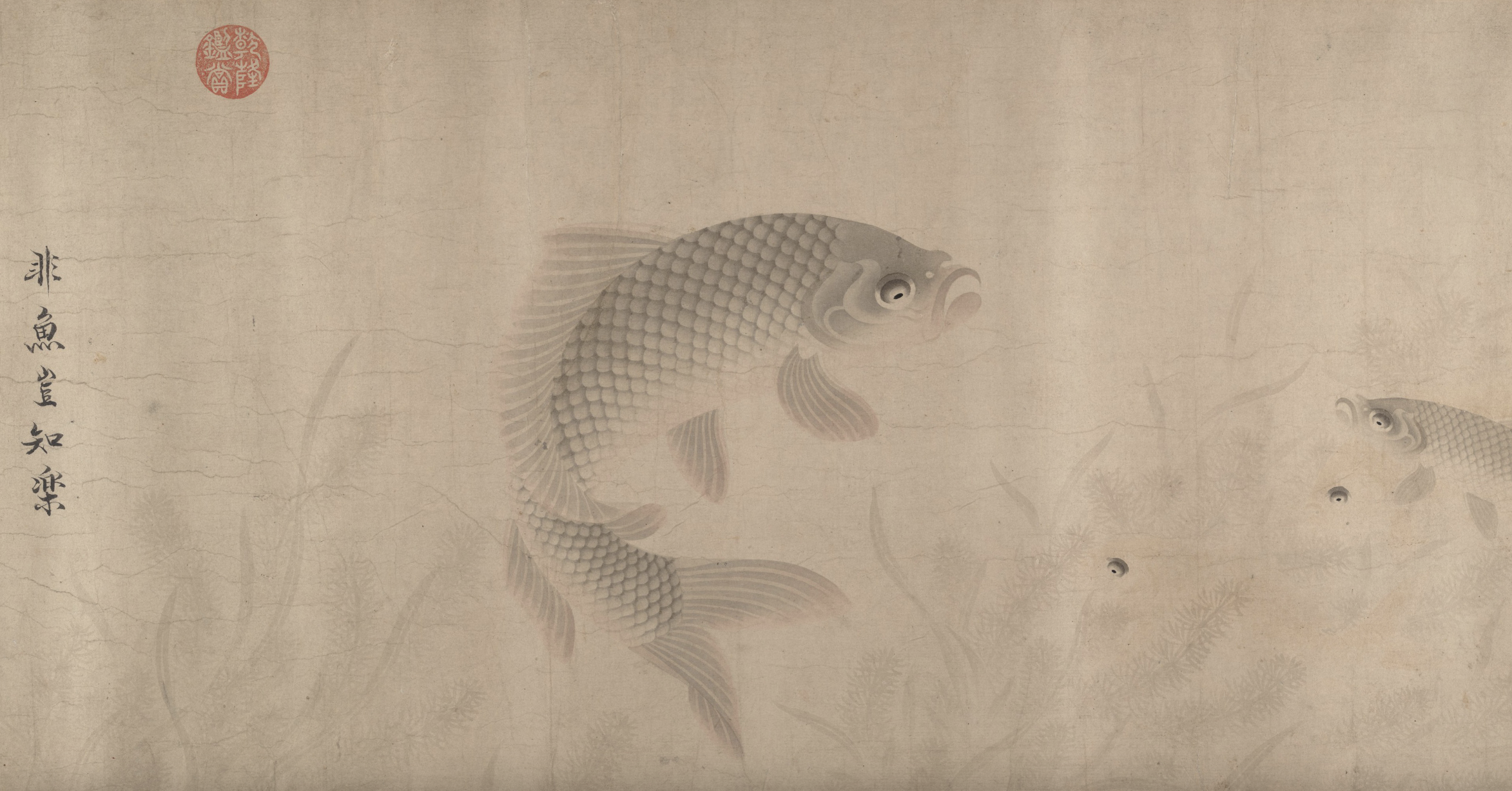
Zhou Dongqing, The Pleasures of Fishes (1291)
By Laura Dowdy
Overview
A decentralized autonomous organization (DAO) refers to a group of people who come together without a central leader or company dictating any of the decisions. They are built on a blockchain using smart contracts. One of the most noteworthy early DAOs was the ConstitutionDAO. This DAO was formed in November 2021 with the singular purpose of generating enough money (in the form of payment tokens cryptocurrency) to purchase, at auction, one of the 13 known-to-exist original, physical copies of the United States Constitution.[1] Although ConstitutionDAO raised roughly $47 million in Ethereum in roughly a week, the DAO was outbid by hedge fund CEO, Kenneth Griffin, at an auction hosted by Soetheby’s for a winning bid of $43.2 million, according to CNBC.[2] The seller was New York–based philanthropist Dorothy Tapper Goldman, who inherited the copy in 1997 from her late husband, Harry Goldman[3]. Because the ConstitutionDAO did not secure the bid at auction, investing members of the DAO are still entitled, if they have yet to manually request a refund, to get a refund of their investment, minus “gas” fees, which the blockchain server, Ethereum charges for each transaction[4]. Alternatively, those seeking refunds can opt to receive $People tokens, transferred immediately to their digital wallets.
The ConstitutionDAO was an early riser in the dawn of digital art-collecting communities. Since that record-breaking Sotheby’s auction in 2021, DAOs have continued to take ground in the art market.
This article aims to provide an overview of how DAOs work, broadly defined, including their organizational structure and transactional frameworks, as well as examples of real DAOs focusing on the art and antiquities markets.
What is a DAO?
Definition
DAO stands for Decentralized Autonomous Organization. DAOs are created by people with a shared vision, mission, or goal who come together to form a type of legal structure that does not have a traditional governing body.[5] These organizations have a horizontal, rather than a vertical or hierarchical structure, which enables participating members to make decisions regarding the organization collaboratively, traditionally by casting votes.
Purpose
Why do DAOs exist?
While there are many reasons someone may decide to participate in or create a DAO, the primary function that sets DAOs apart from other legal entities, such as corporations, is that DAOs do not have a centralized governing authority, and therefore, the members collectively make all decisions according to the distribution of voting power, often determined by the number of tokens each member has, and do not require the approval of a board of directors or other authoritative figures[6]. This structure enables members of the DAO to take more ownership of the decision-making process and the ultimate success of the DAO.
Benefits and Purposes for Artists
For artists, DAOs often serve as a means of participating in a marketplace where artists can sell their work in the form of NFTs. The DAO structure allows creators to be a part of a larger, borderless community, participating and selling their works in an open marketplace, and contributing to the organization’s decision-making process.[7] The benefits of DAOs for artists are that the artist may have voting power to determine policies, procedures, core values upon which the DAO operates, and more.[8]
For example, the DAO, Teia, is a “non-profit, open-source online platform for trading digital assets as OBJKT NFTs.”[9] Teia was formed after one of the most popular initial NFT DAOs using Tezos blockchain, Hic Et Nunc, abruptly shut down in November 2021. Members of the Hic Et Nunc community quickly responded to the shutdown by creating Teia.art[10]. One such member is artist, Merchant Coppola, who has been one of the most active members throughout the Hic Et Nunc-to-Teia transition. Because Teia is owned, managed, governed, and continuously being built and improved upon by its community members, it is able to serve as a malleable platform for collectors and creators of digital art to come together for collaboration, artistic expression, and monetary gain.[11]
Benefits and Purposes for Investors and Collectors
For investors and collectors of NFTs, DAOs can be an ideal marketplace to participate in because, unlike traditional corporate entities, DAOs’ decentralized structure allows for people all over the world, at varying levels of investment, and without formal titles, to participate in the governing body and decision-making processes.[12] Another key benefit of DAOs is that they provide transparency for investors and collectors. For instance, DAOs operate on blockchain, which means that records from sales and transactions are kept in a digital ledger format.[13] The blockchain captures each transaction, thereby providing a transparent method of record-keeping in which those with financial interest can have access to any discrepancies and records, at any time.
How to Start a Digital Art DAO
There are several things to consider before creating a DAO. At the forefront, a DAO must be created by a community that determines and agrees upon the primary goals that the DAO will achieve. For instance, some DAOs focus on creating a marketplace for digital art in the form of NFTs or entertainment, while others may focus specifically on a socially-driven goal, such as social impact or philanthropy, or may act as more generalized financial marketplaces.
Once the initial purpose, goals, and problems the DAO will attempt to solve are agreed upon by the founding members of the community, there are still other considerations, such as how community members will meet the technical and developer needs of the DAO. For DAOs focused on a creative or artistic goal, such as creating a marketplace for NFTs, the community must establish the type of blockchain and relevant tools to run the DAO. Additionally, to establish a marketplace where NFTs can be sold, the founding community must select a particular token ISO supply and allocation method. ISO stands for the International Organization for Standardization, which is a global, non-governmental organization (NGO) based in Geneva, Switzerland.[14] The ISO develops international standards for, among many other industries, cryptocurrencies. When the ISO determines a standard for currencies, they assign a code to the currency. These codes allow financial institutions around the world to recognize transactions and codes as valid currency values. Currently, there are few established codes for cryptocurrencies, however, some cryptocurrencies will become compliant with the new ISO 20022 list, as of March 2023[15]. In addition to selecting the currency, the community decides on how to set up the treasury, including the method of receiving funds from sales and transactions.
How Do Art DAOs Work?
NFT marketplaces, such as SuperRare[16] and Teia,[17] are DAOs that focus specifically on building a community of artists and creatives, digital art collections, and collectors who want to invest in digital art. Once the DAO is established, transactions for NFT sales are recorded on a blockchain, such as Tezos,[18] which powers Teia, while the community manages and maintains the process of uploading artworks onto the marketplace to sell. To participate in selling or purchasing an NFT, you must create a virtual wallet that is compatible with dApp, which is a distributed open-source software application[19] that runs on a peer-to-peer (P2P) blockchain network (instead of on a single computer). Users must also buy liquid proof-of-stake currency[20] (LPoS), such as Tezos to “fill” their wallet and then use it for transactions.
How are they Run/Managed/Governed/Funded
Typically, the number of tokens a member of the DAO has correlates to their share of votes; however, some DAOs have rules against allowing the member with the most tokens to have the majority voting power, and instead, rely on different voting mechanisms, such as quadratic voting or simple majority voting,[21] to maintain fairness. While each DAO has its own guidelines for voting, most require a demonstrated activity within the community in addition to owning tokens, in order to participate in the governance and management of the DAO.
Who Owns the Art
Members of the DAO also act as its managers. When the DAO provides a marketplace for transactions or sales involving intellectual property, such as NFTs that are copyrightable, or are capable of being registered as a trademark through the United States Patent and Trademark Office (“USPTO”), the creator of the NFT retains the intellectual property rights in the work.[22] However, in certain circumstances, the intellectual property right to a work may be assigned away to the purchaser,[23] as contractual agreements provide.
When a DAO’s members create physical and digital components funded by cryptocurrency, smart contracts typically dictate the rights and obligations that coincide with each transaction. For instance, the DAO, “Plantoids” fosters a community of creators who raise cryptocurrency to fund the creation of physical artworks, paired with a digital form of the work captured on a blockchain. Humans play a role in the Plantoid lifeform’s procreation by funding it through cryptocurrency. When a Plantoid obtains enough funding, it is able to be “reproduced” and therefore, is built in the physical world; its “body” is created in the form of a metal sculpture, while its “soul” manifests in blockchain.[24] Anyone can play a role in the lifecycle of a Plantoid by investing in the DAO, and therefore, can assist in procreating the art in physical and digital spaces. Those who invest in a new Plantoid can own a part or a whole of the work, as well as intellectual property rights, such as copyrights if established in each smart contract transaction.
Ultimately, DAOs can be a platform that fosters limitless creativity and intellectual property, and anyone can participate in the creative process either by funding it or by creating the art themselves (both digitally and physically).
What Legal Issues Might Exist for DAOs?
There are many potential legal issues[25] that could arise for community members of a DAO. For instance, most DAOs run on smart contracts,[26] which are contracts in the form of computer codes stored on a blockchain that automatically execute pre-determined agreements when certain conditions are met. For example, the contract can be as simple as an “if, then” condition, such as a sales transaction, when the conditions are met, the money is transferred to the seller’s account. On the legal side, smart contracts can also serve as legally binding agreements; however, only certain states, including Arizona and California, allow certain types of agreements to be binding via smart contracts. Many potential legal issues exist when a non-lawyer creates a legally binding smart contract in code on blockchain technology.
This format allows community members to save time by not having to negotiate the conditions of a contract and by not having to manually implement contractual considerations, such as NTF sales transactions.[27] Because smart contracts are computer code-operated, contractual liability issues could arise if there are issues with the code itself, or if bugs are found in the code. This could, for example, present liabilities for those involved in the transaction, such as the purchaser or seller of the NFT, as well as the members of the DAO itself.
Another potential legal issue for DAOs relates to jurisdiction. For instance, because DAOs are not associated with a specific physical location, as a traditional company would be legally registered in, it can be difficult to determine the governing jurisdiction for any legal issues that could arise.[28]
Recent lawsuits have also arisen on issues related to complying with regulatory oversight. In particular, in 2022, The Commodity Futures Trading Commission filed a complaint[29] against Ooki DAO (formerly doing business as bZx DAO), for engaging in activities that could only lawfully be performed by a registered designated contract market (“DCM”). Additionally, the DAO engaged in activities requiring registration with the futures commission merchant, when the DAO had not acquired such registration.[30] Thus, the DAO violated both the Commodity Exchange Act (the “Act”), 7 U.S.C. §§ 1-26, and the Commission Regulations (“Regulations”), 17 C.F.R. pts. 1-190 (2021). The settlement order[31] found that the founding members of bZeroX, Kyle Kistner and Tom Bean, were liable for the Ooki DAO’s activities which violated the CEA and CFTC regulations because they transferred control of the bZx Protocol to the bZx DAO. When they renamed the bZx DAO the current Ooki DAO, they attempted to create an organization immune from suit while continuing to operate the DAO with the same activities that violated the original regulations of the bZx Protocol. This case presented an important precedent in ensuring that even members of decentralized autonomous organizations can be held liable for violating regulatory requirements.
In summary, because of their decentralized structure, DAOs allow creators from all around the world to unite around a singular goal within a borderless community. Whether the goal is to create and sell digital artworks, as with Teia.art, or to collect rare artifacts, as with ConstitutionDAO, the options for what a DAO can achieve are only limited by the imagination and input of its community members. For most DAOs, those who are most active within the community reap the greatest rewards in terms of voting shares, input into the organizational structure, and achieving investment goals. In other words, the potential benefits and rewards of being involved in a DAO are typically closely related to the level of one’s investment.
Some Like It Digital, and now DAO
This article examines DAOs at a high level and is a supplementary resource to the Center’s “Some Like it Digital” series. As a part of the series, the Center explores the topic of DAOs in a conversation on May 9, 2023, with Alex Liu, attorney and Director of Operations at Tezos Commons, and Merchant Coppola, visual poet, artist, and founder of Teia DAO LLC. Join us for the event or watch the program’s recording to learn more about the laws that govern DAOs and how they interact with the crypto and art world, along with the intricacies of complexities of building a DAO are discussed. About the event HERE.
About the Author
Laura Dowdy, Spring 2023 Legal Intern with the Center for Art Law, is a second-year law student at New England Law | Boston, concentrating on Intellectual Property law, especially art, copyright, and trademark law. She can be reached at laura.dowdy@nesl.edu.
Reference Sources
- Bill Chappell, A rare copy of the first printing of the U.S. Constitution is going up for auction, NPR (Nov. 2021) available at https://www.npr.org/2022/11/01/1133144637/constitution-sothebys-auction-rare ↑
- Li Yun, et al., Citadel CEO Ken Griffin pays $43.2 million for Constitution copy, outbidding crypto group, CNBC (Nov. 2021) available at https://www.cnbc.com/2021/11/19/citadel-ceo-ken-griffin-pays-43point2-million-for-constitution-copy-outbidding-crypto-group.html ↑
- Angelica Villa, Philanthropist to Sell Rare Copy of Constitution for $15 M. at Auction, ARTnews (Sep. 2021) available at https://www.artnews.com/art-news/market/constitution-auction-sothebys-1234604170/ ↑
- ConstitutionDAO, available at https://www.constitutiondao.com/ ↑
- Graves, Stephen et al., What Is a Decentralized Autonomous Organization (DAO)?, Decrypt 9Dec. 2021) available at https://decrypt.co/resources/decentralized-autonomous-organization-dao ↑
- Oberheiden, Nick, 5 Things to Consider When Creating a DAO, JD Supra (Feb. 2022) available at https://www.jdsupra.com/legalnews/5-things-to-consider-when-creating-a-dao-5888423/ ↑
- Teia DAO LLC., available at https://teia.art/about ↑
- Id. ↑
- Id. ↑
- The History of Teia.art: A Marketplace Salvaged by the Community, Tezos Ukraine (Aug. 2022) available at https://tezos.org.ua/en/blog/history-of-hic-et-nunc-teia-ressurection ↑
- Teia DAO LLC., available at https://teia.art/about ↑
- Bhalla, Anshika, A Beginner’s Guide To Understanding DAO Governance Models (Nov. 2022) available at https://www.blockchain-council.org/dao/dao-governance-models/ ↑
- Hayes, Adam, et al., Blockchain Facts: What Is It, How It Works, and How It Can Be Used (Apr. 2023) available at https://www.investopedia.com/terms/b/blockchain.asp ↑
- About Us, International Organization for Standardization, available at https://www.iso.org/about-us.html ↑
- Koome, Brian, ISO 20022 Compliant Crypto Coins: Implementation Slated for March 2023 (Feb. 2023) available at https://www.cryptopolitan.com/iso-20022-compliant-crypto-list/ ↑
- SuperRare DAO, available at https://superrare.notion.site/SuperRare-Network-Hub-fcb9174476514c7b893de5c40faf83fb ↑
- Teia DAO, available at https://superrare.notion.site/SuperRare-Network-Hub-fcb9174476514c7b893de5c40faf83fb ↑
- Tezos, available at https://tezos.com/ ↑
- Gillis, Alexander, blockchain dApp, TechTarget, available at https://www.techtarget.com/iotagenda/definition/blockchain-dApp#:~:text=A%20decentralized%20application%20(dApp)%20is,than%20on%20a%20single%20computer ↑
- What is Proof of Stake, Tezos, available at https://tezos.com/proof-of-stake/#:~:text=The%20liquid%2Dproof%2Dof%2D,that%20has%20similar%20voting%20preferences. ↑
- Ruane, Jonathan, et al., What a DAO Can — and Can’t — Do, Harvard Business Review (May 2022) available at https://hbr.org/2022/05/what-a-dao-can-and-cant-do ↑
- Ferrill, Elizabeth, et al., Demystifying NFTs and intellectual property: what you need to know, Reuters (May 2022) available at https://www.reuters.com/legal/legalindustry/demystifying-nfts-intellectual-property-what-you-need-know-2022-05-10/ ↑
- Mukaddam, Farah, NFTs and Intellectual Property Rights, Norton Rose Fulbright (Oct. 2021) available at https://www.nortonrosefulbright.com/en/knowledge/publications/1a1abb9f/nfts-and-intellectual-property-rights ↑
- De Filippi, Primavera, History of the Project, Plantoid DAO, available at https://plantoid.org/#love ↑
- Montague, John, DAO Governance and Ancillary Legal Issues, JDSupra (Feb. 2023) available at https://www.jdsupra.com/legalnews/dao-governance-and-ancillary-legal-3993656/#:~:text=In%20conclusion%2C%20DAO%20governance%20presents,member%20rights%2C%20and%20dispute%20resolution. ↑
- Levi, Stuart, et al., An Introduction to Smart Contracts and Their Potential and Inherent Limitations, Harvard Law School Forum on Corporate Governance (May 2018) available at https://corpgov.law.harvard.edu/2018/05/26/an-introduction-to-smart-contracts-and-their-potential-and-inherent-limitations/ ↑
- Stelzner, Michael, NFTs and DAOs: How They Work Together, Social Media Examiner (Apr. 2022) available at https://www.socialmediaexaminer.com/nfts-and-daos-how-they-work-together/#:~:text=You%20can%20code%20the%20smart,other%20smart%20contracts%20in%20place. ↑
- Montague, John, DAO Governance and Ancillary Legal Issues, JDSupra (Feb. 2023) available at https://www.jdsupra.com/legalnews/dao-governance-and-ancillary-legal-3993656/#:~:text=In%20conclusion%2C%20DAO%20governance%20presents,member%20rights%2C%20and%20dispute%20resolution. ↑
- See Commodity Futures Trading Commission v. Ooki DAO, No. 05416, District Court, N.D., California ↑
- CFTC Imposes $250,000 Penalty Against bZeroX, LLC and Its Founders and Charges Successor Ooki DAO for Offering Illegal, Off-Exchange Digital-Asset Trading, Registration Violations, and Failing to Comply with Bank Secrecy Act, CFTC (Sept. 2022) available at https://www.cftc.gov/PressRoom/PressReleases/8590-22 ↑
- Dissenting Statement of Commissioner Summer K. Mersinger Regarding Enforcement Actions Against: 1) bZeroX, LLC, Tom Bean, and Kyle Kistner; and 2) Ooki DAO, CFTC (Sept. 2022) available at https://www.cftc.gov/PressRoom/SpeechesTestimony/mersingerstatement092222 ↑
Disclaimer: This article is for educational purposes only and is not meant to provide legal advice. Readers should not construe or rely on any comment or statement in this article as legal advice. For legal advice, readers should seek a consultation with an attorney.


