• About
    • Mission
    • Team
    • Boards
    • Mentions & Testimonials
    • Institutional Recognition
    • Annual Reports
    • Current & Past Sponsors
    • Contact Us
  • Resources
    • Article Collection
    • Podcast: Art in Brief
    • AML and the Art Market
    • AI and Art Authentication
    • Newsletter
      • Subscribe
      • Archives
      • In Brief
    • Art Law Library
    • Movies
    • Nazi-looted Art Restitution Database
    • Global Network
      • Courses and Programs
      • Artists’ Assistance
      • Bar Associations
      • Legal Sources
      • Law Firms
      • Student Societies
      • Research Institutions
    • Additional resources
      • The “Interview” Project
  • Events
    • Worldwide Calendar
    • Our Events
      • All Events
      • Annual Conferences
        • 2025 Art Law Conference
        • 2024 Art Law Conference
        • 2023 Art Law Conference
        • 2022 Art Law Conference
        • 2015 Art Law Conference
  • Programs
    • Visual Artists’ Legal Clinics
      • Art & Copyright Law Clinic
      • Artist-Dealer Relationships Clinic
      • Artist Legacy and Estate Planning Clinic
      • Visual Artists’ Immigration Clinic
    • Summer School
      • 2026
      • 2025
    • Internship and Fellowship
    • Judith Bresler Fellowship
  • Case Law Database
  • Log in
  • Become a Member
  • Donate
  • Log in
  • Become a Member
  • Donate
Center for Art Law
  • About
    About
    • Mission
    • Team
    • Boards
    • Mentions & Testimonials
    • Institutional Recognition
    • Annual Reports
    • Current & Past Sponsors
    • Contact Us
  • Resources
    Resources
    • Article Collection
    • Podcast: Art in Brief
    • AML and the Art Market
    • AI and Art Authentication
    • Newsletter
      Newsletter
      • Subscribe
      • Archives
      • In Brief
    • Art Law Library
    • Movies
    • Nazi-looted Art Restitution Database
    • Global Network
      Global Network
      • Courses and Programs
      • Artists’ Assistance
      • Bar Associations
      • Legal Sources
      • Law Firms
      • Student Societies
      • Research Institutions
    • Additional resources
      Additional resources
      • The “Interview” Project
  • Events
    Events
    • Worldwide Calendar
    • Our Events
      Our Events
      • All Events
      • Annual Conferences
        Annual Conferences
        • 2025 Art Law Conference
        • 2024 Art Law Conference
        • 2023 Art Law Conference
        • 2022 Art Law Conference
        • 2015 Art Law Conference
  • Programs
    Programs
    • Visual Artists’ Legal Clinics
      Visual Artists’ Legal Clinics
      • Art & Copyright Law Clinic
      • Artist-Dealer Relationships Clinic
      • Artist Legacy and Estate Planning Clinic
      • Visual Artists’ Immigration Clinic
    • Summer School
      Summer School
      • 2026
      • 2025
    • Internship and Fellowship
    • Judith Bresler Fellowship
  • Case Law Database
Home image/svg+xml 2021 Timothée Giet Art law image/svg+xml 2021 Timothée Giet Libel by Fiction: Greene v. Paramount Pictures Corporation
Back

Libel by Fiction: Greene v. Paramount Pictures Corporation

March 9, 2014
By Richard A. Altman, Esq.

Screen shot 2014-03-09 at 2.04.36 PM

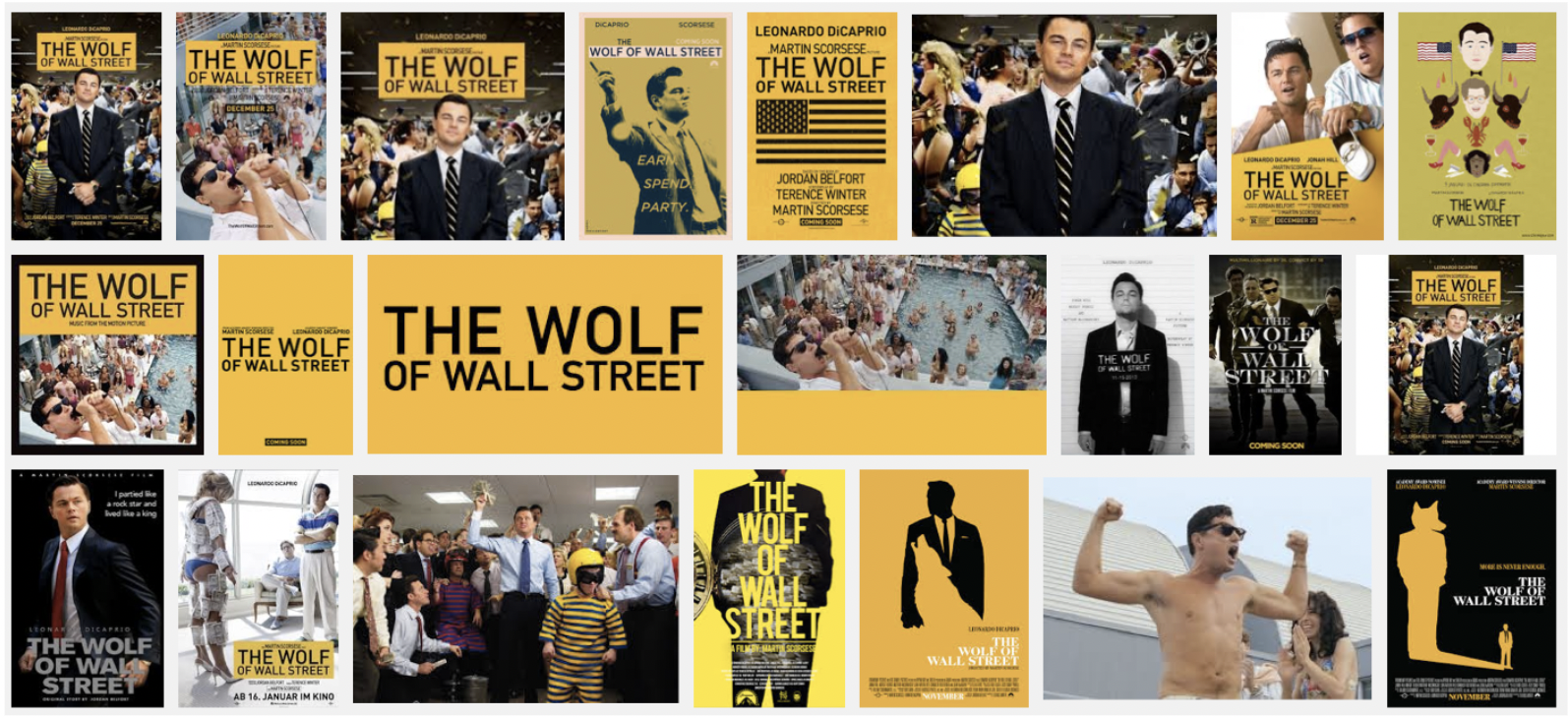
Whether the Center for Art Law hosts its next dinner and a movie evening dedicated to the new Martin Scorsese film “The Wolf of Wall Street” remains to be seen. However, a suit arising from this film, recently filed in the Eastern District of New York, illuminates a curious area of defamation law known as libel by fiction.  It arises when someone claims that a fictional work which portrays a character in a negative light, usually as a criminal or an unchaste woman, is based upon personality or physical characteristics or qualities which the plaintiff possesses, such that people who know the plaintiff will think that he or she is the basis for the person portrayed.  It is rarely successful, but if a plaintiff can show that people reasonably assume that the fictional character is based upon him or her, and that the portrayal is sufficiently negative, it is possible to maintain a defamation claim.

What makes the claim so odd is that it is counter-intuitive and even illogical, because “a plaintiff claims that something that is fictional is not factually accurate.”1  In New York, every libel plaintiff must show that the complained-of portrayal or statement is “of and concerning” him.  This is not an issue in the usual situation, where a plaintiff is actually named in a publication and there is no doubt regarding who he or she is.  But if the plaintiff is only verbally (or visually) described in the fictional work as someone else, it is then the part of the plaintiff’s burden to show that persons who know the plaintiff will necessarily recognize him in the fictional portrayal.  The burden is a heavy one, but, as will be shown, the plaintiff in the new case may have met that burden, and could survive a motion to dismiss.  And perversely, his less-than-spotless reputation may make him more, rather than less,  likely to succeed.

In Greene v. Paramount Pictures Corporation et al., 14-cv-1044 (E.D.N.Y, Feb. 18, 2014), the plaintiff, Andrew Greene, alleges that he is a lawyer, an inactive member of the California bar, and was formerly the head of the Corporate Finance Department of Stratton Oakmont, Inc., from 1993 until his resignation in 1996.  Stratton Oakmont was a large over-the-counter securities brokerage firm in the 1990’s, and its head, Jordan Belfort, was indicted in 1998 for securities fraud and money laundering, which led to the firm’s demise.  Mr. Greene further alleges that the recently released Martin Scorsese film, “Wolf of Wall Street,” contains a fictional character named Nicky “Rugrat” Koskoff, who is “portrayed as a criminal, drug user, degenerate, depraved, and/or devoid of any morality or ethics,”2 and that the character of Koskoff is based upon him.  In the film, Koskoff is played by Leonardo DiCaprio.

Mr. Greene further alleges that in 2007, Belfort wrote a memoir about the firm with the same name as the film, that the book refers to him (Greene) by his correct name, and that the film is based upon the book.  He references similarities between himself and the portrayal of Koskoff, including that they both were close friends with Belfort, that they both went to law school, that they both wore toupées, that the film mocks Koskoff’s toupée, calling it a “piece of shit hairpiece,”3 and that they both had significant leadership roles at Stratton Oakmont.

However, what the complaint omits is that Mr. Greene was one of four former officers of that firm who were collectively fined $10 million in damages by a National Association of Securities Dealers arbitration panel, allegedly for defrauding an investor.  Apparently Mr. Greene’s share was $1.5 million.4  It is not known whether the arbitration was ultimately enforced, or whether the fines were paid, but the findings of the NASD panel, and the assessment of a substantial punitive damage fine, would seem to affect Mr. Greene’s reputation negatively.  Since, by definition, a libel plaintiff claims damage to a good reputation, the likelihood of ultimate recovery here would thus appear slim.  But libel-by-fiction cases have their own rules.

Mr. Greene sets forth five causes of action based upon these facts.  It seems however, that only one has a chance of success.

The first and second causes of action are based upon New York Civil Rights Law §§ 50 and 51, which provide a cause of action for an injunction and damages against anyone who “uses for advertising purposes, or for the purposes of trade, the name, portrait or picture of any living person without having first obtained the written consent of such person.”  But this statute is not a general protection of the right of privacy; there is no such right in New York other than that provided by libel laws.5   A claim under these statutes requires the unconsented-to use of the actual name or likeness of the plaintiff, usually in a photograph.  Portrayal of the plaintiff in fiction under a different name is not sufficient.6  Here, plaintiff does not allege that his actual name or likeness appears anywhere in the film.  Thus, since neither plaintiff’s actual name nor likeness were used, it would seem that he has no claim under Civil Rights Law §§ 50 and 51 for either an injunction or damages.

The third cause of action alleges that the defendants “have consciously and deliberately disregarded and violated Plaintiff’s common law propriety [sic] right to exclusive control of the commercial use of his image, likeness, and characterization,”7 and he seeks an injunction and damages.  But as just stated, there is no such common law right in New York.  The right to control one’s image, likeness and characterization is purely statutory.  Hence the third cause of action is likely to be dismissed.

The fourth and fifth causes of action are in the nature of claims for libel per se.  They allege that the statements and portrayal in the film show him “as a criminal and drug user with misogynistic tendencies.”8  The fourth alleges that the statements and portrayals were made “with malice or [that defendants] acted with reckless disregard as to the truth or falsity of the statements.”9  The fifth alleges that the statements were made “negligently as to the truth or falsity of the statements.”10  Nowhere in the complaint are the actual statements in the film set out verbatim.  There is only one exception, where a character in the film named Donnie Azoff is alleged to say, “Fucking Rugrat that wig-wearing faggot I can’t believe that fucking guy. I want to kill him.”  Belfort’s character then says, “Swear to God, I want to choke him to death. Irresponsible little prick.”11

The failure to set out verbatim in a defamation complaint the exact words complained of is fatal to a claim in New York State courts.12  However, it is not necessarily fatal in federal courts, because pleadings there are governed by F.R.Civ.P. 8.  “While the federal rules do not require the particularized pleading requirements set forth in New York’s C.P.L.R. section 3016, Rule 8 still requires that each pleading be specific enough to afford defendant sufficient notice of the communications complained of to enable him to defend himself.”13  Thus plaintiff still must point to specific language or imagery in the film which states facts to support his claim that he is portrayed as a criminal.  He has not done so.  Obviously the film is far more than just a portrayal of Mr. Greene, and it would seem necessary to identify those portions of the film specifically alleged to be defamatory.

In any event, the only words actually quoted in the complaint are not defamatory.  They are obviously not statements of fact about “Rugrat,” capable of being true or false, but are merely  opinions in the form of invective and abusive language, which is not actionable.  Only statements of fact can be libelous, and calling someone a “wig-wearing faggot” and an “irresponsible little prick,” while certainly nasty and insulting, would not be considered libelous.14

Thus, even leaving aside these significant and possibly fatal omissions, we are left only with a claim for libel by fiction.  This is where it gets interesting.  As noted above, the claim is counter-intuitive, in that it is based on the assertion that a work of fiction is false.  But it does exist:  “In the fiction context, the plaintiff must also show that the viewer was totally convinced that the episode in all aspects as far as the plaintiff is concerned is not fiction at all.”15

In Batra v Wolf,16 the Court refused to dismiss a complaint against the television show “Law and Order,” brought by a lawyer who claimed that a character in an episode of the show was based on him, and portrayed him as corrupt.  The episode was based on a true and widely reported event involving judicial corruption in Brooklyn, and a judge who served time in prison.  The plaintiff, a lawyer named Ravi Batra, had been involved in judicial politics, but was never charged with any crime in connection with the event.  He had however been linked to the corrupt judge in the press.  The lawyer in the episode had the same first name, Ravi, and both the plaintiff and the fictional lawyer were of Indian descent.  In the episode, the surname Batra was changed to Patel.  The court said that the similarities were close enough to entitle the plaintiff to proceed, and did not dismiss the action:

In the context in which Floater was presented, extensive media coverage linking Batra to the Garson/Siminovsky scandal, there is a reasonable likelihood that the ordinary viewer, unacquainted with Batra personally, could understand Patel’s corruption to be the truth about Batra. While the accusations against Batra were for graft rather than for bribery, it cannot be said that this distinction is sufficiently “far-fetched” that Patel’s corruption could never be understood as describing actual facts.17

In Geisler v. Petrocelli,18 the plaintiff had appeared in a work of fiction under her real name, which allegedly portrayed her as participating in a fraud involving a tennis match, and in which she was “lured into untoward sexual conduct which is graphically portrayed.”19  The Court then said:

Rather, it is required that the reasonable reader must rationally suspect that the protagonist is in fact the plaintiff, notwithstanding the author’s and publisher’s assurances that the work is fictional. This points up the disturbing irony inherent in the scheme: the more virtuous the victim of the libel, the less likely it will be that she will be able to establish this essential confusion in the mind of the third party. Thus, the more deserving the plaintiff of recompense for the tarnishing of a spotless reputation, the less likely will be any actual recovery. Such a seeming contradiction is best resolved by the trier of fact since adjudication of the issue as a matter of law will seldom satisfy the expectation that legal holdings be consistent and logical.  Id. at 639.

What makes Mr. Greene’s case unusual is that it is the opposite of Giesler.  If a plaintiff with a spotless reputation is less likely to recover, is a plaintiff with a tarnished one more likely to recover?  It seems no less illogical than a libel-by-fiction claim itself.20

Based on the case law and commentary,  it appears that Mr. Greene can legitimately assert that he and “Rugrat” Koskoff are one and the same, at least as a threshold issue. Maybe the toupée is the clincher. Moreover, considering the dictum in Geisler, the fact that Mr. Greene’s reputation is not spotless ironically might make his likelihood of ultimate recovery greater than if the NASD had never penalized him and if the firm had never crashed and burned.  But then, if that had not happened, there would have been no movie.

Sources:

1  Batra v. Wolf, 2008 N.Y. Misc. LEXIS 1933 at *5 (Supreme Ct. N.Y.Co. Mar. 14,  2008).
2  Complaint, ¶ 30 at 6.
3  Id., ¶ 28 at 6.
4 See http://www.securitiesarbitration.com/news/1997/04/18/former-stratton-execs-fined-10m/ (accessed March 5, 2014).
5  Arrington v. New York Times Co., 55 N.Y.2d 433 (1982).
6  Allen v. Gordon, 86 App.Div.2d 514 (1st Dept.1982), aff’d 56 N.Y.2d 780 (1982).
7   Complaint, ¶ 55 at 10.
8  Id., ¶ 62 at 11.
9  Id., ¶ 60 at 11.
10  Id., ¶ 65 at 12.
11  Id., ¶ 29 at 6.
12  CPLR 3016(a); Buffolino v. Long Island Sav. Bank, FSB, 126 A.D.2d 508 (2d Dept.1987).
13   Gristede’s Foods, Inc. v. Poospatuck (Unkechauge) Nation, 2009 U.S. Dist. LEXIS 111675, 2009 WL 4547792, at *8-9 (E.D.N.Y. Dec. 1, 2009)(citations omitted).
14 Steinhilber v. Alphonse, 68 N.Y.2d 283 (1986).
15 Batra, supra n. 1 at *5 (citing Welch v. Penguin Books USA, Inc., 1991 N.Y. Misc. LEXIS 225 (Sup.Ct.Kings Co.1991)(quotation marks omitted).
16  2008 N.Y. Misc. LEXIS 1933 (Supreme Ct. N.Y.Co. Mar. 14, 2008).
17  Batra, supra, n. 1 at *10.
18   616 F.2d 636 (2d Cir.1980).
19   616 F.33 at 638 (footnote omitted).
20  The subject of libel by fiction is explored in two recent law review articles: “When ‘Ripped from the Headlines’ Means ‘See You in Court’: Libel by Fiction and the Tort-Law Twist on a Controversial Defamation Concept,” 13 Texas Rev. Ent. & Sports L. 117 (2012) and “When Is Fiction Just Fiction? Applying Heightened Threshold Tests to Defamation in Fiction,” 76 Fordham L.Rev. 1853 (2007).

About the Author: Richard A. Altman, Esq. specializes in art law, intellectual property, and defamation.   He may be reached at 212.633.0123 or altmanlaw@earthlink.net.

Disclaimer: This article is intended as general information, not legal advice, and is no substitute for seeking representation.

Disclaimer: This article is for educational purposes only and is not meant to provide legal advice. Readers should not construe or rely on any comment or statement in this article as legal advice. For legal advice, readers should seek a consultation with an attorney.

Post navigation

Previous Photographs and Richard Prince: The Gifts that Keep on Giving
Next Case Review: Bilinski v. the Keith Haring Foundation

Related Posts

photo from the Met of statues, classical Greeco-Roman wing

Secrecy in Museums Administration

August 31, 2023

Case Review: US v. Philbrick (2022)

November 7, 2022

FBI with New Information on the 1990 Gardner Museum Heist?

March 25, 2013
Center for Art Law
Center for Art Law

Follow us on Instagram for the latest in Art Law!

The expansion of the use of collaborations between The expansion of the use of collaborations between artists and major consumer corporations brings along a myriad of IP legal considerations. What was once seen in advertisement initiatives  has developed into the creation of "art objects," something that lives within a consumer object while retaining some portion of an artists work. 

🔗 Read more about this interesting interplay in Natalie Kawam Yang's published article, including a discussion on how the LOEWE x Ghibli Museum fits into this context, using the link in our bio.
We can't wait for you to join us on February 4th! We can't wait for you to join us on February 4th!  Check out the full event description below:

Join the Center for Art Law for an in-person, full-day training aimed at preparing lawyers for working with art market participants and understanding their unique copyright law needs. The bootcamp will be led by veteran art law attorneys, Louise Carron, Barry Werbin, Carol J. Steinberg, Esq., Scott Sholder, Marc Misthal, specialists in copyright law. 

This Bootcamp provides participants -- attorneys, law students, law graduates and legal professionals -- with foundational legal knowledge related to copyright law for art market clients. Through a combination of instructional presentations and mock consultations, participants will gain a solid foundation in copyright law and its specificities as applied to works of visual arts, such as the fair use doctrine and the use of generative artificial intelligence tools.

🎟️ Grab tickets using the link in our bio!
Don't forget to grab tickets to our upcoming Collo Don't forget to grab tickets to our upcoming Colloquium, discussing the effectiveness of no strike designations in Syria, on February 2nd. Check out the full event description below:

No strike designations for cultural heritage are one mechanism by which countries seek to uphold the requirements of the 1954 Hague Convention. As such, they are designed to be key instruments in protecting the listed sites from war crimes. Yet not all countries maintain such inventories of their own whether due to a lack of resources, political views about what should be represented, or the risk of misuse and abuse. This often places the onus on other governments to create lists about cultures other than their own during conflicts. Thus, there may be different lists compiled by different governments in a conflict, creating an unclear legal landscape for determining potential war crimes and raising significant questions about the effectiveness of no strikes as a protection mechanism. 

Michelle Fabiani will discuss current research seeking to empirically evaluate the effectiveness of no strike designations as a protection mechanism against war crimes in Syria. Using data on cultural heritage attacks from the height of the Syrian Conflict (2014-2017) compiled from open sources, a no strike list completed in approximately 2012, and measures of underlying risk, this research asks whether the designations served as a protective factor or a risk factor for a given site and the surrounding area. Results and implications for holding countries accountable for war crimes against cultural heritage are discussed. 

🎟️ Grab tickets using the link in our bio!

#centerforartlaw #artlaw #culturalheritage #lawyer #legalreserach #artlawyer
Don't miss our up coming in-person, full-day train Don't miss our up coming in-person, full-day training aimed at preparing lawyers for working with art market participants and understanding their unique copyright law needs. The bootcamp will be led by veteran art law attorneys, Louise Carron, Barry Werbin, Carol J. Steinberg, Esq., Scott Sholder, Marc Misthal, specialists in copyright law. 

This Bootcamp provides participants -- attorneys, law students, law graduates and legal professionals -- with foundational legal knowledge related to copyright law for art market clients. Through a combination of instructional presentations and mock consultations, participants will gain a solid foundation in copyright law and its specificities as applied to works of visual arts, such as the fair use doctrine and the use of generative artificial intelligence tools.

🎟️ Grab tickets using the link in our bio! 

#centerforartlaw #artlaw #legal #research #lawyer #artlawyer #bootcamp #copyright #CLE #trainingprogram
In order to fund acquisitions of contemporary art, In order to fund acquisitions of contemporary art, The Phillips Collection sold seven works of art from their collection at auction in November. The decision to deaccession three works in particular have led to turmoil within the museum's governing body. The works at the center of the controversy include Georgia O'Keefe's "Large Dark Red Leaves on White" (1972) which sold for $8 million, Arthur Dove's "Rose and Locust Stump" (1943), and "Clowns et pony" an 1883 drawing by Georges Seurat. Together, the three works raised $13 million. Three board members have resigned, while members of the Phillips family have publicly expressed concerns over the auctions. 

Those opposing the sales point out that the works in question were collected by the museum's founders, Duncan and Marjorie Phillips. While museums often deaccession works that are considered reiterative or lesser in comparison to others by the same artist, the works by O'Keefe, Dove, and Seurat are considered highly valuable, original works among the artist's respective oeuvres. 

The museum's director, Jonathan P. Binstock, has defended the sales, arguing that the process was thorough and reflects the majority interests of the collection's stewards. He believes that acquiring contemporary works will help the museum to evolve. Ultimately, the controversy highlights the difficulties of maintaining institutional collections amid conflicting perspectives.

🔗 Click the link in our bio to read more.
Make sure to check out our newest episode if you h Make sure to check out our newest episode if you haven’t yet!

Paris and Andrea get the change to speak with Patty Gerstenblith about how the role international courts, limits of accountability, and if law play to protect history in times of war.

🎙️ Click the link in our bio to listen anywhere you get your podcasts!
Alexander Butyagin, a Russian archaeologist, was a Alexander Butyagin, a Russian archaeologist, was arrested by Polish authorities in Warsaw. on December 4th. Butyagin is wanted by Ukraine for allegedly conducting illegal excavations of Myrmekion, an ancient city in Crimea. Located in present-day Crimea, Myrmekion was an Ancient Greek colony dating to the sixth century, BCE. 

According to Ukrainian officials, between 2014 and 2019 Butyagin destroyed parts of the Myrmekion archaeological site while serving as head of Ancient Archaeology of the Northern Black Sea region at St. Petersburg's Hermitage Museum. The resulting damages are estimated at $4.7 million. Notably, Russia's foreign ministry has denounced the arrest, describing Poland's cooperation with Ukraine's extradition order as "legal tyranny." Russia invaded and annexed Crimea in 2014.

🔗 Read more by clicking the link in our bio

#centerforartlaw #artlaw #artcrime #artlooting #ukraine #crimea
Join us on February 18th to learn about the proven Join us on February 18th to learn about the provenance and restitution of the Cranach painting at the North Carolina Museum of Art.

A beloved Cranach painting at the North Carolina Museum of Art was accused of being looted by the Nazis. Professor Deborah Gerhardt will describe the issues at stake and the evidentiary trail that led to an unusual model for resolving the dispute.

Grab your tickets today using the link in our bio!

#centerforartlaw #artlaw #legal #legalresearch #museumissues #artwork
“In the depth of winter, I finally learned that wi “In the depth of winter, I finally learned that within me there lay an invincible summer."
~ Albert Camus, "Return to Tipasa" (1952) 

Camus is on our reading list but for now, stay close to the ground to avoid the deorbit burn from the 2026 news and know that we all contain invincible summer. 

The Center for Art Law's January 2026 Newsletter is here—catch up on the latest in art law and start the year informed.
https://itsartlaw.org/newsletters/january-newsletter-which-way-is-up/ 

#centerforartlaw #artlaw #lawyer #artlawyer #legalresearch #legal #art #law #newsletter #january
Major corporations increasingly rely on original c Major corporations increasingly rely on original creative work to train AI models, often claiming a fair use defense. However, many have flagged this interpretation of copyright law as illegitimate and exploitative of artists. In July, the Senate Judiciary Committee on Crime and Counterterrorism addressed these issues in a hearing on copyright law and AI training. 

Read our recent article by Katelyn Wang to learn more about the connection between AI training, copyright protections, and national security. 

🔗 Click the link in our bio to read more!
Join the Center for Art Law for an in-person, all- Join the Center for Art Law for an in-person, all-day  CLE program to train lawyers to work with visual artists and their unique copyright needs. The bootcamp will be led by veteran art law attorneys specializing in copyright law.

This Bootcamp provides participants -- attorneys, law students, law graduates and legal professionals -- with foundational legal knowledge related to copyright law for art market clients. Through a combination of instructional presentations and mock consultations, participants will gain a solid foundation in copyright law and its specificities as applied to works of visual arts, such as the fair use doctrine and the use of generative artificial intelligence tools. 

🎟️ Grab tickets using the link in our bio!
Our interns do the most. Check out a day in the li Our interns do the most. Check out a day in the life of Lauren Stein, a 2L at Wake Forest, as she crushes everything in her path. 

Want to help us foster more great minds? Donate to Center for Art Law.

🔗 Click the link below to donate today!

https://itsartlaw.org/donations/new-years-giving-tree/ 

#centerforartlaw #artlaw #legal #legalresearch #caselaw #lawyer #art #lawstudent #internships #artlawinternship
  • About the Center
  • Contact Us
  • Newsletter
  • Upcoming Events
  • Internship
  • Case Law Database
  • Log in
  • Become a Member
  • Donate
DISCLAIMER

Center for Art Law is a New York State non-profit fully qualified under provision 501(c)(3)
of the Internal Revenue Code.

The Center does not provide legal representation. Information available on this website is
purely for educational purposes only and should not be construed as legal advice.

TERMS OF USE AND PRIVACY POLICY

Your use of the Site (as defined below) constitutes your consent to this Agreement. Please
read our Terms of Use and Privacy Policy carefully.

© 2026 Center for Art Law
 

Loading Comments...
 

You must be logged in to post a comment.