• About
    • Mission
    • Team
    • Boards
    • Mentions & Testimonials
    • Institutional Recognition
    • Annual Reports
    • Current & Past Sponsors
    • Contact Us
  • Resources
    • Article Collection
    • Podcast: Art in Brief
    • AML and the Art Market
    • AI and Art Authentication
    • Newsletter
      • Subscribe
      • Archives
      • In Brief
    • Art Law Library
    • Movies
    • Nazi-looted Art Restitution Database
    • Global Network
      • Courses and Programs
      • Artists’ Assistance
      • Bar Associations
      • Legal Sources
      • Law Firms
      • Student Societies
      • Research Institutions
    • Additional resources
      • The “Interview” Project
  • Events
    • Worldwide Calendar
    • Our Events
      • All Events
      • Annual Conferences
        • 2025 Art Law Conference
        • 2024 Art Law Conference
        • 2023 Art Law Conference
        • 2022 Art Law Conference
        • 2015 Art Law Conference
  • Programs
    • Visual Artists’ Legal Clinics
      • Art & Copyright Law Clinic
      • Artist-Dealer Relationships Clinic
      • Artist Legacy and Estate Planning Clinic
      • Visual Artists’ Immigration Clinic
    • Summer School
      • 2026
      • 2025
    • Internship and Fellowship
    • Judith Bresler Fellowship
  • Case Law Database
  • Log in
  • Become a Member
  • Donate
  • Log in
  • Become a Member
  • Donate
Center for Art Law
  • About
    About
    • Mission
    • Team
    • Boards
    • Mentions & Testimonials
    • Institutional Recognition
    • Annual Reports
    • Current & Past Sponsors
    • Contact Us
  • Resources
    Resources
    • Article Collection
    • Podcast: Art in Brief
    • AML and the Art Market
    • AI and Art Authentication
    • Newsletter
      Newsletter
      • Subscribe
      • Archives
      • In Brief
    • Art Law Library
    • Movies
    • Nazi-looted Art Restitution Database
    • Global Network
      Global Network
      • Courses and Programs
      • Artists’ Assistance
      • Bar Associations
      • Legal Sources
      • Law Firms
      • Student Societies
      • Research Institutions
    • Additional resources
      Additional resources
      • The “Interview” Project
  • Events
    Events
    • Worldwide Calendar
    • Our Events
      Our Events
      • All Events
      • Annual Conferences
        Annual Conferences
        • 2025 Art Law Conference
        • 2024 Art Law Conference
        • 2023 Art Law Conference
        • 2022 Art Law Conference
        • 2015 Art Law Conference
  • Programs
    Programs
    • Visual Artists’ Legal Clinics
      Visual Artists’ Legal Clinics
      • Art & Copyright Law Clinic
      • Artist-Dealer Relationships Clinic
      • Artist Legacy and Estate Planning Clinic
      • Visual Artists’ Immigration Clinic
    • Summer School
      Summer School
      • 2026
      • 2025
    • Internship and Fellowship
    • Judith Bresler Fellowship
  • Case Law Database
Home image/svg+xml 2021 Timothée Giet Art law image/svg+xml 2021 Timothée Giet Russia is no Congo: Chabad Decisions and Moscow Convictions
Back

Russia is no Congo: Chabad Decisions and Moscow Convictions

February 11, 2013
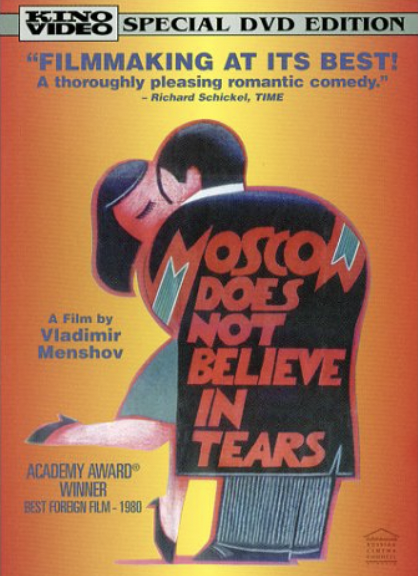
Moscow Does not Believe in Tears, the movie, came out in 1980. According to Bulgakov, when Voland* visited Moscow in the 1930s, Moscow did not believe in God. Well, Moscow’s convictions regarding cultural artifacts are in the affirmative: when asked to return anything, it either ignores the request or gets even.

Following decades of efforts to recover books and manuscripts (the Collection) left in Europe before and after the Russian Revolution, in 2004, Chabad, a religious organization incorporated in New York as of 1940, brought legal action against the Russian Federation, the Russian Ministry of Culture and Mass Communication, the Russian State Library, and the Russian State Military Archive in U.S. Court. Initially Defendants in Agudas Chasidei Chabad of United States v. Russian Fed’n challenged jurisdictional grounds of the suit. However, in 2009, when the Court held that it had jurisdiction to review Chabad’s claim under one of the exceptions to the Foreign Sovereign Immunities Act, Defendants filed a Statement with Respect to Further Participation and informed the Court that they “decline[d] to participate further in this litigation” because they “believe[d] this Court has no authority to enter Orders with respect to the property owned by the Russian Federation and in its possession, and the Russian Federation will not consider any such Orders to be binding on it.” Opinions may vary on whether this decision was a dreadful mistake on the part of the Defendants’ counsel, Squire, Sanders & Dempsey, LLP (that incidentally filed a Motion to Withdraw Appearance as Counsel of Record) or whether it was proper as a cost cutting measure and a logical thing in light of the predictable outcome.

What followed left many incredulous…

First, in 2010, Chief United States District Judge Royce C. Lambeth entered a default judgement in favor of Chabad in Agudas Chasidei Chabad of United States v. Russian Fed’n, 729 F. Supp. 2d 141, 145 (D.D.C. 2010) ordering return of the Collection. The Court found that 1) Plaintiff sufficiently established its claim to the Library and Archive that “defendants unlawfully possess and refuse to relinquish;” 2) Defendants “expropriated both the Archive and Library from plaintiff in violation of international law;” 3) Plaintiff demonstrated that “the property at issue is owned or operated by agencies or instrumentalities of a foreign state, namely the Russian Federation;” and 4) Defendants were “engaged in a commercial activity in the United States.” The 2010 decision fell on deaf ears and not a single item from the Chabad Collection was sent from Moscow to New York.

Then, on July 26, 2011, the Court granted Chabad’s motion seeking permission to pursue execution of the 2010 judgment. In relevant parts, the conclusion reads “The Court is sympathetic to plaintiff, aware of the long road it has traveled and all-too familiar with the difficult trail that lies ahead in attempting to enforce a FSIA judgment. … … that the ability to attach and execute property not otherwise subject to immunity under FSIA or any other federal statute may aid plaintiff in its pursuit of the return of the lost Library and Archive containing the cultural heritage and history of the Chasidim movement, and that the show cause order may prompt Russia to rethink its decision to retain items of immense historical and religious significance, seized during times of great crisis and in violation of international law, in warehouses rather than return them to their rightful owners.” Agudas Chasidei Chabad of U.S. v. Russian Fed’n, 798 F. Supp. 2d 260, 274 (D.D.C. 2011). Again, Defendants ignored the holding and stopped loaning art works to the American cultural institutions.

Now, on January 16, 2013, Judge Lambeth imposed civil contempt sanctions against Defendants in the amount of $50,000/day until they comply with the 2010 and 2011 rulings and return the contested Collection to the Chabad corporation. The 2013 Lambeth decision finds that 1) The US Federal Court has authority to issue Sanctions against a foreign sovereign in the Foreign Sovereign Immunities Act (FSIA) context; 2) Sanctions are appropriate because Defendants have “steadily resisted all legal and diplomatic efforts to compel them to return the collection for at least two decades”; and 3) the size of the award is calibrated to “coerce compliance” and fitting Defendant’s size as one of the worlds’ largest economies.

It is worth noting that the United States government did submit a statement to the Court urging it “not to enter sanctions” (U.S. Statement, EDF no. 111) on legal and pragmatic grounds. After all, current United States -Russian relations are complicated enough (see Magnitsky Rule of Law; moratorium on art loans; Obama/Putin relations; Registration of Foreign Agents in Russia; anti-Magnitsky Laws). Notwithstanding the United States government submission, the Court held that it may and ought to enter sanctions against this foreign government and its agencies. As precedent, the Court cited the 2011 decision in FG Hemisphere Associates, LLC v. Democratic Republic of Congo, 394 U.S. App. D.C. 439 (D.C. Cir. 2011) aff’ing 637 F. 3d 373 (D.D.C. 2009), which affirmed lower court’s issuance of sanctions against a foreign state for refusing to comply with discovery orders. There the Court held that the FSIA “did not abrogate a court’s inherent power to impose contempt sanctions on a foreign sovereign.” It is unclear whether the Republic of Congo ever paid the amount assessed against it — $5,000 every week, doubling every four weeks until reaching a maximum of $80,000 per week.

What is crystal clear, even to the Court, is the difference between “entering” and “enforcing”sanctions. Enforcing of sanctions, monetary or otherwise is “carefully restricted by the FSIA.” Chabad, 2013 U.S. Dist. LEXIS 6244, 10. 

What’s next? At the time when the default judgment came down in 2010, Russia imposed a ban on art loans despite the fact that it had all assurances that its cultural treasures would be immune from attachment if on loan in the United States. “… with respect to any art or artifacts belonging to Russia and currently in the United States, the Court reaffirms what should have been obvious beforehand: absolutely nothing in today’s order has the effect of removing or altering any protection for cultural objects subject to immunity under 22 U.S.C. § 2459. The Court hopes that today’s opinion will help facilitate a return to business as usual in the sharing of artifacts and history between nations that is crucial to the promotion of cross-cultural understanding in a global world…” See Agudas Chasidei Chabad of U.S. v. Russian Fed’n, 798 F. Supp. 2d 260, 274 (D.D.C. 2011). One may wonder what constitutes “business as usual” with Russia. In any case, further enraged by the sanctions ordered, Moscow is threatening a lawsuit of its own, in a Moscow court, against none other than the United States Library of Congress for unreturned rare books loaned to the United States in 1994 from the Chabad Collection…

It has been reported that the Russian Foreign Ministry has “‘recommended’ that the Ministry for Culture and the Russian State Library prepare a counter suit against the US Library of Congress, which assisted Chabad-Lubavitch in appropriating some books from the Schneerson Library in 1990s. The Russian State Library’s actions are expected to be symmetrical to the actions of the American side….  If it finds the Library of Congress guilty of purloining the books and the financial claim is not settled, that will be a basis for Russia to demand the seizure of the non-immune American property abroad.” It appears that there were books given to the Library of Congress in 1994 and instead of returning the loan, the books were handed over to the Chabad community…

So what should we expect from Russia now? With Valentine’s day coming up? I don’t think it’s LOVE.

* Character in Master and Margaret, by Mikhail Bulgakov.

Sources: Case Law; RT.com; Newsru.com

Disclaimer: This article is for educational purposes only and is not meant to provide legal advice. Readers should not construe or rely on any comment or statement in this article as legal advice. For legal advice, readers should seek a consultation with an attorney.

Post navigation

Previous Timbuktu’s Manuscripts Saved, UNESCO Pledges Assistance
Next Bungling Burglars Sentenced for Durham University’s Oriental Museum Theft

Related Posts

logo

Collector v. Photographer on Dilution and Creative Rights

April 5, 2012

Marion True’s defence lawyer speaks out

November 11, 2010
logo

Warhol Foundation Kills Antitrust Lawsuit Over Authentication

October 25, 2010
Center for Art Law
Center for Art Law

Follow us on Instagram for the latest in Art Law!

Check out our new episode where Paris and Andrea s Check out our new episode where Paris and Andrea speak with Ali Nour, who recounts his journey from Khartoum to Cairo amid the ongoing civil war, and describes how he became involved with the Emergency Response Committee - a group of Sudanese heritage officials working to safeguard Sudan’s cultural heritage. 

🎙️ Click the link in our bio to listen anywhere you get your podcasts! 

#centerforartlaw #artlaw #artlawyer #legal #research #podcast #february #legalresearch #newepisode #culturalheritage #sudaneseheritage
When you see ‘February’ what comes to mind? Birthd When you see ‘February’ what comes to mind? Birthdays of friends? Olympic games? Anniversary of war? Democracy dying in darkness? Days getting longer? We could have chosen a better image for the February cover but somehow the 1913 work of Umberto Boccioni (an artist who died during World War 1) “Dynamism of a Soccer Player” seemed to hit the right note. Let’s keep going, individuals and team players.

Center for Art Law is pressing on with events and research. We have over 200 applications to review for the Summer Internship Program, meetings, obligations. Reach out if you have questions or suggestions. We cannot wait to introduce to you our Spring Interns and we encourage you to share and keep channels of communication open. 

📚 Read more using the link in our bio! Make sure to subscribe so you don't miss any upcoming newsletters!

#centerforartlaw #artlaw #artlawyer #legal #research #newsletter #february #legalresearch
Join the Center for Art Law for conversation with Join the Center for Art Law for conversation with Frank Born and Caryn Keppler on legacy and estate planning!

When planning for the preservation of their professional legacies and the future custodianship of their oeuvres’, artists are faced with unique concerns and challenges. Frank Born, artist and art dealer, and Caryn Keppler, tax and estate attorney, will share their perspectives on legacy and estate planning. Discussion will focus on which documents to gather, and which professionals to get in touch with throughout the process of legacy planning.

This event is affiliated with the Artist Legacy and Estate Planning Clinic which seeks to connect artists, estate administrators, attorneys, tax advisors, and other experts to create meaningful and lasting solutions for expanding the art canon and art legacy planning. 

🎟️ Grab tickets using the link in our bio! 

#centerforartlaw #artlaw #clinic #artlawyer #estateplanning #artistlegacy #legal #research #lawclinic
Authentication is an inherently uncertain practice Authentication is an inherently uncertain practice, one that the art market must depend upon. Although, auction houses don't have to guarantee  authenticity, they have legal duties related to contract law, tort law, and industry customs. The impact of the Old Master cases, sparked change in the industry including Sotheby's acquisition of Orion Analytical. 

📚 To read more about the liabilities of auction houses and the change in forensic tools, read Vivianne Diaz's published article using the link in our bio!
Join us for an informative guest lecture and pro b Join us for an informative guest lecture and pro bono consultations on legacy and estate planning for visual artists.

Calling all visual artists: join the Center for Art Law's Artist Legacy and Estate Planning Clinic for an evening of low-cost consultations with attorneys, tax experts, and other arts professionals with experience in estate and legacy planning.

After a short lecture on a legacy and estate planning topic, attendees with consultation tickets artist will be paired with one of the Center's volunteer professionals (attorneys, appraisers and financial advisors) for a confidential 20-minute consultation. Limited slots are available for the consultation sessions.

Please be sure to read the entire event description using the LinkedIn event below.

🎟️ Grab tickets using the link in our bio!
On May 24, 2024 the UK enacted the Digital Markets On May 24, 2024 the UK enacted the Digital Markets, Competition and Consumers Act 2024 (DMCC). This law increases transparency requirements and consumer rights, including reforming subscription contracts. It grants consumers cancellation periods during cooling-off times. 

Charitable organizations, including museums and other cultural institutions, have concerns regarding consumer abuse of this option. 

🔗 Read more about this new law and it's implications in Lauren Stein's published article, including a discussion on how other jurisdictions have approached the issue, using the link in our bio!
Don't miss our on our upcoming Bootcamp on Februar Don't miss our on our upcoming Bootcamp on February 4th! Check out the full event description below:

Join the Center for Art Law for an in-person, full-day training aimed at preparing lawyers for working with art market participants and understanding their unique copyright law needs. The bootcamp will be led by veteran art law attorneys, Louise Carron, Barry Werbin, Carol J. Steinberg, Esq., Scott Sholder, Marc Misthal, specialists in copyright law.

This Bootcamp provides participants -- attorneys, law students, law graduates and legal professionals -- with foundational legal knowledge related to copyright law for art market clients. Through a combination of instructional presentations and mock consultations, participants will gain a solid foundation in copyright law and its specificities as applied to works of visual arts, such as the fair use doctrine and the use of generative artificial intelligence tools.

🎟️ Grab tickets using the link in our bio!
The expansion of the use of collaborations between The expansion of the use of collaborations between artists and major consumer corporations brings along a myriad of IP legal considerations. What was once seen in advertisement initiatives  has developed into the creation of "art objects," something that lives within a consumer object while retaining some portion of an artists work. 

🔗 Read more about this interesting interplay in Natalie Kawam Yang's published article, including a discussion on how the LOEWE x Ghibli Museum fits into this context, using the link in our bio.
We can't wait for you to join us on February 4th! We can't wait for you to join us on February 4th!  Check out the full event description below:

Join the Center for Art Law for an in-person, full-day training aimed at preparing lawyers for working with art market participants and understanding their unique copyright law needs. The bootcamp will be led by veteran art law attorneys, Louise Carron, Barry Werbin, Carol J. Steinberg, Esq., Scott Sholder, Marc Misthal, specialists in copyright law. 

This Bootcamp provides participants -- attorneys, law students, law graduates and legal professionals -- with foundational legal knowledge related to copyright law for art market clients. Through a combination of instructional presentations and mock consultations, participants will gain a solid foundation in copyright law and its specificities as applied to works of visual arts, such as the fair use doctrine and the use of generative artificial intelligence tools.

🎟️ Grab tickets using the link in our bio!
Don't forget to grab tickets to our upcoming Collo Don't forget to grab tickets to our upcoming Colloquium, discussing the effectiveness of no strike designations in Syria, on February 2nd. Check out the full event description below:

No strike designations for cultural heritage are one mechanism by which countries seek to uphold the requirements of the 1954 Hague Convention. As such, they are designed to be key instruments in protecting the listed sites from war crimes. Yet not all countries maintain such inventories of their own whether due to a lack of resources, political views about what should be represented, or the risk of misuse and abuse. This often places the onus on other governments to create lists about cultures other than their own during conflicts. Thus, there may be different lists compiled by different governments in a conflict, creating an unclear legal landscape for determining potential war crimes and raising significant questions about the effectiveness of no strikes as a protection mechanism. 

Michelle Fabiani will discuss current research seeking to empirically evaluate the effectiveness of no strike designations as a protection mechanism against war crimes in Syria. Using data on cultural heritage attacks from the height of the Syrian Conflict (2014-2017) compiled from open sources, a no strike list completed in approximately 2012, and measures of underlying risk, this research asks whether the designations served as a protective factor or a risk factor for a given site and the surrounding area. Results and implications for holding countries accountable for war crimes against cultural heritage are discussed. 

🎟️ Grab tickets using the link in our bio!

#centerforartlaw #artlaw #culturalheritage #lawyer #legalreserach #artlawyer
Don't miss our up coming in-person, full-day train Don't miss our up coming in-person, full-day training aimed at preparing lawyers for working with art market participants and understanding their unique copyright law needs. The bootcamp will be led by veteran art law attorneys, Louise Carron, Barry Werbin, Carol J. Steinberg, Esq., Scott Sholder, Marc Misthal, specialists in copyright law. 

This Bootcamp provides participants -- attorneys, law students, law graduates and legal professionals -- with foundational legal knowledge related to copyright law for art market clients. Through a combination of instructional presentations and mock consultations, participants will gain a solid foundation in copyright law and its specificities as applied to works of visual arts, such as the fair use doctrine and the use of generative artificial intelligence tools.

🎟️ Grab tickets using the link in our bio! 

#centerforartlaw #artlaw #legal #research #lawyer #artlawyer #bootcamp #copyright #CLE #trainingprogram
In order to fund acquisitions of contemporary art, In order to fund acquisitions of contemporary art, The Phillips Collection sold seven works of art from their collection at auction in November. The decision to deaccession three works in particular have led to turmoil within the museum's governing body. The works at the center of the controversy include Georgia O'Keefe's "Large Dark Red Leaves on White" (1972) which sold for $8 million, Arthur Dove's "Rose and Locust Stump" (1943), and "Clowns et pony" an 1883 drawing by Georges Seurat. Together, the three works raised $13 million. Three board members have resigned, while members of the Phillips family have publicly expressed concerns over the auctions. 

Those opposing the sales point out that the works in question were collected by the museum's founders, Duncan and Marjorie Phillips. While museums often deaccession works that are considered reiterative or lesser in comparison to others by the same artist, the works by O'Keefe, Dove, and Seurat are considered highly valuable, original works among the artist's respective oeuvres. 

The museum's director, Jonathan P. Binstock, has defended the sales, arguing that the process was thorough and reflects the majority interests of the collection's stewards. He believes that acquiring contemporary works will help the museum to evolve. Ultimately, the controversy highlights the difficulties of maintaining institutional collections amid conflicting perspectives.

🔗 Click the link in our bio to read more.
  • About the Center
  • Contact Us
  • Newsletter
  • Upcoming Events
  • Internship
  • Case Law Database
  • Log in
  • Become a Member
  • Donate
DISCLAIMER

Center for Art Law is a New York State non-profit fully qualified under provision 501(c)(3)
of the Internal Revenue Code.

The Center does not provide legal representation. Information available on this website is
purely for educational purposes only and should not be construed as legal advice.

TERMS OF USE AND PRIVACY POLICY

Your use of the Site (as defined below) constitutes your consent to this Agreement. Please
read our Terms of Use and Privacy Policy carefully.

© 2026 Center for Art Law