• About
    • Mission
    • Team
    • Boards
    • Mentions & Testimonials
    • Institutional Recognition
    • Annual Reports
    • Current & Past Sponsors
    • Contact Us
  • Resources
    • Article Collection
    • Podcast: Art in Brief
    • AML and the Art Market
    • AI and Art Authentication
    • Newsletter
      • Subscribe
      • Archives
      • In Brief
    • Art Law Library
    • Movies
    • Nazi-looted Art Restitution Database
    • Global Network
      • Courses and Programs
      • Artists’ Assistance
      • Bar Associations
      • Legal Sources
      • Law Firms
      • Student Societies
      • Research Institutions
    • Additional resources
      • The “Interview” Project
  • Events
    • Worldwide Calendar
    • Our Events
      • All Events
      • Annual Conferences
        • 2025 Art Law Conference
        • 2024 Art Law Conference
        • 2023 Art Law Conference
        • 2022 Art Law Conference
        • 2015 Art Law Conference
  • Programs
    • Visual Artists’ Legal Clinics
      • Art & Copyright Law Clinic
      • Artist-Dealer Relationships Clinic
      • Artist Legacy and Estate Planning Clinic
      • Visual Artists’ Immigration Clinic
    • Summer School
      • 2026
      • 2025
    • Internship and Fellowship
    • Judith Bresler Fellowship
  • Case Law Database
  • Log in
  • Become a Member
  • Donate
  • Log in
  • Become a Member
  • Donate
Center for Art Law
  • About
    About
    • Mission
    • Team
    • Boards
    • Mentions & Testimonials
    • Institutional Recognition
    • Annual Reports
    • Current & Past Sponsors
    • Contact Us
  • Resources
    Resources
    • Article Collection
    • Podcast: Art in Brief
    • AML and the Art Market
    • AI and Art Authentication
    • Newsletter
      Newsletter
      • Subscribe
      • Archives
      • In Brief
    • Art Law Library
    • Movies
    • Nazi-looted Art Restitution Database
    • Global Network
      Global Network
      • Courses and Programs
      • Artists’ Assistance
      • Bar Associations
      • Legal Sources
      • Law Firms
      • Student Societies
      • Research Institutions
    • Additional resources
      Additional resources
      • The “Interview” Project
  • Events
    Events
    • Worldwide Calendar
    • Our Events
      Our Events
      • All Events
      • Annual Conferences
        Annual Conferences
        • 2025 Art Law Conference
        • 2024 Art Law Conference
        • 2023 Art Law Conference
        • 2022 Art Law Conference
        • 2015 Art Law Conference
  • Programs
    Programs
    • Visual Artists’ Legal Clinics
      Visual Artists’ Legal Clinics
      • Art & Copyright Law Clinic
      • Artist-Dealer Relationships Clinic
      • Artist Legacy and Estate Planning Clinic
      • Visual Artists’ Immigration Clinic
    • Summer School
      Summer School
      • 2026
      • 2025
    • Internship and Fellowship
    • Judith Bresler Fellowship
  • Case Law Database
Home image/svg+xml 2021 Timothée Giet Art law image/svg+xml 2021 Timothée Giet Scams or Gems? NFTs in the Art Market
Back

Scams or Gems? NFTs in the Art Market

June 19, 2023
By Seoryung Blair Park

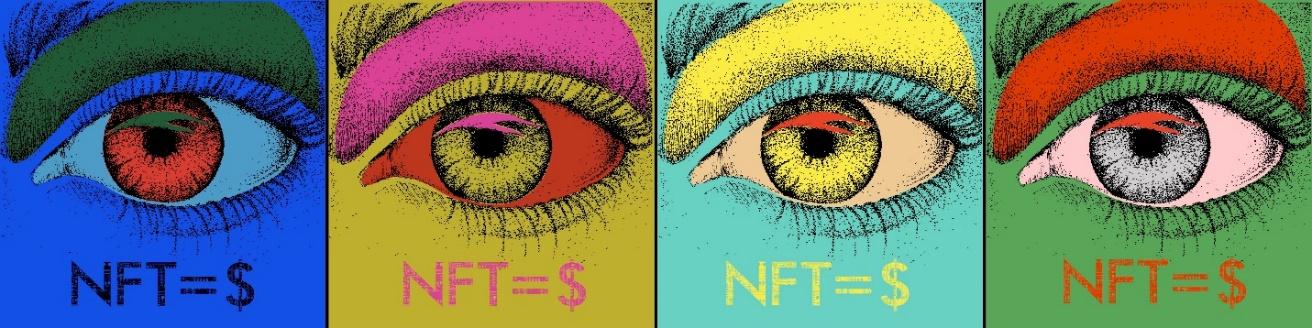
Looking at NFTs and seeing dollar signs was recently a common affliction. The COVID-19 pandemic not only accelerated online shopping and dating but also created a digital art fever involving non-fungible tokens (NFTs). Over three million pieces of NFTs were traded that have a total value of over $2 billion.[1] In 2021, this art market saw a spike in digital trading due in part to the inability for art collectors to physically purchase pieces during the pandemic.[2]

While NFTs can be digital gold mines for artists, designers, purchasers, and investors, the NFT art market can also be a malicious playground for scammers. Cybercriminals are getting bolder and more creative in ways to steal the wealth and intellectual property of unwary participants through a variety of different scams.

Moreover, the abundance of scams across a booming digital art space has created a phenomenon called FUD – fear, uncertainty, and doubt — to a level that can significantly affect traders’ NFT experiences.[3] According to the report by Elliptic, a London-based provider of crypto asset risk management services to businesses worldwide, the NFT scam wave has “the potential to reduce the accessibility or enjoyment with NFTs to both new and existing traders.”[4]

Whether one is an NFT trader or not, knowing the common scams within the NFT market can help stay safe from them. One should be beware of scammers, else risk loosing significant assets and fast.

Different Forms of Scams

The “Rug Pull” 

Fake sites are not the only NFT scams to watch out for. Some NFT projects are themselves a scam. Fraudsters promote counterfeit NFT collections, claiming that these are bound to be profitable investments in the future. They then swiftly abandon the project once the prices hit a high ceiling and transfer the funds to their various digital wallets.[5] Those who invested in the project are not given anything they were promised and “ghosted” by the developers.

This type of scam is known as rug pulls—the latest form of fraud where developers trick people into investing in a project and then steal their digital tokens. The rug pull costs investors hundreds of millions of dollars a year.[6] In 2021, this scam has gathered nearly three billion dollars, accounting for 37% of all cryptocurrency scam revenue for the year.[7]

While rug pull scams are the most unsafe and hard-to-spot type of NFT scam to the victims, the obscurity inherent in the decentralization procedure makes committing scams like these simple for criminals.[8] Given the flexibility of Web3 in creating new decentralized projects with new tokens and freedom from intermediaries for financial transactions, scammers have unrestrained opportunities to exploit unsuspecting victims with their extravagant claims.[9] And the rising interest in metaverse technologies makes them an easy promise by scam projects.

Case Study: The First “Rug Pull” Case

In March 2022, the U.S. Attorney’s Office for the S.D.N.Y. charged the two creators of the Frosties NFT collection for committing a $1.1 million rug pull.[10] Nguyen and Llacuna were charged with (1) conspiracy to commit wire fraud in violation of 18 U.S.C. §1349 and (2) conspiracy to commit money laundering in violation of 18 U.S.C. §1956(h).[11]

According to the complaint, the defendants lied to purchasers that in addition to its unique collection of 8,888 ice cream scoop characters NFTs, they would receive certain benefits, such as giveaways and access to a metaverse game.[12] Then, after having sold all 8,888 NFTs and raising funds from purchasers, they shut down the project’s website, closed the Discord server, and transferred all of the sales proceeds to their digital wallets.[13] The defendants used Tornado Cash, a cryptocurrency transaction “mixer,” that allows one to transfer crypto from one wallet to another without creating noticeable links between them.[14] Meanwhile, devastated investors rushed to sell Frosties at a substantial discount, earning only a few dollars back.[15]

The defendants were arrested right before they prepared to launch the sale of the second set of NFTs advertised as “Embers.”[16] The second project was anticipated to generate approximately $1.5 million in cryptocurrency proceeds.[17] Now, they each face 20 years in prison.[18]

This landmark case in the NFT space has drawn the attention of the authorities, so it could set the tone for future cases and regulations in the space. It demonstrated that whether to classify digital assets as securities, commodities, or a separate asset class entirely does not matter to wire fraud charges.[19] In the eyes of law enforcement, NFTs are no exception to the general rule that “you can’t solicit funds for a business opportunity, abandon that business, and abscond with money investors provided you.”[20]

Insider Trading 

Last year, the Department of Justice (DOJ) brought a charge against a former employee of the NFT marketplace, labeling it “the first-ever digital asset insider trading scheme.”[21] What is striking about this case is that the defendant’s indictment was not based on the typical insider trading statutes involving securities law violations but instead the general wire fraud statute.[22] While this case contains facts and methods usually seen in stock-related insider trading cases, it differs from traditional insider trading prosecutions in crucial ways.[23]

This strategy by the DOJ provides prosecutors with a key advantage in digital asset cases. If the government brought the case as a typical insider trading case, there is a strong likelihood that it may not prevail since many NFTs are not securities but serve as a tool that represents the buyer’s ownership of discrete assets, such as a work of art or the rights to a song.[24]

Case Study: The First Digital Asset Insider Trading Scheme

In June 2022, the S.D.N.Y. charged the former executive at OpenSea, Nathaniel Chastain, with wire fraud and money laundering.[25] Similar to the Frostie case, the defendant was charged under the wire fraud statute 18 U.S.C. §1343. The indictment followed President Joe Biden’s executive order calling for federal agencies to ensure “responsible development of digital assets.”[26]

According to the indictment, Chastain was an employee of OpenSea who took advantage of his access to confidential information before it became publicly known.[27] OpenSea would promote NFTs on its site by listing “featured NFTs” on its homepage multiple times a week, and these NFTs usually appreciated in price due to the increase in publicity and resulting demand.[28] Because Chastain sometimes selected which NFTs would feature on the homepage, he purchased those NFTs in advance and resold them at a much higher price, earning a profit of around $67,000.[29] Furthermore, just like the defendants in the rug pull case, Chastain exploited the decentralized nature of NFTs on the blockchain to cover his tracks. He purchased and sold the NFTs from various anonymous accounts and then transferred funds through even more anonymous accounts to cover his tracks.[30]

Chastain moved to dismiss the indictment based on three grounds. First, the wire fraud count should be dismissed because the “confidential business information” he allegedly misappropriated and the sale of NFTs was not OpenSea’s “property” within the meaning of the wire fraud statute.[31] Second, the DOJ could not prove that he engaged in money laundering because transactions on the Ethereum blockchain are public.[32] Third, the wire fraud argument based on a “misappropriation theory” was insufficiently pleaded because an “insider trading” charge requires trading in securities or commodities, and NFTs are neither.[33]

Nevertheless, in October 2022, the district court refused to dismiss the indictment.[34] While it conceded that Chastain’s arguments “have some force,” it concluded that his points are for a jury to decide at trial as they are “about the sufficiency of the evidence, not the adequacy of the indictment.”[35] For the court, the question of whether NFTs are securities or not was of no consequence: the DOJ did not actually charge him with insider trading as defined under securities law.[36] In contrast to section 10(b) insider trading claim which requires fraud “in connection with the purchase or sale of any security,” section 1343 provides flexibility as it is not limited to securities or commodities.[37] Therefore, the court ruled that whether the “insider trader” label was misleading was an issue to be handled separately by striking it from pleadings or precluding it at trial.[38]

According to the U.S. Attorney Damian Williams, Chastain’s charge demonstrates “the commitment of this Office to stamping out insider trading—whether it occurs on the stock market or the blockchain.”[39] Although we will have to wait and see if the DOJ’s wire fraud theory proves successful, this case presents a strong possibility that the DOJ could theoretically use it as a model to police market manipulation for other modern activities in the digital asset space—and beyond— regardless of whether they are considered securities.[40] The SEC’s jurisdiction is limited to enforcing securities laws, but the DOJ can “dodge the knotty question of whether the asset is a security.”[41]

Takeaway 

Scams are not unique to NFTs, as we see them in various areas of financial services and many other parts of life. The threat of NFT fraud, however, raises some interesting and novel legal questions.

The legal status of NFTs can be murky as there is no official law governing NFTs, but there are still ways by which individuals can be held criminally liable. Although better safety measures are certainly required to prevent NFT scams, regulators have taken an innovative step in applying established criminal theories of liability to NFTs.

While the law in this area is uncertain and rapidly evolving, it pays off for purchasers and creators to perform due diligence to avoid common scams. As with any investment, performing due diligence on the NFT project is imperative— especially when extravagant claims are made by proponents.

ABOUT THE AUTHOR

Seoryung Park is a graduate of the University of Connecticut School of Law with a concentration in IP law. She was an associate editor on the Connecticut International Journal of Law. She earned B.A. in criminology at the University of Toronto. She loves fashion, art, music, and catching her favorite TV shows. She does not own any NFTs but enjoys learning about them.

Image by Iryna Khomenko via Shutterstock: https://www.shutterstock.com/image-vector/nft-theme-design-nonfungible-token-sign-1935174506

Select Resources:

  1. Eray Arda Akartuna et al., NFTs and Financial Crime: Money Laundering, Market Manipulation, Scams & Sanctions Risks in Non-Fungible Tokens, ELLIPTIC (Aug. 24, 2022), https://www.elliptic.co/resources/nfts-financial-crime. ↑
  2. Id. ↑
  3. Akartuna, supra note 1. ↑
  4. Id. ↑
  5. Andrew Rossow, Scams Explained: What Are Rug Pulls? Are They a Crime?, NFTNOW (Apr. 14, 2022), https://nftnow.com/guides/scams-explained-what-are-rug-pulls-and-are-they-a-crime/. ↑
  6. Zack Abrams, How the FBI Made Its First NFT “Rug Pull” Bust – Just in Time to Save Other Would-Be Victims, THE BUS. OF BUS. (Mar. 28, 2022), https://www.businessofbusiness.com/articles/how-the-fbi-made-its-first-nft-rug-pull-bust-just-in-time-to-save-other-victims-from-the-same-fate/. ↑
  7. Rossow, supra note 38. ↑
  8. Felix, supra note 26. ↑
  9. James Howell, Web3 Scams and How to Avoid Them, 101 BLOCK CHAINS (Mar. 9, 2023), https://101blockchains.com/web3-scams/. ↑
  10. Ian McGinley, Wire Fraud: The Most Powerful Law in Crypto Right Now, REUTERS (Aug. 23, 2022), https://www.reuters.com/legal/legalindustry/wire-fraud-most-powerful-law-crypto-right-now-2022-08-23/. ↑
  11. Scott H. Kimpel, DOJ Brings Criminal Charges Against Two Defendants in NFT Fraud, 12 NAT’L L. REV., 89 (2022), https://www.natlawreview.com/article/doj-brings-criminal-charges-against-two-defendants-nft-fraud; See also Complaint, U.S. v. Nguyen, 22-mag-2478 (S.D.N.Y. Mar. 15, 2022). ↑
  12. Id. at ¶ 2. ↑
  13. Rossow, supra note 38. ↑
  14. Abrams, supra note 39. ↑
  15. Nguyen, ¶ 10(c). ↑
  16. TFL, https://www.thefashionlaw.com/doj-hits-creators-of-frosties-nfts-with-conspiracy-fraud-charges/ (last visited Oct. 16, 2022). ↑
  17. Id. ↑
  18. Id. ↑
  19. McGinley, supra note 43. ↑
  20. Press Release, Dept. of Justice, Two Defendants Charged In Non-Fungible Token (“NFT”) Fraud And Money Laundering Scheme (Mar. 24, 2022), https://www.justice.gov/usao-sdny/pr/two-defendants-charged-non-fungible-token-nft-fraud-and-money-laundering-scheme-0. ↑
  21. Joshua M. Newville & Jonathan Mollod, District Court Declines to Dismiss NFT “Insider Trading” Indictment against Former OpenSea Employee, PROSKAUER (Nov. 15, 2022), https://www.proskauer.com/blog/district-court-declines-to-dismiss-nft-insider-trading-indictment-against-former-opensea-employee. ↑
  22. Id. ↑
  23. David Axelrod & Andrew N. D’Aversal, How the Feds are Prosecuting NFT Insider Trading Scheme as Wire Fraud – and Why That Matters, COINDESK (Jun. 10, 2022), https://www.coindesk.com/layer2/2022/06/10/how-the-feds-are-prosecuting-nft-insider-trading-scheme-as-wire-fraud-and-why-that-matters/. ↑
  24. Chris Sloan, NFTs: Securities Law and Fraud Concerns, CROWDFUND INSIDER (Jun. 8, 2022), https://www.crowdfundinsider.com/2022/07/193609-nfts-securities-law-and-fraud-concerns/. (“On the other hand, when an NFT represent a partial interest in an asset or enterprise, or a right to receive profits from a project or business, the NFT is likely to be classified as a security.”). ↑
  25. Id. ↑
  26. Axelrod, supra note 55. ↑
  27. See Indictment, U.S. v. Nathaniel Chastain, 22-cr-305, (S.D.N.Y. May 31, 2022). ↑
  28. Id. ¶ 7. ↑
  29. Axelrod, supra note 55. ↑
  30. Id. ↑
  31. Zach Lewis & Jeremy Goldman, Case Update: NFT “Insider Trading” Case Allowed to Proceed Against Former OpenSea Employee, FRANKFURT KURNIT (Oct. 21, 2022), https://ipandmedialaw.fkks.com/post/102i0p4/case-update-nft-insider-trading-case-allowed-to-proceed-against-former-opensea. ↑
  32. Id. ↑
  33. Id. ↑
  34. Newville, supra note 53. ↑
  35. Id. ↑
  36. Lewis, supra note 63. ↑
  37. Newville, supra note 53. ↑
  38. Id. ↑
  39. Andrew Pimlott, Worldwide: Beware of NFT Fraud, MONDAQ (Feb. 16, 2023), https://www.mondaq.com/unitedstates/fin-tech/1283286/beware-of-nft-fraud. ↑
  40. Axelrod, supra note 55. ↑
  41. Matthew Bultman, Ex-OpenSea Employee’s NFT Handling Runs into DOJ’s ‘Stradivarius,’ BLOOMBERG LAW (Oct. 31, 2022), https://news.bloomberglaw.com/securities-law/ex-opensea-employees-nft-handling-runs-into-dojs-stradivarius. ↑


Disclaimer: This article is for educational purposes only and is not meant to provide legal advice. Readers should not construe or rely on any comment or statement in this article as legal advice. For legal advice, readers should seek a consultation with an attorney.

Post navigation

Previous Langford and the Pandora Papers: The Flaws Uncovered in the Art World
Next Repatriation of the Benin Bronzes: an Ethical and Legal Discussion?

Related Posts

logo

Disputed Greek Art: First Water Diamonds or Forgeries

June 12, 2012
Sothebys Trial Sketch, ELIZABETH WILLIAMS Plaintiff/ Rybolovlev attorney Arthur Kornstien gives opening statement to the jury Dimitri Rybolovlev is seated far left. Judge Jesse Furman presiding

Diversity-Fraud: Accent Delight v. Sotheby’s

February 15, 2024

Cleopatra’s Kneedle Does not Weather Well in NY

January 8, 2011
Center for Art Law
Center for Art Law

Follow us on Instagram for the latest in Art Law!

Don't miss our on our upcoming Bootcamp on Februar Don't miss our on our upcoming Bootcamp on February 4th! Check out the full event description below:

Join the Center for Art Law for an in-person, full-day training aimed at preparing lawyers for working with art market participants and understanding their unique copyright law needs. The bootcamp will be led by veteran art law attorneys, Louise Carron, Barry Werbin, Carol J. Steinberg, Esq., Scott Sholder, Marc Misthal, specialists in copyright law.

This Bootcamp provides participants -- attorneys, law students, law graduates and legal professionals -- with foundational legal knowledge related to copyright law for art market clients. Through a combination of instructional presentations and mock consultations, participants will gain a solid foundation in copyright law and its specificities as applied to works of visual arts, such as the fair use doctrine and the use of generative artificial intelligence tools.

🎟️ Grab tickets using the link in our bio!
The expansion of the use of collaborations between The expansion of the use of collaborations between artists and major consumer corporations brings along a myriad of IP legal considerations. What was once seen in advertisement initiatives  has developed into the creation of "art objects," something that lives within a consumer object while retaining some portion of an artists work. 

🔗 Read more about this interesting interplay in Natalie Kawam Yang's published article, including a discussion on how the LOEWE x Ghibli Museum fits into this context, using the link in our bio.
We can't wait for you to join us on February 4th! We can't wait for you to join us on February 4th!  Check out the full event description below:

Join the Center for Art Law for an in-person, full-day training aimed at preparing lawyers for working with art market participants and understanding their unique copyright law needs. The bootcamp will be led by veteran art law attorneys, Louise Carron, Barry Werbin, Carol J. Steinberg, Esq., Scott Sholder, Marc Misthal, specialists in copyright law. 

This Bootcamp provides participants -- attorneys, law students, law graduates and legal professionals -- with foundational legal knowledge related to copyright law for art market clients. Through a combination of instructional presentations and mock consultations, participants will gain a solid foundation in copyright law and its specificities as applied to works of visual arts, such as the fair use doctrine and the use of generative artificial intelligence tools.

🎟️ Grab tickets using the link in our bio!
Don't forget to grab tickets to our upcoming Collo Don't forget to grab tickets to our upcoming Colloquium, discussing the effectiveness of no strike designations in Syria, on February 2nd. Check out the full event description below:

No strike designations for cultural heritage are one mechanism by which countries seek to uphold the requirements of the 1954 Hague Convention. As such, they are designed to be key instruments in protecting the listed sites from war crimes. Yet not all countries maintain such inventories of their own whether due to a lack of resources, political views about what should be represented, or the risk of misuse and abuse. This often places the onus on other governments to create lists about cultures other than their own during conflicts. Thus, there may be different lists compiled by different governments in a conflict, creating an unclear legal landscape for determining potential war crimes and raising significant questions about the effectiveness of no strikes as a protection mechanism. 

Michelle Fabiani will discuss current research seeking to empirically evaluate the effectiveness of no strike designations as a protection mechanism against war crimes in Syria. Using data on cultural heritage attacks from the height of the Syrian Conflict (2014-2017) compiled from open sources, a no strike list completed in approximately 2012, and measures of underlying risk, this research asks whether the designations served as a protective factor or a risk factor for a given site and the surrounding area. Results and implications for holding countries accountable for war crimes against cultural heritage are discussed. 

🎟️ Grab tickets using the link in our bio!

#centerforartlaw #artlaw #culturalheritage #lawyer #legalreserach #artlawyer
Don't miss our up coming in-person, full-day train Don't miss our up coming in-person, full-day training aimed at preparing lawyers for working with art market participants and understanding their unique copyright law needs. The bootcamp will be led by veteran art law attorneys, Louise Carron, Barry Werbin, Carol J. Steinberg, Esq., Scott Sholder, Marc Misthal, specialists in copyright law. 

This Bootcamp provides participants -- attorneys, law students, law graduates and legal professionals -- with foundational legal knowledge related to copyright law for art market clients. Through a combination of instructional presentations and mock consultations, participants will gain a solid foundation in copyright law and its specificities as applied to works of visual arts, such as the fair use doctrine and the use of generative artificial intelligence tools.

🎟️ Grab tickets using the link in our bio! 

#centerforartlaw #artlaw #legal #research #lawyer #artlawyer #bootcamp #copyright #CLE #trainingprogram
In order to fund acquisitions of contemporary art, In order to fund acquisitions of contemporary art, The Phillips Collection sold seven works of art from their collection at auction in November. The decision to deaccession three works in particular have led to turmoil within the museum's governing body. The works at the center of the controversy include Georgia O'Keefe's "Large Dark Red Leaves on White" (1972) which sold for $8 million, Arthur Dove's "Rose and Locust Stump" (1943), and "Clowns et pony" an 1883 drawing by Georges Seurat. Together, the three works raised $13 million. Three board members have resigned, while members of the Phillips family have publicly expressed concerns over the auctions. 

Those opposing the sales point out that the works in question were collected by the museum's founders, Duncan and Marjorie Phillips. While museums often deaccession works that are considered reiterative or lesser in comparison to others by the same artist, the works by O'Keefe, Dove, and Seurat are considered highly valuable, original works among the artist's respective oeuvres. 

The museum's director, Jonathan P. Binstock, has defended the sales, arguing that the process was thorough and reflects the majority interests of the collection's stewards. He believes that acquiring contemporary works will help the museum to evolve. Ultimately, the controversy highlights the difficulties of maintaining institutional collections amid conflicting perspectives.

🔗 Click the link in our bio to read more.
Make sure to check out our newest episode if you h Make sure to check out our newest episode if you haven’t yet!

Paris and Andrea get the change to speak with Patty Gerstenblith about how the role international courts, limits of accountability, and if law play to protect history in times of war.

🎙️ Click the link in our bio to listen anywhere you get your podcasts!
Alexander Butyagin, a Russian archaeologist, was a Alexander Butyagin, a Russian archaeologist, was arrested by Polish authorities in Warsaw. on December 4th. Butyagin is wanted by Ukraine for allegedly conducting illegal excavations of Myrmekion, an ancient city in Crimea. Located in present-day Crimea, Myrmekion was an Ancient Greek colony dating to the sixth century, BCE. 

According to Ukrainian officials, between 2014 and 2019 Butyagin destroyed parts of the Myrmekion archaeological site while serving as head of Ancient Archaeology of the Northern Black Sea region at St. Petersburg's Hermitage Museum. The resulting damages are estimated at $4.7 million. Notably, Russia's foreign ministry has denounced the arrest, describing Poland's cooperation with Ukraine's extradition order as "legal tyranny." Russia invaded and annexed Crimea in 2014.

🔗 Read more by clicking the link in our bio

#centerforartlaw #artlaw #artcrime #artlooting #ukraine #crimea
Join us on February 18th to learn about the proven Join us on February 18th to learn about the provenance and restitution of the Cranach painting at the North Carolina Museum of Art.

A beloved Cranach painting at the North Carolina Museum of Art was accused of being looted by the Nazis. Professor Deborah Gerhardt will describe the issues at stake and the evidentiary trail that led to an unusual model for resolving the dispute.

Grab your tickets today using the link in our bio!

#centerforartlaw #artlaw #legal #legalresearch #museumissues #artwork
“In the depth of winter, I finally learned that wi “In the depth of winter, I finally learned that within me there lay an invincible summer."
~ Albert Camus, "Return to Tipasa" (1952) 

Camus is on our reading list but for now, stay close to the ground to avoid the deorbit burn from the 2026 news and know that we all contain invincible summer. 

The Center for Art Law's January 2026 Newsletter is here—catch up on the latest in art law and start the year informed.
https://itsartlaw.org/newsletters/january-newsletter-which-way-is-up/ 

#centerforartlaw #artlaw #lawyer #artlawyer #legalresearch #legal #art #law #newsletter #january
Major corporations increasingly rely on original c Major corporations increasingly rely on original creative work to train AI models, often claiming a fair use defense. However, many have flagged this interpretation of copyright law as illegitimate and exploitative of artists. In July, the Senate Judiciary Committee on Crime and Counterterrorism addressed these issues in a hearing on copyright law and AI training. 

Read our recent article by Katelyn Wang to learn more about the connection between AI training, copyright protections, and national security. 

🔗 Click the link in our bio to read more!
Join the Center for Art Law for an in-person, all- Join the Center for Art Law for an in-person, all-day  CLE program to train lawyers to work with visual artists and their unique copyright needs. The bootcamp will be led by veteran art law attorneys specializing in copyright law.

This Bootcamp provides participants -- attorneys, law students, law graduates and legal professionals -- with foundational legal knowledge related to copyright law for art market clients. Through a combination of instructional presentations and mock consultations, participants will gain a solid foundation in copyright law and its specificities as applied to works of visual arts, such as the fair use doctrine and the use of generative artificial intelligence tools. 

🎟️ Grab tickets using the link in our bio!
  • About the Center
  • Contact Us
  • Newsletter
  • Upcoming Events
  • Internship
  • Case Law Database
  • Log in
  • Become a Member
  • Donate
DISCLAIMER

Center for Art Law is a New York State non-profit fully qualified under provision 501(c)(3)
of the Internal Revenue Code.

The Center does not provide legal representation. Information available on this website is
purely for educational purposes only and should not be construed as legal advice.

TERMS OF USE AND PRIVACY POLICY

Your use of the Site (as defined below) constitutes your consent to this Agreement. Please
read our Terms of Use and Privacy Policy carefully.

© 2026 Center for Art Law