• About
    • Mission
    • Team
    • Boards
    • Mentions & Testimonials
    • Institutional Recognition
    • Annual Reports
    • Current & Past Sponsors
    • Contact Us
  • Resources
    • Article Collection
    • Podcast: Art in Brief
    • AML and the Art Market
    • AI and Art Authentication
    • Newsletter
      • Subscribe
      • Archives
      • In Brief
    • Art Law Library
    • Movies
    • Nazi-looted Art Restitution Database
    • Global Network
      • Courses and Programs
      • Artists’ Assistance
      • Bar Associations
      • Legal Sources
      • Law Firms
      • Student Societies
      • Research Institutions
    • Additional resources
      • The “Interview” Project
  • Events
    • Worldwide Calendar
    • Our Events
      • All Events
      • Annual Conferences
        • 2026 Art Law Conference
        • 2025 Art Law Conference
        • 2024 Art Law Conference
        • 2023 Art Law Conference
        • 2022 Art Law Conference
        • 2015 Art Law Conference
  • Programs
    • Visual Artists’ Legal Clinics
      • Art & Copyright Law Clinic
      • Artist-Dealer Relationships Clinic
      • Artist Legacy and Estate Planning Clinic
      • Visual Artists’ Immigration Clinic
    • Summer School
      • 2026
      • 2025
    • Internship and Fellowship
    • Judith Bresler Fellowship
  • Case Law Database
  • Log in
  • Become a Member
  • Donate
  • Log in
  • Become a Member
  • Donate
Center for Art Law
  • About
    About
    • Mission
    • Team
    • Boards
    • Mentions & Testimonials
    • Institutional Recognition
    • Annual Reports
    • Current & Past Sponsors
    • Contact Us
  • Resources
    Resources
    • Article Collection
    • Podcast: Art in Brief
    • AML and the Art Market
    • AI and Art Authentication
    • Newsletter
      Newsletter
      • Subscribe
      • Archives
      • In Brief
    • Art Law Library
    • Movies
    • Nazi-looted Art Restitution Database
    • Global Network
      Global Network
      • Courses and Programs
      • Artists’ Assistance
      • Bar Associations
      • Legal Sources
      • Law Firms
      • Student Societies
      • Research Institutions
    • Additional resources
      Additional resources
      • The “Interview” Project
  • Events
    Events
    • Worldwide Calendar
    • Our Events
      Our Events
      • All Events
      • Annual Conferences
        Annual Conferences
        • 2026 Art Law Conference
        • 2025 Art Law Conference
        • 2024 Art Law Conference
        • 2023 Art Law Conference
        • 2022 Art Law Conference
        • 2015 Art Law Conference
  • Programs
    Programs
    • Visual Artists’ Legal Clinics
      Visual Artists’ Legal Clinics
      • Art & Copyright Law Clinic
      • Artist-Dealer Relationships Clinic
      • Artist Legacy and Estate Planning Clinic
      • Visual Artists’ Immigration Clinic
    • Summer School
      Summer School
      • 2026
      • 2025
    • Internship and Fellowship
    • Judith Bresler Fellowship
  • Case Law Database
Home image/svg+xml 2021 Timothée Giet Art law image/svg+xml 2021 Timothée Giet The Shifting Sands of Art Authentication: Calder Foundation, Authentication, and Litigation
Back

The Shifting Sands of Art Authentication: Calder Foundation, Authentication, and Litigation

April 24, 2014
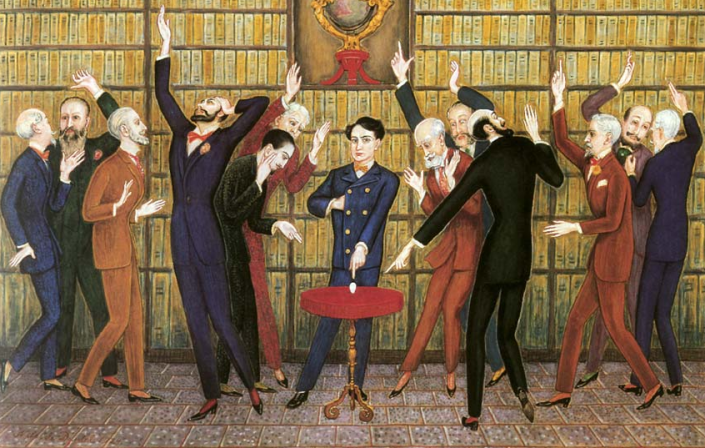
image of men pointing at an egg

By Irina Tarsis, Esq.

As the Calder Foundation finds itself in court again who will have the last word regarding authentication?

On 3 March 2014, a well-intentioned Bill to amend the New York Arts and Cultural Affairs Law was introduced in the New York State Assembly. If voted in, the “act to amend the arts and cultural affairs law, in relation to opinions concerning authenticity, attribution and authorship of works of fine art the proposed amendments arguably would protect art authenticators from frivolous or malicious suits brought by art owners.”  For the purposes of the Bill, “art authenticator” is someone who provides authentication of artwork “through documentation, stylistic inquiry, and/or scientific verification.” As proposed, it offers enhanced protection to individuals and entities “recognized in the visual arts community as having expertise regarding the artist” in respect to whose work the authenticator is rendering an opinion. The Bill will prevent collectors from using the legal system to strong-arm art experts into giving favorable opinions about authorship, attribution or authentication. In fact, the Bill may be a response to the increased number of suits brought against art foundations and against art historians as well as to the recent trend of the US- based art authentication committees to disband. (See for example The Keith Haring Foundation to Disband its Authentication Committee and Authentication Committees Disband: Who’s Next?).

Ultimately, it does seem unfair to penalize art historians for withholding favorable opinions in cases where they challenge attribution or deem works of art not genuine. The Bill is intended to allow authenticators and art historians, who have increasingly become reluctant to provide professional opinions about authentication, to have open scholarly discussions debating if suspect or unconfirmed objects deserve to be included in artist catalogues raisonnés and their known oeuvres.

Art authenticators provide an important service not only to the humanities but also to the art market. Indeed, the art market has long relied on art historians and authentication committees to flag suspect art and pass judgment about authenticity. However, neither authenticators nor art historians are able to access the insurance they require to protect them for providing their professional opinion. Protection readily available for malpractice and erroneous professional activity appears to be reserved for professions involved in medicine or law. As a result from the lack of protection, the threat of legal action has driven some art authenticators out of the business.

Authenticators in the United States seem to have been more affected by legal actions than the authenticators in the European authentication markets, where, direct descendants of artists are entitled to issue certificates of authenticity or bring about destruction of works deemed inauthentic. (See for example, Authenticating Picasso and Burning Fake Chagalls). To the detriment of the art community, it has become a common practice for authentication committees in the United States to deny providing any reasoning for determining when certain works of art are deemed to be fake or dubious. This is premised on the argument that if authenticators reveal what red flags triggered their suspicions, the sly art forgeries would simply incorporate mechanism and compensate for the deficiencies in the subsequent forgery, thus making the work of art experts harder still. Incidentally, just this week the man responsible for selling fakes to the Knoedler Gallery was indicted in Spain and was quoted as saying that art works smelling of tea leaves should raise alarm bells as tea bags are frequently used by art forgers. Letting forgers know what to look for, makes the forgery market easily accessible. (For more, read Indictment Details How to Forge a Masterpiece.)

Alas, just as “to err is human” so is making false statements for various disreputable reasons. Even artists themselves have been known to refuse providing authenticity of their own works just to spite the legal owner of a genuine artwork. (See for example Valentina Favero, “Art Law and Authenticity: a critical analysis of some issues from Defendants v. Vandergucht”).

Unlike forensic science, authentication based on connoisseurship is subjective, and it may change over time based on subsequent studies and conclusions. While auction houses offer attribution warranty guaranteeing that within a set period of time after sale, a transaction may be rescinded if attribution of the work definitively changes, art collectors are not 100% protected from the adverse economic effects of attribution revisions that an authentication committee may issue vis-à-vis an object. This occurred in the famous “Double Denied” case involving a silkscreen attributed to Andy Warhol. The Warhol Authentication Committee rejected authenticity twice, even though the silkscreen had been authenticated prior to those 2002 decisions. See Simon-Whelan v. The Andy Warhol Found. for the Visual Arts, No. 07 Civ. 6423 (LTS) (S.D.N.Y. May 26, 2009).

The Bill is very likely to pass in New York in 2014, given the nearly unanimous support it has garnered among various Bar Associations and arts organizations, including appraisers’ and art historians’ organizations. Just in time, perhaps, the recently filed case brought by Gerard Cramer against the Calder Foundation brings a challenge on the very ground that would require heightened standards or pleading under the proposed law.

In 1948 Alexander Calder (1898-1976) an internationally renowned and universally beloved master of sculptures, sold one of his mobiles to Gerard Cramer, a gallery owner in Switzerland. Subsequently, this work entitled “Eight Black Leaves,” appeared in various catalogues, its authenticity remaining unchallenged. According to the complaint, Cramer and Calder remained on amicable terms and corresponded for years after the sale.

The Calder Foundation is a New York based nonprofit, which, according to its mission, catalogues Calder’s works and makes them available to the public for inspection, research and educational purposes. There is a list of Calder’s works available on the Foundation’s website. While the Foundation never completed a catalogue of Calder’s works, it has established a practice of issuing inventory numbers to the works it rules to be authentic.

Following Calder’s death, his sculptures remained popular and desirable. In 2012, Cramer heirs contacted Christie’s auction house indicating they wanted to consign “Eight Black Leaves” for sale. The auction house apparently agreed to accept the work on consignment subject to the issuance of an inventory number by the Calder Foundation, as is the common practice in the art market regarding Calder works.

According to the complaint “it is a well-known fact in the marketplace for Calder works, and works without an inventory number issued by the Calder Foundation cannot be sold as authentic Calder work.” Instead of giving the work a status of a complete work, the Foundation labeled it a fragment. The sales have been blocked because the Foundation alleges that “Eight Black Leaves” are a segment of a larger artwork.

On 28 February 2014, Patrick Cramer, co-administrator of the Estate of Gerard Cramer, brought a suit against the Calder Foundation, as well as individual Calder descendants, alleging that defendants were blocking a sale of their mobile. The wrongful act alleged in the complaint is described as “arbitrary determination of authenticity.” The Complaint states that the Foundation has “compromised its scholarly integrity” by mislabeling “Eight Black Leaves” as a fragment and this act is only one in a bigger scheme to control the market for Calder works. This and other decisions made by the Calder Foundation have allegedly stemmed from conflict of interest and self-dealing, because the Foundation has its own 22,000-item Calder collection, which it deals.

The Plaintiff accused the Foundation of product disparagement, anti-trust violations and other wrongdoings. (See a related case Thome v. Alexander & Louisa Calder Found., No. 600823/07 (N.Y. Sup. Ct. 2008); aff’d 70 A.D.3d 88 (N.Y. App. Div. 2009)).

Why are there more and more cases being filed against authenticators and by authenticators, such as the recently dismissed Calder Estate claim and the pending case filed by the Basquiat sisters? (For details, see Calder Estate Fraud Claim Dismissed or Basquiat sightings, or Case Review: Heriveaux v. Christies, Inc.) The whopping prices that certain twentieth century art giants are netting at auction have attracted a new breed of art buyers – those who purchase art for the purpose of investment. These investors are interested in safeguarding their investments with more just than uncertain scholarly opinion. If auction houses and galleries refuse to sell, and collectors hesitate to buy art works attributed to the blockbuster names unless there is an authentication certificate included in each transaction, an opinion has to be ventured and a certificate signed. This exercise, in theory should be unbiased and free from threat of liability.

As a justification for the new Bill, its drafters have noted that:

 “the role of authenticators as drivers of the art market cannot be overstated. Art authenticators reduce the risk of counterfeits and imitations flooding the art market that could potentially devalue the work of millions of artists. In recent years, the work of authenticators has come under pressure from meritless lawsuits against those who render opinions in good faith. Such defense of expensive and frivolous lawsuits have left many in the industry reluctant to lend their expertise in authenticating art works. This bill would clarify the role of art authenticators to ensure that those who practice their profession, in good faith, would be afforded protections under the law to ensure that only valid, verifiable claims against authenticators are allowed to proceed in civil court.”

The real threat of litigation that may result in case authentication is challenged or revoked necessitates a scapegoat; a scapegoat that the new Bill promises to prevent art historians from becoming. Unfortunately, the possibility of malfeasance by economically motivated authentication entities remains intact. While the proposed Bill tries to address possible conflicts of interest facing authenticators by indicating that entities with a financial interest in the transaction would not receive enhanced protection from the new law, this provision would only ensure that authentication committee members would not be protected if they provide authentication to the works they own and/or are selling.

However, it is important to note that there is a difference between the ‘financial interest’ detected in a specific work being authenticated in order to benefit from the sale and a ‘financial interest’ in other works of the same artist that may explain false denouncements of other works to make them unsellable, or remove competition. There is a reason why even the IRS recognized that bulk discount is merited on inheritance tax owed by heirs of a given artist because if all of the works in the studio were to be sold at once, the uptake on the supply side, would flood the market and result in a reduced demand for the works. Thus, one can reasonably argue that a foundation that has an authentication committee while capable of selling artworks by the same artist on the open market does have a financial interest in controlling the size of the pool, and thus the market and is more likely to find something wrong with the work submitted from the outside.

Cramer is represented by attorneys from Eaton & Van Winkle LLP, Michael A. Lacher and Adam J. Rader. An answer or a motion from the Foundation in response to the complaint is expected by May 8, 2014.

In conclusion: Caveat emptor! Again and always, because the more things change, the more they stay the same.


Select Sources:

  • Complaint, Cramer v. Calder Foundation, et al, (S.D.N.Y. Feb. 28, 2014);
  • Valentina Favero, “Art Law and Authenticity: a critical analysis of some issues from Defendants v. Vandergucht, discussing Arnold Herstand & Co. v. Gallery: Gertrude Stein, Inc, 211 A.D.2d 77 (1995), available here.
  • Simon-Whelan v. The Andy Warhol Found. for the Visual Arts, No. 07 Civ. 6423 (LTS) (S.D.N.Y. May 26, 2009)
  • Thome v. Alexander & Louisa Calder Found., No. 600823/07 (N.Y. Sup. Ct. 2008); aff’d 70 A.D.3d 88 (N.Y. App. Div. 2009)

About the Author: Irina Tarsis, Esq., specializes in art law, provenance research and cultural heritage law. She may be reached at itsartlaw@gmail.com.

Disclaimer: This article is intended as general information, not legal advice, and is no substitute for seeking representation.

Disclaimer: This article is for educational purposes only and is not meant to provide legal advice. Readers should not construe or rely on any comment or statement in this article as legal advice. For legal advice, readers should seek a consultation with an attorney.

Post navigation

Previous Spotlight on Art Law Instruction
Next Interns in the Arts

Related Art Law Articles

Benningson V Guggenheim Case Review Center for Art Law
Art lawCase ReviewLegal Issues in Museum Administration

Case Review: Bennigson v. Solomon R. Guggenheim Foundation

March 13, 2026
Art Muralists Artists? Center for Art Law
Art law

Are Muralists Artists? Legally, It Varies

March 13, 2026
Clinic Instagram
Art lawWish You Were Herebootcampevent review

WYWH: “Art Lawyering Bootcamp: Copyright Law”

March 6, 2026
Center for Art Law
What the Heck is Copyright (2)

What is Copy, Right?

Annual Conference

2026 edition explores Visual Art, AI, and the Law in the 21st Century.


Early Bird Tickets Available
Center for Art Law

Follow us on Instagram for the latest in Art Law!

You may have noticed our February newsletter arriv You may have noticed our February newsletter arrived twice, think of it as an encore. March has arrived with its familiar whirlwind, and like many of you, we find ourselves following world affairs with disbelief, dismay, and a deepening sense of urgency. Mahatma Gandhi observed that “the difference between what we do and what we are capable of doing would suffice to solve most of the world’s problems.” At the Center, we believe that building knowledge, access, and community in art law is one meaningful way to solve some of the world’s problems; we wish we could do more. 

🔗 Check out our March newsletter, using the link in our bio, to get a curated collection of art law news, our most recent published articles, upcoming events, and much more!!

#centerforartlaw #artlaw #artlawyer #lawyer #artissues #newsletter #march #legalresearch
Don't miss out on our upcoming Copyright Clinic on Don't miss out on our upcoming Copyright Clinic on March 18th!! Join us for an informative presentation and pro bono consultations to better understand the current art and copyright law landscape. Copyright law is a body of federal law that grants authors exclusive rights over their original works — from paintings and photographs to sculptures, as well as other fixed and tangible creative forms. Once protection attaches, copyright owners have exclusive economic rights that allow them to control how their work is reproduced, modified and distributed, among other uses.

Albeit theoretically simple, in practice copyright law is complex and nuanced: what works acquire such protection? How can creatives better protect their assets or, if they wish, exploit them for their monetary benefit?

🎟️ Grab tickets using the link in our bio!

#centerforartlaw #artlaw #legal #research #lawyer #artlawyer #bootcamp #copyright #CLE #trainingprogram
September of 2025 stuck a potential death blow to September of 2025 stuck a potential death blow to the NFT market: Christie's announced the closing of their digital art department. It had only lasted 3 years. NFTs experienced a incredibly  fast tracked rise and fall in popularity, leaving behind questions as to their continuing value and ownership rights. And yet, there could be some lasting change on how digital ownership will continue moving foward. 

📚 To learn more about this niche and potentially, completely, disappearing market read Shaila Gray's recently published article using the link in our bio!

#centerforartlaw #artlaw #artlawyer #lawyer #legalresearch #nfts #blockchain #digitalart #artmarket #artistissues
ONLY 5 DAYS LEFT to apply for the Second Edition ONLY 5 DAYS LEFT to apply  for the Second Edition of Center for Art Law Summer School!! Deadline to apply is  March 15th! Check out these memories from our 2025 Summer School. Don't miss your chance to participate in a whirlwind adventure exploring art law in NYC. 🗽

Taking place in the vibrant art hub of New York City, the program will provide participants with a foundational understanding of art law, opportunities to explore key issues in the field, and access to a network of professionals and peers with shared interests. Participants will also have the opportunity to see how things work from a hands-on and practical perspective by visiting galleries, artist studios, auction houses and law firms, and speak with professionals dedicated to and passionate about the field.

🎟️ APPLY NOW using the link in our bio!
After many years of hard work we’ve officially cro After many years of hard work we’ve officially crossed the 1,000 cases mark in our case law database!! Let us know what your favorites are below!
Join us on March 12 for Charitable Contributions: Join us on March 12 for Charitable Contributions: Tax Considerations for Artists and Collectors. For this event we are pleased to be hearing from Attorney Karin Gross. With over 30 years of experience, Ms. Gross is an expert in the area of tax law and specializes in the area of tax aspects for charitable giving. She served in the Office of Legislative Counsel for the U.S. House of Representatives, drafting legislation on behalf of Members of Congress and committee and has worked at the IRS Office of Chief Council. Ms. Gross will guide participants through important tax considerations for artists, collectors and art market participants. 

🎟️ Grab tickets using the link in bio!

#centerforartlaw #artlaw #artlawyer #tax #taxlaw #artist #irs #artandtaxlaw
On March 2nd, SCOTUS ended the saga of "The Recent On March 2nd, SCOTUS ended the saga of "The Recent Enteance to Paradise ", having denied writ of certiorari in Thaler v. Perlmutter. The question posed to the Court was if a work with a nonhuman author could receive copyright protections. The Court of Appeals for D.C. (2025) and the District Court (2023) have already answered 'no' to this issue, citing prior case law human requirements, statute interpretation of the word human artist, and other arguments. Check out our coverage discussing both lower court opinions using the link in bio. Human authorship remains a must for copyright registration. 

📚 Read more about the Supreme Court petition and outcome using the link in bio!

#centerforartlaw #copyright #artlaw #artlawyer #copyrightlaw #ailaw #aiart #artissues #artandai
Deadline Extended!! We are still accepting applica Deadline Extended!! We are still accepting applications for the Second Edition of Center for Art Law Summer School until March 15th! Don't miss this opportunity to explore art law NYC style 🗽

Taking place in the vibrant art hub of New York City, the program will provide participants with a foundational understanding of art law, opportunities to explore key issues in the field, and access to a network of professionals and peers with shared interests. Participants will also have the opportunity to see how things work from a hands-on and practical perspective by visiting galleries, artist studios, auction houses and law firms, and speak with professionals dedicated to and passionate about the field.

Applications Extended till March 15th!

🎟️ APPLY NOW using the link in our bio!

#centerforartlaw #artlawsummerschool #newyork #artlaw #artlawyer #legal #lawyer #art
Have you seen the 2024 documentary "The Spoils"? O Have you seen the 2024 documentary "The Spoils"? Our latest review covers Jamie Kastner's film that follows the Max Stern Foundation's restitution efforts and asks hard questions about who holds power in the art world. Savannah Weiler reviews it and we want to hear your take. Read it via the link in bio and drop your thoughts in the comments! 👇 

#centerforartlaw #FILMREVIEW #nazieralootedart #maxsternfoundation
Smile — you're at the Center for Art Law! 🌷 Meet o Smile — you're at the Center for Art Law! 🌷 Meet our Spring 2026 intern team, joining us from schools and graduate programs across the country! 🎓 

Our Spring 2026 Interns have been learning and working hard starting January! We are pleased to introduce to you Donyea James (Legal Intern, Fordham Law, 3L), Alexandra Kharchenko (Legal Intern, French LLM Grad of Northwestern Pritzker School of Law), Jacqueline Koutrodimos-Lewis (Graduate Intern, with MA in Classics and BA in Art History), Halle O’Hern (Legal Intern, Brooklyn Law, 2L), Marina Rastorfer (Legal Intern, Cardozo Law, LLM), and Savannah Weiler (Graduate Intern, MA in History of Art). 

From legal research to event planning, our interns are doing it all — under careful supervision!

Interested in joining our team? Fall 2026 internships begin the 2nd week of September — visit the link in our bio to learn more!
📌 We are looking for interns who can commit to working with us the entire academic year. 

#ArtLaw #LegalInterns #SpringInterns #InternSpotlight #ArtAndLaw #LawSchool #Internship BrooklynLawSchool #FordhamLaw #CardozoLaw #Northwestern #UTAustin #ClassicsAndArt #ArtHistory #NextGenLawyers
🏒 🎨⚖️ Thank you to all the applicants interested 🏒 🎨⚖️

Thank you to all the applicants interested in our 2026 summer internship program. We are humbled by the talent and volume of applications received. We only wish we could offer placement to all of you. If we cannot accommodate your interest this summer, please consider joining us as guest writers, volunteers and students at the upcoming summer school.
Grab an Early Bird Discount for our new CLE progra Grab an Early Bird Discount for our new CLE program to train lawyers to assist visual artists and dealers in the unique aspects of their relationship.

Center for Art Law’s Art Lawyering Bootcamp: Artist-Dealer Relationships is an in-person, full-day training aimed at preparing lawyers for working with visual artists and dealers, in the unique aspects of their relationship. The bootcamp will be led by veteran attorneys specializing in art law.

This Bootcamp provides participants -- attorneys, law students, law graduates and legal professionals -- with foundational legal knowledge related to the main contracts and regulations governing dealers' and artists' businesses. Through a combination of instructional presentations and mock consultations, participants will gain a solid foundation in the specificities of the law as applied to the visual arts.

Bootcamp participants will be provided with training materials, including presentation slides and an Art Lawyering Bootcamp handbook with additional reading resources.

The event will take place at DLA Piper, 1251 6th Avenue, New York, NY. 9am -5pm.

Art Lawyering Bootcamp participants with CLE tickets will receive New York CLE credits upon successful completion of the training modules. CLE credits pending board approval. 

🎟️ Grab tickets using the link in our bio! 

#centerforartlaw #artlaw #legal #research #lawyer #artlawyer #bootcamp #artistdealer #CLE #trainingprogram
  • About the Center
  • Contact Us
  • Newsletter
  • Upcoming Events
  • Internship
  • Case Law Database
  • Log in
  • Become a Member
  • Donate
DISCLAIMER

Center for Art Law is a New York State non-profit fully qualified under provision 501(c)(3)
of the Internal Revenue Code.

The Center does not provide legal representation. Information available on this website is
purely for educational purposes only and should not be construed as legal advice.

TERMS OF USE AND PRIVACY POLICY

Your use of the Site (as defined below) constitutes your consent to this Agreement. Please
read our Terms of Use and Privacy Policy carefully.

© 2026 Center for Art Law