
Turkey Rules: Cultural Heritage Protection Efforts Explained
March 26, 2018
By Merve Stolzman
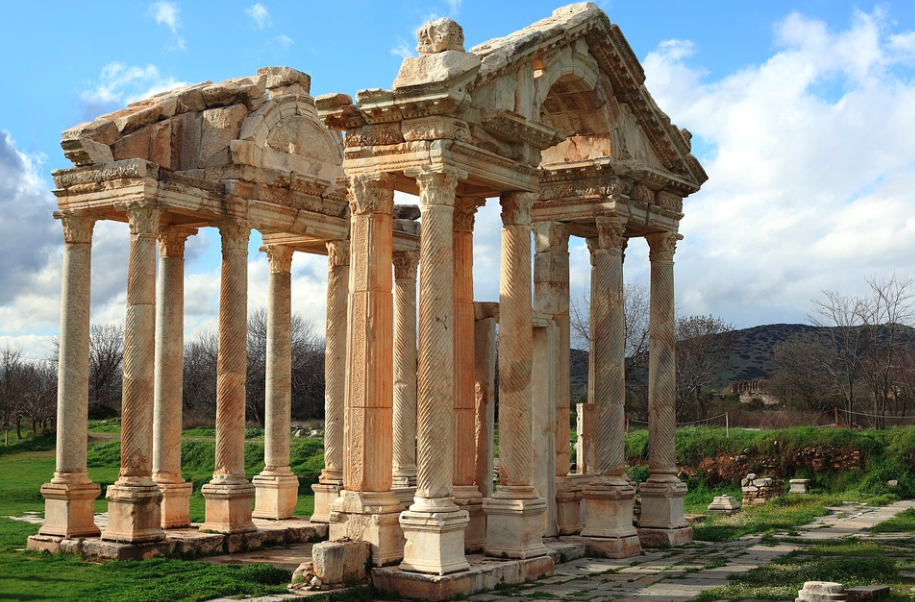
Turkey undisputedly possesses a rich cultural heritage. Seventeen of its historic sites are on the United Nations Educational, Scientific, and Cultural Organization (“UNESCO”) World Heritage List. This list includes Cappadocia, and, most recently, the temple of Aphrodisias and the nearby marble quarries that contributed to its beauty. Turkey has also placed seventy-one additional sites on UNESCO’s Tentative List as possible future nominations. This list is likely to get bigger, as dozens of new historic and cultural sites and artifacts are discovered every month.

However, being one of the largest source countries of cultural property makes Turkey highly susceptible to looting and theft. The Ministry of Culture and Tourism (“the Ministry”) lists at least 300 reported incidences of theft to date, each relating to multiple artifacts. This number does not take even take into account the thousands of non-registered artifacts that individuals and organizations smuggle, or try to smuggle, outside of the country every year. Turkey has conceded that illicit excavations by both foreigners and locals have been one of the country’s most important issues for over a century.
In the last few years, Turkey has experienced what appears to be a cultural revitalization, or at least a public willingness to place more importance on the heritage of its rich lands. As part of this effort, it has declared what it dubs a “cultural war” on foreign governments to regain cultural property which it claims was stolen during the last few decades of Ottoman rule and in the mid-twentieth century. For instance, several years ago, the government allegedly threatened to deny licenses for several excavations conducted by German and French researchers in Turkey. It also reportedly refused to allow its exhibitions to travel to the British Museum in London, and the Metropolitan Museum of Art in New York City. Turkey’s alleged rationale for these overt, and what many consider to be aggressive, protective measures was that they functioned as a form of self-help restitution of artifacts Turkey considered to have been illicitly exported from its territory. While Turkey denied that it attempted to use excavation licenses and temporary exhibitions as a bargaining chip for restitution negotiations, this dispute has brought Turkey’s efforts at protecting its cultural property to the forefront.
Germany, a country which has conducted numerous — and sometimes controversial — excavations in Turkey since the nineteenth-century, argued that the reason why the objects in its museums were taken out of Turkey in the first place was because the Turkish government was destroying, rather than preserving, them. The Pergamon Museum’s Director in Berlin, Hermann Parzinger, feared that the same fate awaited the artifacts should they be returned. He is not alone, and even Turkish archaeologists question Turkey’s commitment to preserving its heritage. To determine whether these fears are founded, we must examine the laws and regulations in place in Turkey to combat the illicit trafficking of cultural property, and how those have been applied in practice to prevent theft, and recover property exported illegally.
Recognizing the value and importance of its cultural patrimony, Turkey has implemented civil and criminal laws protecting against the export of its cultural valuables since 1869. The most recent iteration, Law No. 2863 on Conservation of Cultural and Natural Property (“Law No. 2863”), was enacted in 1983, and has been supplemented since through a variety of regulations adopted pursuant to this law. Turkey also ratified the 1970 UNESCO Convention on the Means of Prohibiting and Preventing the Illicit Import, Export and Transfer of Ownership of Cultural Property (“1970 Convention”) on April 21, 1981, and the 1972 Convention Concerning the Protection of the World Cultural and Natural Heritage (“World Heritage Convention”) on March 16, 1983. While it has not enacted any implementing legislation, it considers both conventions to be self-executing, and Law No. 2863 largely governs Turkey’s obligations under these treaties.
The General Directorate of Cultural Heritage and Museums, which is part of the Ministry of Culture and Tourism, (“the General Directorate”), based in Ankara, is the designated task force for protection cultural property in Turkey. It operates together with 63 regional Directorates, each specializing either in the protection, surveying, or restoration of cultural assets, and also coordinates with 193 museums and 138 archaeological sites to perform its various duties.
The Duty to Identify and Record
Arguably one of the General Directorate’s most important duties is to locate, identify, inventory, register, and publish cultural property, and designate immovable property as conservation sites. There are over 100,000 immovable properties registered in Turkey, more than 16,000 of them being archaeological sites. In terms of movable cultural property, museums are obligated under Law No. 2863 to maintain a detailed inventory of their collections. However, because the law does not set out a specific inventory system, each museum uses their own — some more effectively than others.
In an effort to standardize these various approaches, the General Directorate has initiated the National Inventory System of Museums (“MUES”) to not only create a unified national database containing detailed information about movable cultural property, but also develop a single model for inventory and storage that can be used nationwide. The General Directorate has already trained museum staff from around 100 museums to utilize this system. The project provides museums and experts with a tool to coordinate research activities, exhibitions, and other projects relating to these artifacts, and also monitors their location at a given time to combat damage, loss, and/or theft. The national database can be found online but is currently only accessible by Turkish citizens. For those who do not have access to this portal, another website, part of an earlier effort to create a comprehensive inventory of artifacts, is still active and contains a catalog where users can search the inventories of the General Directorate of Foundations (“VGM”), Turkish Academy of Science (“TUBA”), Turkish Historical Society (“TTK”), and the Ministry.
The Duty to Prevent Theft
Law No. 2863 emphasizes that any above-ground and underground cultural property, as set out in Articles 3(a)(1), 6, and 23 of the legislation, “has the quality of state property,” whether the object or archaeological site has been discovered yet or not. Commentators insist that this provision implies that all cultural property in Turkey belongs to the state. Any individual or group that finds, or knows the existence of, such property must immediately notify the relevant authorities, which must then report it to the Ministry and the regional Museum Directorate.
Those who discover cultural property must be allowed to keep the artifacts or sites if they are not deemed to be in need of protection pursuant to Article 25 of Law No. 2863. They can then form their own private collections or museums with these artifacts after receiving a permit from the Ministry. However, any item falling into the purview of Article 25 must be registered with the Ministry, and placed into its custody. The Ministry then transfers any movable cultural property to state-run or affiliated museums.
Given that all movable and immovable cultural property belongs to the state, its sale is extremely regulated. Law No. 2863 sets out a general bar on the sale or donation of immovable and movable cultural property under Article 25 protection (with the exclusion of certified movable ethnographic property). As such, only non-Article 25 properties can be bought or sold at auction, assuming the individual or group has obtained a three-year licence from the Ministry to do so. If selling the artifact at auction, owners must also “inform and show” state-run museums such property, and give them an opportunity to purchase it. Most importantly, no sale or donation of movable cultural property can take place abroad, although the Turkish government can allow for temporary exhibitions if the host country can guarantee against the possibility of damage, loss, and other threats to the objects.
To ensure that these laws are implemented, the General Directorate’s Anti-Smuggling Branch, which coordinates of all anti-smuggling activities in Turkey, monitors auction house catalogs, places warnings on popular internet websites specializing in the sale of antiquities, and requires sellers to provide the official certificates, registrations, and licenses from the General Directorate or its Museum Directorates before being allowed to place an ad on these websites. Several of the artifacts the Ministry has recovered from abroad were discovered after reviewing auction catalogs, including one instance where the General Directorate discovered that a Yortan jug was being sold on eBay in Australia. The jug was returned to Turkey after negotiations with the Australian authorities in 2014. Other recovered items include a piece of a sarcophagus up for sale at Gorny and Mosch auction house in Munich, and silver coins that slipped through Turkish authorities’ fingers and ended up at the Los Angeles Numismatic Fine Arts and Bank Leu auction houses in the U.S. and Switzerland, respectively.
Regulating Excavations
While recovery of inventoried or registered cultural property is one aspect of the General Directorate’s work on protecting Turkey’s cultural heritage, the majority of the artifacts smuggled out of Turkey and sold in overseas auction houses are those that were illegally excavated, and, as such, unrecorded. The law attempts to prevent such conduct by placing severe restrictions on who can excavate and trade these artifacts (and how), and subjecting those who excavate without permission to criminal sanctions.
The Ministry of Culture and Tourism has the ultimate right to survey, sound, and excavate immovable and movable cultural property, although it may grant a one-year renewable permit to Turkish and foreign teams and organizations to do so under certain conditions. A representative from the Ministry of Culture and Tourism must be present at these excavations to monitor the work, and any movable cultural property excavated in these missions must be transferred to the appropriate state museum. Private individuals can also obtain licenses to “treasure hunt,” although they cannot do so on protected immovable cultural property. In 2017, the General Directorate granted excavation permits to 118 Turks, 59 Museum Directorates, and thirty-two foreigners.
Training and Education
As part of its prevention techniques, the General Directorate coordinates meetings with the General Directorate of Customs Enforcement within the Ministry of Customs and Trade, the Department of Anti-Smuggling and Organized Crime (“KOM”) within the Turkish National Police, and the Gendarmerie General Command to share information, and participates in joint workshops and trainings with these other agencies. The General Directorate also organizes symposiums to train its own staff on effective security and risk management measures that aid in the protection of cultural property, using expertise from around the world. For instance, the General Directorate plans to host a one-day symposium in June 2018, open to both its own staff and other interested individuals, on the promotion of cultural property protection both domestically and abroad. The General Directorate also provides similar training sessions to its incoming staff. The most recent seminars took place between February 13-27, 2018.
The regional Museum Directorates host a variety of educational programs to raise awareness of Turkey’s rich cultural history, and teach children to appreciate its value. These events include museum tours, storytelling, and simulated archaeological digs. Museums also host public symposiums, bringing in experts from around the country to teach participants about specific cultural treasures. Canakkale’s Museum Directorate, for instance, hosts a conference series that takes place throughout the year entitled “Archaeological Chats.” During its latest event, a professor presented on the architecture of the Ottoman Empire’s Tulip Period.
Monitoring and Inspections
The Gendarmerie and police frequently monitor and patrol known archeological sites and other areas where cultural property is known to exist. In 2015 and 2016, two Roman sarcophagi were discovered in an olive grove in Iznik after individuals tried to illegal excavate the area. To ensure that this does not happen again, the police and Gendarmerie are reportedly monitoring the olive grove around the clock while the Turkish courts decide whether to grant permission for a sanctioned dig.
Turkey’s policing units also inspect borders, docks, airports, and customs stations, and set up routine check points on major roads. They often rely on the general public to notify them of illegal excavations. Currently, the police are on the hunt for a group of treasure hunters after receiving information from witnesses about an illegal dig at a Roman burial site in Adiyaman.
Recovering Stolen Artifacts
The General Directorate reports that between 2003 and 2016, Turkey recovered 4,269 cultural artifacts found abroad. This number is almost double of what it was between 1992 and 2002. The majority of the recovered cultural artifacts came from Europe, although the U.S., Australia, and the United Arab Emirates were also included on the list.
Domestic Efforts
If theft from a museum, conservation site, or collector, or an illicit sale of protected cultural property has taken place, the General Directorate is responsible for immediately notifying KOM and its provincial agencies, the Ministry of Interior’s Interpol-Europol Department, the Ministry of Customs and Trade, the Gendarmerie General Command, the Turkish Coast Guard, Museum Directorates, and other collectors and museums of the theft or sale, and providing them with as much information as possible. The General Directorate must ensure that the theft is thoroughly investigated by these institutions. Once notified, the Police and Gendarmerie all over the country are tasked with searching for the item, seizing it when found, and handing it over to the relevant state museum or research facility for identification and safe-keeping. Those involved are detained, and may be subject to criminal prosecution pursuant to Articles 67 and 68 of Law No. 2863.
In January 2018 alone, the police discovered and thwarted three separate attempts to smuggle artifacts out of the country, including one operation in Istanbul that seized over 20,000 items — reportedly the largest single raid in Turkey’s history. In its most recent report, KOM stated that it conducted 339 police operations in 2016, and seized 62,875 artifacts, their most successful to date. 638 suspects were subject to legal sanctions. Notably, there was a 27 percent decrease in the number of theft cases from 2015.
International Investigations and Recovery
The General Directorate and the General Directorate of Customs Enforcement also coordinate with foreign law enforcement and international organizations, including Interpol and the World Customs Organization (“WCO”). Once the Interpol-Europol branch of the Turkish National Police has been informed of the theft or illegal sale, the cultural property in question is put on the Interpol’s Stolen Arts Database. Most recently, a papier mache calligraphy tablet and two candlesticks, all three dating to the nineteenth century, and one late Roman sculpture were added to this list. At the time of writing, all were still waiting to be recovered.
Turkey has been able to bring home at least a dozen groups of artifacts with the help of foreign or international recovery operations. Interpol has been central in six of these cases, including one relating to a gold brooch that was smuggled out of Turkey in 2005 and found through a German and Interpol investigation, and a sarcophagus depicting the twelve labors of Hercules, the discovery of which Interpol notified Turkey after Swiss customs officials found it at the border. This sarcophagus was also the subject of a controversial, but ultimately successful legal case in Switzerland.
Diplomatic Negotiations, Agreements, and Personal Donations
If discovered in another country, Turkey makes a formal request for the artifact’s return, often, but not always, pursuant to the 1970 UNESCO Convention. At this point, unless it wants to make a legal claim, Turkey, like many other source countries, has to rely substantially on the willingness of host countries, and individuals and institutions within them, to negotiate the restitution of its cultural property. One of its well-known recoveries was that of the top half of the statue called the “Weary Hercules,” which was on display at the Boston Museum of Fine Arts. After over twenty-years of negotiations, Turkey was able to prove the provenance of the piece by bringing a cast of the bottom half of the statue to Boston to show that the pieces fit together. The country has also entered into bilateral agreements with, as of 2015, seven countries to regain illicitly exported cultural property. Similarly, it was able to restitute the Orpheus Mosaics from the Dallas Museum of Art through a memorandum of understanding between the Turkish government and the museum.
Turkey has also benefited from the good will of private collectors, who have agreed to donate the objects to Turkish museums. One case involved a seal from the Iznik region in Turkey that was put up for auction by the Classical Numismatic Group in the U.S. Unable to halt the sale, the government soon thereafter obtained the item from the buyer, who was a Turkish citizen. Last January, the U.K. also returned a Yortan jug that a British citizen had purchased as a souvenir while on a trip to Ephesus sixty-years ago.
Only in a few cases has Turkey had to resort to the courts to regain its cultural property, retaining the services of prominent international attorneys and law firms to help them do so. Arguably the most famous of these cases is the six-year legal battle for the return of the Lydian Hoard from the Met in 1993. Ultimately settling out of court, the Met agreed to return over 200 gold, silver, and bronze artifacts to Turkey after discovering in its records that the museum may have suspected that the objects were stolen when they received them as gifts from collectors and other sources.
Assessing the Reasons for Continued Theft and Smuggling in Turkey
Despite Turkish authorities’ efforts to halt illegal excavations and smuggling, Turkish cultural objects that should not have been exported still find their way to European auction houses. This past January, a rare coin from the ancient port of Ephesus was sold by Heritage Auctions in New York as part of a large lot of ancient coins. At least one Turkish news report suspects that this coin, as well as several others from Turkey sold on the same day, were likely smuggled out of the country.
The hard task of tracking movable and easily concealed property falls to a group of individuals whose manpower and resources are simply not sufficient to police the large array of ancient artifacts and sites within its borders. This, coupled with the number of locals who view cultural property as a good source of income, and the large flow of expats and tourists in and out of the country, demonstrates the significant obstacles that Turkey faces in preventing the illicit export of its cultural treasures, and tracking the artifacts and smugglers once they have been stolen. Turkey itself admits that while border and coast patrols are performed, it lacks the infrastructure and resources to monitor the entirety of its vast coastline.
Failure and Unwillingness to Preserve and Restitute
As mentioned earlier, one of the General Directorate’s tasks is to preserve cultural property. However, the condition of some of Turkey’s most prized museums and archaeological sites, such as the Temple of Artemis in Ephesus (an Ancient Wonder of the World) and Topkapi Palace, suggest that the country may lack the resources, and the will, to preserve and secure its numerous open-air museums from looting and destruction. One German archaeologist working on various sites in Turkey observed that the regional authorities have failed to apprehend almost any of the looters that rob tombs, and instead insist that the archaeologists repair the damage the illegal excavators have caused. To illustrate, a Byzantine-era castle has been the victim of treasure hunters on multiple occasions, and despite complaints from nearby residents, the government has not implemented any safeguarding measures. Most recently, archaeologists criticized the Ministry of Culture after its crew allegedly used concrete and heavy equipment to build a walkway and roof in Gobeklitepe, the world’s oldest known temple. Experts claimed that such modern building materials should not have been used on such an ancient site, and blamed the Ministry for damaging valuable Neolithic remains waiting to be excavated beneath the ground. The Ministry, which is improving accessibility on the site in hopes of getting it moved from the Tentative List to an official World Heritage site, denied these claims. In 2015, then Prime Minister of Turkey Ahmet Davutoglu also faced criticism from historians for nailing a large campaign poster to the famous Valens Aqueduct in Istanbul, and causing physical damage to the site as a result.
Some foreign and Turkish historians and archaeologists also argue that the government lacks the will to protect all of Turkey’s cultural artifacts and historic sites, and instead has shifted its focus towards the political and economic effects of cultural property protection. In one case, excavations of Aigai, a 10,000 year-old Ionian city, were threatened after only a year because the municipality rescinded their funding of the project, arguing that the archaeologists did not unearth “any artifact to draw people to the ancient city.” Similarly, the Ministry cut its donation to the dig at Side in Antalya province. The excavation team cited to the fact that a brothel was discovered on site as a reason for their funding difficulties.
Archaeologists also refer to the several sites that have been intentionally flooded, covered in concrete, or are no longer excavated because of government-sponsored infrastructural projects. Allianoi, a Roman spa town, and parts of ancient Zeugma, which is on UNESCO’s Tentative List, are already buried under sand and water because of Turkey’s controversial dam projects, and the 12,000-year-old town of Hasankeyf is likely to follow. This past January, Turkey’s Constitutional Court dismissed a complaint raised by the “Initiative to Keep Hasankeyf Alive,” and gave the government permission to proceed with their Ilisu Dam project. While the government has already begun to move many historical monuments, and intends to save more, critics argue that it is doing so without care to the cultural heritage of the town itself, and causing irreversible damage to valuable immovable property, such as the city’s famous man-made caves, in the process. Experts opine that there are at least 300 sites that have yet to be explored. Archaeologists who protested the flooding are also facing retribution from the government. One has remarked that he has consistently been denied digging licenses since he led efforts against Allianoi’s burial.
There is also some evidence to suggest that the government has not been as transparent in the past about objects that have been stolen from museums. In 2010, a government-sanctioned commission of experts wrote a report concluding that several hundreds of artwork from the Ankara State Art and Sculpture Museum were missing, and some replaced by replicas. The government revealed in 2012 that they had prevented it from becoming public “to avoid possible backlash.”
Lack of Recorded Provenance
These challenges are further exacerbated by the fact that the majority of objects that are illegally exported out of Turkey are also those that were initially excavated by the perpetrators. Since there is no public record of the existence of such objects, it is difficult for Turkish authorities to even know that cultural property was smuggled out. Only when the unprovenanced property is discovered within its borders while in transit or in other countries is the theft exposed. However, at this point Turkey faces another obstacle: proving that the object was stolen from Turkey.
While the General Directorate works with Interpol to determine whether a discovered artifact belongs to Turkey, it does not have a uniform system for determining the provenance of a piece. It relies on university academics or museum experts to research and conduct forensics into the origins of the movable cultural property identified in enforcement and monitoring operations. Forensics is particularly important because there are many objects that may have come from anywhere in the region, not just Turkey, since the countries in this area have a shared history, if not shared borders. For instance, experts were able to prove that a collection of early Bronze age gold jewelry purchased by and displayed in the Penn Museum were from the Troy excavation site in Turkey. The jewelry was of a style that could have been from anywhere in the region, but the experts were able to test soil found on the pieces to show that it matched that found on the Troy archaeological site. The Penn Museum ultimately agreed to loan the “Troy Gold” to Turkey indefinitely.
At the same time, Turkey’s shared history has also exposed the country to criticism from foreign countries and museums, which argue that some of Turkey’s restitution claims are hypocritical given that Turkish museums themselves house artifacts from its former Ottoman lands. Israel, for instance, has so far been unsuccessful in obtaining a 2,000 year-old tablet called the Siloam Inscription currently housed at the Istanbul Archaeology Museum. Turkey has refused Israel’s restitution claim, arguing that the tablet rightfully belongs to the Ottoman Empire, and in extension, Turkey.
Turkey has been taking advantage of its Ottoman history in other, potentially more problematic ways. Its claims against the the Louvre for the return of Iznik tiles stolen from Sultan Selim II’s mausoleum in Istanbul, the Met for the return of eighteen artifacts contained in the museum’s Norbert Schimmel collection, and its most recent legal battle with Christies and well-known art collector Michael Steinhardt to bring an almost 5,000 year old stone idol, called the Guennol Stargazer, back to Turkey, are founded on the 1906 iteration of Turkey’s cultural property protection law. This legislation provided that any cultural artifacts or sites discovered in any of the Ottoman Empire’s lands belonged to the empire. Turkey argues that this law applies because these artifacts were all taken out of the country at the end of the nineteenth century. The Louvre, the Met, and Christie’s refuse to recognize this law as a basis for restitution, arguing that the 1970 UNESCO Convention, which does not have retroactive application, allows them to keep these items. Only time will tell whether Turkey is successful in proving ownership through the 1906 Ottoman law. If the courts decide in Turkey’s favor, this will prove monumental in not only aiding its own restitution claims, but those of other countries fighting similar battles.
Cooperation Rather than Retaliation
The examples above demonstrate that Turkey cannot regain its stolen property without international cooperation and assistance. This puts into question whether its more coercive strategies at obtaining its artifacts from countries such as Germany, France, the U.S., and the U.K. — as discussed at the beginning of this article — are the most effective at ensuring long-lasting protection of its cultural heritage. Some believe that Turkey was able to regain, through a bilateral agreement, a 3,000-year-old Hittite sculpture, the Bogazkoy Sphinx, from the Pergamon Museum in Berlin because of its threats to Germany, although Germany denies that this was its motivation. Not all seem to be following Germany’s example however, and instead appear to be responding in kind to Turkey’s aggression. Its ongoing legal dispute for the recovery of the Guennol Stargazer has not, for instance, been the most amicable.

Given Turkey’s difficulty in proving the provenance of illegally excavated objects, which is a particular point of contention in the Stargazer case, it needs foreign auction houses, museums, and courts to be more receptive to its restitution pleas. Its current tactics are likely to undermine, rather than enhance, such sympathies. In the case of the Bogazkoy Sphinx for instance, Turkey has seemingly further alienated the Pergamon Museum by not fulfilling their part of the agreement, which was to temporarily loan several artifacts to the Museum, and instead called for more artifacts to be returned before their “embargo” against the museum is lifted. Around the same time, a marble relief that Turkey had reported stolen to Interpol in 2012 was put up for sale by Sixbid auction house in Germany, and while Turkey was able to get a temporary halt on the sale, the auction house refused to recognize Turkey’s claims. The case is still under investigation.
Ultimately, Turkey does not need to make threats to obtain its cultural property residing abroad. It has successfully brought home thousands of cultural artifacts through more diplomatic means, including objects that were once in the custody of the museums that Turkey has threatened in recent years. According to the General Directorate’s records of recovered objects, the majority were obtained either through negotiations, individual donations, or international investigations and recovery efforts. None of these would likely have been successful without the presence of good will on behalf of both parties involved.
A special parliamentary investigative committee, tasked with inventorying and negotiating the return of cultural artifacts that have been taken out of Turkey in the last 130 years, is currently visiting countries that have been housing some of Turkey’s most prized artifacts in their museums, such as the Altar of Zeus currently on display at the Pergamon Museum in Berlin. During these visits, it is in Turkey’s best interest to dispense with tactics that are likely to anger and alienate other countries and the international community, and instead continue to focus on the diplomatic efforts, including concluding more bilateral and voluntary agreements, that have so far been relatively successful at recovering stolen artifacts.
At the same time, it should further improve its own domestic safeguarding and enforcement mechanisms to guarantee that restituted artifacts, as well as those that have yet to be smuggled out, are protected from harm and looting. The numbers presented above seem to suggest that Turkey’s efforts are making a positive impact. The same parliamentary committee visiting various countries recently published a draft report with recommendations on how to prevent looting and smuggling, including the use of drones and other surveillance mechanisms, demonstrating that the protection of Turkey’s priceless heritage is at least on the government agenda. The Ministry’s MUES project is also particularly promising, as it will help the General Directorate keep track of registered movable property, and ensure that inventory systems are comprehensive enough to demonstrate any future artifact’s provenance should it ever find itself in foreign hands. Only by combining these efforts can Turkey effectively ensure that its valuable treasures are preserved, at home, for future generations.
Select Sources:
**Sources linked above and below may be in either English or Turkish, although the author has cited to English sources wherever she can**
- Convention on the Means of Prohibiting and Preventing the Illicit Import, Export and Transfer of Ownership of Cultural Property, Nov. 14, 1970, 823 U.N.T.S. 231, available at http://portal.unesco.org/en/ev.php-URL_ID=13039&URL_DO=DO_TOPIC&URL_SECTION=201.html.
- Kültür ve Tabiat Varlıklarını Koruma Kanunu [Law on the Conservation of Cultural and National Property], No. 2863, T.C. Resmi Gazete 18113 (July 23, 1983) (Tur.), translated in Turkey: National Cultural Heritage Laws, UNESCO, http://www.unesco.org/culture/natlaws/media/pdf/turkey/turkey_lawconservationculturalnaturalproperty_1_entof (last visited Mar. 24, 2018).
- U.N. Econ., Soc., & Cultural Org., Turk. Ministry of Culture and Tourism, Gen. Directorate for Cultural Heritage and Museums, Anti-Smuggling Dep’t, Nat’l Rep. on the Implementation of the 1970 Convention on the Means of Prohibiting and Preventing the Illict Imp., Exp., and Transfer of Ownership of Cultural Prop. (2011-2015), http://www.unesco.org/new/fileadmin/MULTIMEDIA/HQ/CLT/pdf/Rapport_Turquie.pdf.
- Raporlar [Reports], Kaçakçılık ve Organize Suçlara Mücadele Daire Başkanlığı [KOM], http://www.kom.pol.tr/Sayfalar/Raporlar.aspx (last visited Mar. 24, 2018) (containing the list of KOM reports since 1993, available both in English and Turkish).
- Sibel Özel, Under the Turkish Blanket Legislation: The Recovery of Cultural Property Removed from Turkey, 38 Int’l J. Legal Info. 177 (2010), available at https://scholarship.law.cornell.edu/cgi/viewcontent.cgi?article=1215&context=ijli.
- Turkey: Description, UNESCO, http://whc.unesco.org/en/statesparties/tr (last visited Mar. 21, 2018).
- Turkey: National Cultural Heritage Laws, UNESCO, http://whc.unesco.org/en/statesparties/tr/laws/ (last visited Mar. 24, 2018).
- Kaçakçılığın Önlenmesi İle İlgili Faaliyetler, T.C. Küʟᴛüʀ ᴠᴇ Tᴜʀɪᴢᴍ Bᴀᴋᴀɴʟɪğɪᴋüʟᴛüʀ Vᴀʀʟɪᴋʟᴀʀɪ ᴠᴇ Müᴢᴇʟᴇʀ Gᴇɴᴇʟ Müᴅüʀʟüğü, http://www.kulturvarliklari.gov.tr/TR,44454/kacakciligin-onlenmesi-ile-ilgili-faaliyetler.html (last visited Mar. 24, 2018).
- Yurt Dışından İadesi Sağlanan Eserler, T.C. Küʟᴛüʀ ᴠᴇ Tᴜʀɪᴢᴍ Bᴀᴋᴀɴʟɪğɪᴋüʟᴛüʀ Vᴀʀʟɪᴋʟᴀʀɪ ᴠᴇ Müᴢᴇʟᴇʀ Gᴇɴᴇʟ Müᴅüʀʟüğü, http://www.kulturvarliklari.gov.tr/TR,44470/yurt-disindan-iadesi-saglanan-eserler.html (last visited Mar. 24, 2018).
- Andrea Kasiske, Archaeology Strains German-Turkish Relations, Deutsche Welle (Apr. 27, 2013), http://www.dw.com/en/archeology-strains-german-turkish-relations/a-16772755.
- Constanze Letsch and Kate Connolly, Turkey Wages “Cultural War” in Pursuit of its Archaeological Treasures, The Guardian (Jan. 21, 2013), https://www.theguardian.com/world/2013/jan/21/turkey-cultural-war-archaeological-treasure.
- Adam Klasfeld, Christie’s Defends Sale of 5,000-Year-Old Turkish Idol, Courthouse News Service (Aug. 29, 2017) https://www.courthousenews.com/christies-defends-sale-5000-year-old-turkish-idol/.
- Turkey, Saving Antiquities for Everyone (SAFE), http://savingantiquities.org/a-global-concern/turkey/ (last visited Mar. 24, 2018).
- Jason Farago, Turkey’s Restitution Dispute with the Met Challenges the “Universal Museum,” The Guardian (Oct. 7, 2012, 9:00 AM), https://www.theguardian.com/commentisfree/2012/oct/07/turkey-restitution-dispute-met.
- Archaeological News in Monthly Reviews, Turkish Archaeological News, http://turkisharchaeonews.net/content/archaeological-news-monthly-reviews (last visited Mar. 24, 2018).
About the Author: Merve Stolzman, whose passion for cultural heritage preservation grew out of her having been born and raised in Turkey, is an attorney specializing in various disciplines of public international law. Her work and research in the art law field has included the criminalization of the use of cultural property for military purposes, the appropriate means and methods of war for the protection of cultural property, and the international restitution of ancient artifacts and art. She can be reached at merve.stolzman@gmail.com.
Disclaimer: This article is for educational purposes only and is not meant to provide legal advice. Readers should not construe or rely on any comment or statement in this article as legal advice. For legal advice, readers should seek a consultation with an attorney.


You must be logged in to post a comment.