• About
    • Mission
    • Team
    • Boards
    • Mentions & Testimonials
    • Institutional Recognition
    • Annual Reports
    • Current & Past Sponsors
    • Contact Us
  • Resources
    • Article Collection
    • Podcast: Art in Brief
    • AML and the Art Market
    • AI and Art Authentication
    • Newsletter
      • Subscribe
      • Archives
      • In Brief
    • Art Law Library
    • Movies
    • Nazi-looted Art Restitution Database
    • Global Network
      • Courses and Programs
      • Artists’ Assistance
      • Bar Associations
      • Legal Sources
      • Law Firms
      • Student Societies
      • Research Institutions
    • Additional resources
      • The “Interview” Project
  • Events
    • Worldwide Calendar
    • Our Events
      • All Events
      • Annual Conferences
        • 2025 Art Law Conference
        • 2024 Art Law Conference
        • 2023 Art Law Conference
        • 2022 Art Law Conference
        • 2015 Art Law Conference
  • Programs
    • Visual Artists’ Legal Clinics
      • Art & Copyright Law Clinic
      • Artist-Dealer Relationships Clinic
      • Artist Legacy and Estate Planning Clinic
      • Visual Artists’ Immigration Clinic
    • Summer School
      • 2025
    • Internship and Fellowship
    • Judith Bresler Fellowship
  • Case Law Database
  • 2025 Year-End Appeal
  • Log in
  • Become a Member
  • Donate
  • 2025 Year-End Appeal
  • Log in
  • Become a Member
  • Donate
Center for Art Law
  • About
    About
    • Mission
    • Team
    • Boards
    • Mentions & Testimonials
    • Institutional Recognition
    • Annual Reports
    • Current & Past Sponsors
    • Contact Us
  • Resources
    Resources
    • Article Collection
    • Podcast: Art in Brief
    • AML and the Art Market
    • AI and Art Authentication
    • Newsletter
      Newsletter
      • Subscribe
      • Archives
      • In Brief
    • Art Law Library
    • Movies
    • Nazi-looted Art Restitution Database
    • Global Network
      Global Network
      • Courses and Programs
      • Artists’ Assistance
      • Bar Associations
      • Legal Sources
      • Law Firms
      • Student Societies
      • Research Institutions
    • Additional resources
      Additional resources
      • The “Interview” Project
  • Events
    Events
    • Worldwide Calendar
    • Our Events
      Our Events
      • All Events
      • Annual Conferences
        Annual Conferences
        • 2025 Art Law Conference
        • 2024 Art Law Conference
        • 2023 Art Law Conference
        • 2022 Art Law Conference
        • 2015 Art Law Conference
  • Programs
    Programs
    • Visual Artists’ Legal Clinics
      Visual Artists’ Legal Clinics
      • Art & Copyright Law Clinic
      • Artist-Dealer Relationships Clinic
      • Artist Legacy and Estate Planning Clinic
      • Visual Artists’ Immigration Clinic
    • Summer School
      Summer School
      • 2025
    • Internship and Fellowship
    • Judith Bresler Fellowship
  • Case Law Database
Home image/svg+xml 2021 Timothée Giet Art law image/svg+xml 2021 Timothée Giet Jasper Johns’ “Tantric Detail” Paintings Held Hostage and Subject of Suit
Back

Jasper Johns’ “Tantric Detail” Paintings Held Hostage and Subject of Suit

February 4, 2013
Who is Who In Kravis & Kravis v. Bryant
  • Henry Kravis — billionaire businessman, co-founder of New York-based private equity firm KKR & Co;
  • Marie-Josée Kravis — his wife, president of the Museum of Modern Art board of trustees;
  • Donald L. Bryant Jr. — art collector, founder and chairman emeritus of the Bryant Group, a St. Louis employee benefits firm;
  • Jasper Johns — famous American artist;
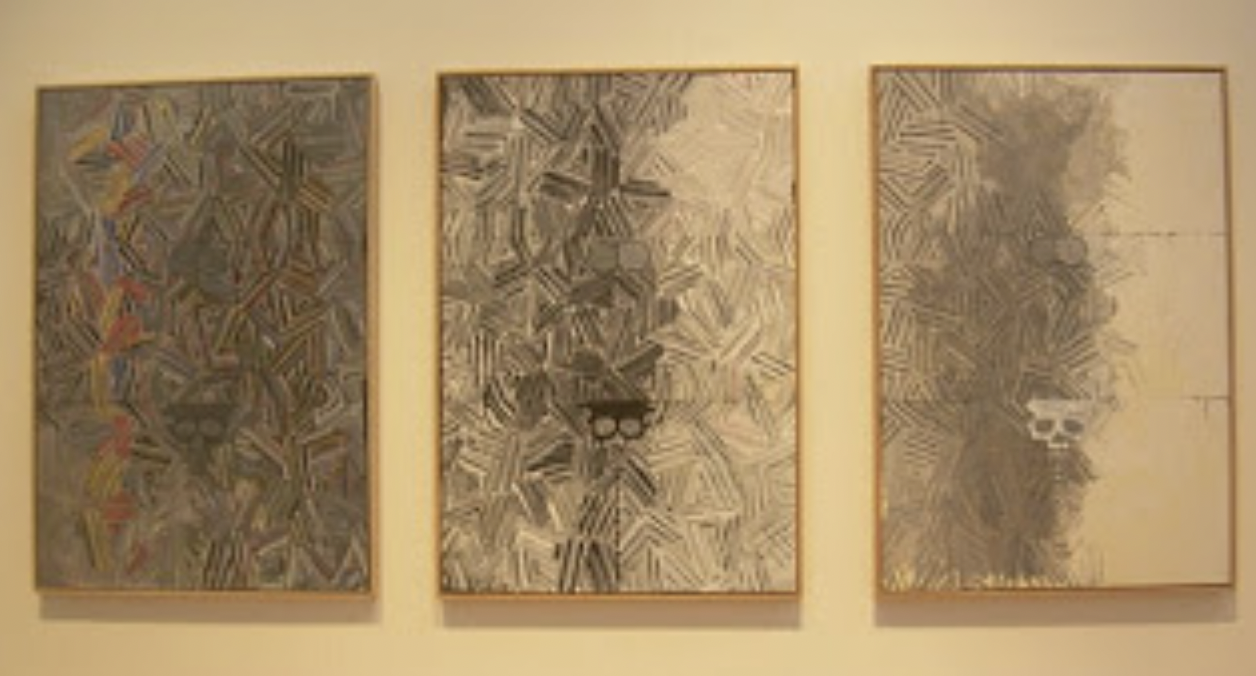
  • Tantric Detail I, Tantric Detail II and Tantric Detail III — three paintings by Jasper Johns;
  • Museum of Modern Art (MoMA) — just that.
  • Gregory P. Joseph — attorney for the Plaintiffs http://www.josephnyc.com/.


Details of the Dispute

In 2008, Kravis and his wife together with Bryant purchased Johns’ Tantric Detail series with the understanding that the two families would share in the enjoyment of the paintings until they were donated to the Museum of Modern Art in New York. In July 2008, MoMA announced the acquisition of the works in a press release where it descried the painting as a “promised gift:”


“Tantric Detail I (1980), Tantric Detail II (1981), and Tantric Detail III (1981), 
by Jasper 

Johns (American, b. 1930), have been widely exhibited, analyzed, and studied, and are among 
the works that Johns has kept in his own collection. …  Together, they eloquently speak to the moment of Johns’s transition from a predominantly abstract practice toward one that bears subtle infusions of art-historical 
and personal references.  Bringing the number of paintings by Johns in the collection to 19, this 
trio complements the Museum’s already extraordinary holdings, especially as they specifically 
address the themes of transience and mortality also evoked in other works.  The paintings are a 
promised gift of MoMA trustee Donald L. Bryant, Jr. and Board President Marie-Josée Kravis and 
her husband Henry

Bryant was supposed to transfer possession of the paintings to Kravises on January 14, 2013 but he did not. Ten days later, on January 24, 2013, Kravises filed a lawsuit seeking specific performance on a contract.

In the papers filed in the Supreme Court of New York, Kravises allege that Bryant refused to honor the alternating ownership rights of Mr. Bryant and Mrs. and Mr. Kravis to periodic possession of the paintings prior to their donation to MoMA. In January of 2013 for the first time in five years, Bryant refused to comply with the terms of the recorded agreements and sought to renegotiate the future of the paintings by repudiating the promise of a gift to MoMA. Kravises allege that there are two written agreements memorializing the joint ownership and possession of “Tantric Detail(s).”

The agreement apparently contains the following sections:

This Agreement with Respect to Art Works (“Agreement”) dated as of January 1, 2009, acknowledges and memorializes the agreements between Donald L. Bryant, Jr. (“Mr. Bryant” or the “First Party”) and Marie-Josée Kravis and Henry R. Kravis (jointly, the “Second Party” or “Mr. and Mrs. Kravis”, and together with Bryant, “Donor Parties”) with regard to [the Art Works]. This agreement also acknowledges and memorializes the agreements between each Donor Party and Museum of Modern Art (“MoMA,” and together with the Donor Parties, the “Parties”). …

The Donor Parties agree as follows: 1. The First Party [Mr. Bryant] had the right to physical possession of the Art Works until December 31, 2008. The Second Party [Mr. and Mrs. Kravis] will have such right on January 1, 2009 (or any other mutually-agreed date) (the “Transition Date”), and then the Donor Parties shall have alternating rights of possession every 12 months after the Transition Date.

… Each Donor Party irrevocably pledges (the “Pledge”) to cause to be transferred all of such Party’s right, title and interest, including copyright interest if any, in the Art Works to MoMA, either by way of (1) a gift during his or her lifetime or (2) a bequest under the Last Will and Testament or other testamentary instrument (“Will”) of Mr. Bryant and or the survivor of Mr. and Mrs. Kravis, respectively, provided that, at the time of such gift or bequest, (i) MoMA is an organization that is organized and operated for a purpose described in (x) Section 170(c) of the Internal Revenue Code of 1986, as amended (the “Code”) and (y) Code Sections 2055(a) and 2522 and (ii) additionally, if the transfer is a gift under Section II(A)(1), MoMA (x) is an organization that is described in Code Section 170(b)(1)(A) and (y) certifies that MoMA will use the Art Works in a manner related to and in furtherance of its charitable and educational purposes. . . . 

…The Pledge is binding upon each Donor Party’s applicable heirs, assigns, executors, administrators and other estate fiduciaries (“Related Parties”). A Donor Party’s failure to include a specific bequest of the Art Works to MoMA in its Will shall not release its Related Parties from the Donor Party’s obligations under Section II(A)(2). Furthermore, should either Mr. Bryant or both Mr. and Mrs. Kravis die without having completed all payments due Matthew Marks Gallery for each such Donor Parties’ respective 50% interest in the Art Works so as to vest title in said Donor Party, then such Donor Party’s Related Parties shall be legally bound to make such payments to complete the transfer of ownership to the Donor Party so that the Related Parties may effect the transfer of ownership of the Art Works to MoMA pursuant to the pledges referenced in the Agreement. *** E. Each Donor Party agrees that the Pledge is an irrevocable definite commitment to MoMA, and that MoMA is relying on the Pledge in a variety of ways, including without limitation: (a) MoMA’s decision not to acquire other works of art based on its expectation of receiving the Art Works; (b) MoMA’s ability to make the Pledge known to others in order to encourage them to make similar commitments; (c) MoMA’s conduct of scholarship about the Art Works; and (d) MoMA’s taking or failing to take any other actions in reliance upon the Pledge.

Complaint explains that the legal action was prompted by Bryant’s refusal to deliver the works to Kravises in January of 2013, as was promised. Kravises alleged that Bryant is holding the works “hostage.” They are asking the court to enjoin Bryant from violating Kravises rights to physical possession of the artworks and grant specific performance requiring Bryant to abide by the terms of the 2009 Agreement and honor the promise to gift his share of the art works to the Museum.
If Bryant does not comply and the court finds in favor of Kravises, Defendant should expect to pay the legal fees of the speedy law offices of Gregory P. Joseph.

Source: Reuters; MoMA Press Release 2008.

Disclaimer: This article is for educational purposes only and is not meant to provide legal advice. Readers should not construe or rely on any comment or statement in this article as legal advice. For legal advice, readers should seek a consultation with an attorney.

Post navigation

Previous Are Iranian Sanctions Beneficial to Contemporary Art: When the Little Man Becomes the Big Man
Next Honduras Increasing Mandatory Prison Sentences to Protect Cultural Heritage

Related Posts

A cathedral with an advertisement hung on its side facade.

Financial Crisis Leads Many European Nations to Consider Commercial Measures to Secure Restoration Funds

July 5, 2012
Center for Art Law Thomson Reuters v Ross Intelligence

Training on Thin Ice: Thomson Reuters v. ROSS and the Future of Fair Use for AI Systems

October 6, 2025

Copyright Registration for AI Generated Works: Zarya of the Dawn and the Dawn of a New Creator

July 6, 2023
Center for Art Law
A Gift for You

A Gift for You

this Holiday Season

Celebrate the holidays with 20% off your annual subscription — claim your gift now!


Get your Subscription Today!
Guidelines AI and Art Authentication

AI and Art Authentication

Explore the new Guidelines for AI and Art Authentication for the responsible, ethical, and transparent use of artificial intelligence.

Download here
Center for Art Law

Follow us on Instagram for the latest in Art Law!

Did you know that Charles Dickens visited America Did you know that Charles Dickens visited America twice, in 1842 and in 1867? In between, he wrote his famous “A Tale of Two Cities,” foreshadowing upheavals and revolutions and suggesting that individual acts of compassion, love, and sacrifice can break cycles of injustice. With competing demands and obligations, finding time to read books in the second quarter of the 21st century might get increasingly harder. As we live in the best and worst of times again, try to enjoy the season of light and a good book (or a good newsletter).

From all of us at the Center for Art Law, we wish you peace, love, and understanding this holiday season. 

🔗 Read more by clicking the link in our bio!

#centerforartlaw #artlaw #legalresearch #artlawyer #december #newsletter #lawyer
Is it, or isn’t it, Vermeer? Trouble spotting fake Is it, or isn’t it, Vermeer? Trouble spotting fakes? You are not alone. Donate to the Center for Art Law, we are the real deal. 

🔗 Click the link in our bio to donate today!

#centerforartlaw #artlaw #legalresearch #endofyear #givingtuesday #donate #notacrime #framingartlaw
Whether legal systems are ready or not, artificial Whether legal systems are ready or not, artificial intelligence is making its way into the courtroom. AI-generated evidence is becoming increasingly common, but many legal professionals are concerned that existing legal frameworks aren't sufficient to account for ethical dilemmas arising from the technology. 

To learn more about the ethical arguments surrounding AI-generated evidence, and what measures the US judiciary is taking to respond, read our new article by Rebecca Bennett. 

🔗 Click the link in our bio to read more!

#centerforartlaw #artlaw #legalresearch #artlawyer #lawyer #aiart #courtissues #courts #generativeai #aievidence
Interested in the world of art restitution? Hear f Interested in the world of art restitution? Hear from our Lead Researcher of the Nazi-Era Looted Art Database, Amanda Buonaiuto, about the many accomplishments this year and our continuing goals in this space. We would love the chance to do even more amazing work, your donations can give us this opportunity! 

Please check out the database and the many recordings of online events we have regarding the showcase on our website.

Help us reach our end of year fundraising goal of $35K.

🔗 Click the link in our bio to donate ❤️🖤
Make sure to grab your tickets for our discussion Make sure to grab your tickets for our discussion on the legal challenges and considerations facing General Counsels at leading museums, auction houses, and galleries on December 17. Tune in to get insight into how legal departments navigate the complex and evolving art world.

The panel, featuring Cindy Caplan, General Counsel, The Jewish Museum, Jason Pollack, Senior Vice President, General Counsel, Americas, Christie’s and Halie Klein, General Counsel, Pace Gallery, will address a range of pressing issues, from the balancing of legal risk management with institutional missions, combined with the need to supervise a variety of legal issues, from employment law to real estate law. The conversation will also explore the unique role General Counsels play in shaping institutional policy.

This is a CLE Event. 1 Credit for Professional Practice Pending Approval.

🎟️ Make sure to grab your tickets using the link in our bio! 

#centerforartlaw #artlaw #legalresearch #generalcounsel #museumissues #artauctions #artgallery #artlawyer #CLE
While arts funding is perpetually scarce, cultural While arts funding is perpetually scarce, cultural heritage institutions particularly struggle during and after armed conflict. In such circumstances, funds from a variety of sources including NGOs, international organizations, national and regional institutions, and private funds all play a crucial role in protecting cultural heritage. 

Read our new article by Andrew Dearman to learn more about the organizations funding emergency cultural heritage protection in the face of armed conflict, as well as the factors hindering effective responses. 

🔗 Click the link in our bio to read more! 

#centerforartlaw #artlaw #legalresearch #lawyer #artlawyer #culturalheritage #armedconflict #UNESCO
Join the Center for Art Law in welcoming Attorney Join the Center for Art Law in welcoming Attorney and Art Business Consultant Richard Lehun as our keynote speaker for our upcoming Artist Dealer Relationships Clinic. 

The Artist-Dealer Relationships Clinic helps artists and gallerists negotiate effective and mutually-beneficial contracts. By connecting artists and dealers to attorneys, this Clinic looks to forge meaningful relations and to provide a platform for artists and dealers to learn about the laws that govern their relationship, as well as have their questions addressed by experts in the field.

After a short lecture, attendees with consultation tickets will be paired with a volunteer attorney for a confidential 20-minute consultation. Limited slots are available for the consultation sessions.
Today we held our last advisory meeting of the yea Today we held our last advisory meeting of the year, a hybrid, and a good wrap to a busy season. What do you think we discussed?
We are incredibly grateful to our network of attor We are incredibly grateful to our network of attorneys who generously volunteer for our clinics! We could not do it without them! 

Next week, join the Center for Art Law for our Artist-Dealer Relationships Clinic. This clinic is focused on helping artists navigate and understand contracts with galleries and art dealers. After a short lecture, attendees with consultation tickets will be paired with one of the Center's volunteer attorneys for a confidential 20-minute consultation. Limited slots are available for the consultation sessions.
'twas cold and still in Brooklyn last night and no 'twas cold and still in Brooklyn last night and not a creature was stirring except for dog walkers and their walkees... And then we reached 7,000 followers!
Don't miss this chance to learn more about the lat Don't miss this chance to learn more about the latest developments in the restitution of Nazi-looted art. Tune in on December 15th at noon ET to hear from our panel members Amanda Buonaiuto, Peter J. Toren, Olaf S. Ossmann, Laurel Zuckerman, and Lilah Aubrey. The will be discussing updates from the HEAR act, it's implications in the U.S., modifications from the German Commission, and the use of digital tools and data to advance restitution research and claims. 

🎟️ Click the link in our bio to get tickets!
Making news is easy. Solving art crimes is hard. R Making news is easy. Solving art crimes is hard. Running a nonprofit is even harder.

Donate to the Center for Art Law to help us meet our year end goal! 

🔗 Click the link in our bio to donate today!
  • About the Center
  • Contact Us
  • Newsletter
  • Upcoming Events
  • Internship
  • Case Law Database
  • Log in
  • Become a Member
  • Donate
DISCLAIMER

Center for Art Law is a New York State non-profit fully qualified under provision 501(c)(3)
of the Internal Revenue Code.

The Center does not provide legal representation. Information available on this website is
purely for educational purposes only and should not be construed as legal advice.

TERMS OF USE AND PRIVACY POLICY

Your use of the Site (as defined below) constitutes your consent to this Agreement. Please
read our Terms of Use and Privacy Policy carefully.

© 2025 Center for Art Law