• About
    • Mission
    • Team
    • Boards
    • Mentions & Testimonials
    • Institutional Recognition
    • Annual Reports
    • Current & Past Sponsors
    • Contact Us
  • Resources
    • Article Collection
    • Podcast: Art in Brief
    • AML and the Art Market
    • AI and Art Authentication
    • Newsletter
      • Subscribe
      • Archives
      • In Brief
    • Art Law Library
    • Movies
    • Nazi-looted Art Restitution Database
    • Global Network
      • Courses and Programs
      • Artists’ Assistance
      • Bar Associations
      • Legal Sources
      • Law Firms
      • Student Societies
      • Research Institutions
    • Additional resources
      • The “Interview” Project
  • Events
    • Worldwide Calendar
    • Our Events
      • All Events
      • Annual Conferences
        • 2025 Art Law Conference
        • 2024 Art Law Conference
        • 2023 Art Law Conference
        • 2022 Art Law Conference
        • 2015 Art Law Conference
  • Programs
    • Visual Artists’ Legal Clinics
      • Art & Copyright Law Clinic
      • Artist-Dealer Relationships Clinic
      • Artist Legacy and Estate Planning Clinic
      • Visual Artists’ Immigration Clinic
    • Summer School
      • 2026
      • 2025
    • Internship and Fellowship
    • Judith Bresler Fellowship
  • Case Law Database
  • Log in
  • Become a Member
  • Donate
  • Log in
  • Become a Member
  • Donate
Center for Art Law
  • About
    About
    • Mission
    • Team
    • Boards
    • Mentions & Testimonials
    • Institutional Recognition
    • Annual Reports
    • Current & Past Sponsors
    • Contact Us
  • Resources
    Resources
    • Article Collection
    • Podcast: Art in Brief
    • AML and the Art Market
    • AI and Art Authentication
    • Newsletter
      Newsletter
      • Subscribe
      • Archives
      • In Brief
    • Art Law Library
    • Movies
    • Nazi-looted Art Restitution Database
    • Global Network
      Global Network
      • Courses and Programs
      • Artists’ Assistance
      • Bar Associations
      • Legal Sources
      • Law Firms
      • Student Societies
      • Research Institutions
    • Additional resources
      Additional resources
      • The “Interview” Project
  • Events
    Events
    • Worldwide Calendar
    • Our Events
      Our Events
      • All Events
      • Annual Conferences
        Annual Conferences
        • 2025 Art Law Conference
        • 2024 Art Law Conference
        • 2023 Art Law Conference
        • 2022 Art Law Conference
        • 2015 Art Law Conference
  • Programs
    Programs
    • Visual Artists’ Legal Clinics
      Visual Artists’ Legal Clinics
      • Art & Copyright Law Clinic
      • Artist-Dealer Relationships Clinic
      • Artist Legacy and Estate Planning Clinic
      • Visual Artists’ Immigration Clinic
    • Summer School
      Summer School
      • 2026
      • 2025
    • Internship and Fellowship
    • Judith Bresler Fellowship
  • Case Law Database
Home image/svg+xml 2021 Timothée Giet Art History image/svg+xml 2021 Timothée Giet Lessons on Auction Houses from Sotheby’s and the Case of the Stolen Renoir
Back

Lessons on Auction Houses from Sotheby’s and the Case of the Stolen Renoir

October 29, 2013
By Hanoch Sheps, J.D.*

Though not all art-related thefts involve multimillion dollar artworks – as portrayed in The Thomas Crown Affair remake – the theft and subsequent recent auction of a painting by French impressionist Pierre-Auguste Renoir raises a question of liability for auction houses that unwittingly offer stolen works of all kinds of media and value.

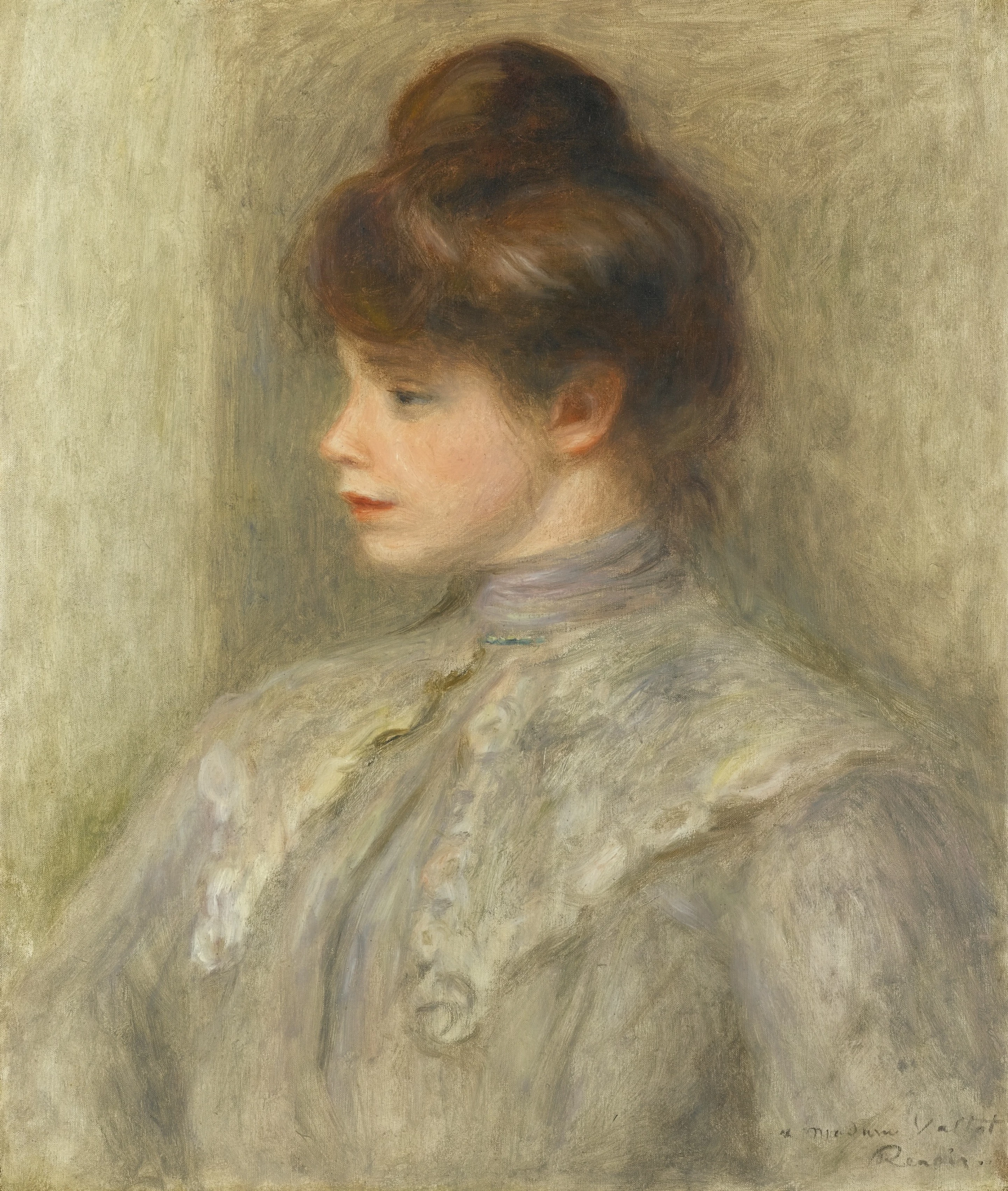
The controversy surrounding the recent sale of a stolen Impressionist painting dates back to August 2000, when Renoir’s Madame Valtat (reproduced here), a painting amongst a number of other reputable artworks, was reported as stolen from a Japanese collector. The 1903 painting depicts the wife of French fauvist Louis Valtat and portrays Madame Valtat (born Suzanne Noël) in a guarded pose.

The painting resurfaced when an anonymous consignor offered it in Sotheby’s February 2013 Impressionist and Modern Art Evening Sale in London. The piece realized a £1,049,250 ($1.61 million) hammer price; however, the original owner, is seeking the return of this work.  If the work is returned, what is Sotheby’s potential liability to the buyer?

Under New York law, auction houses may not disclaim warranty of title for the pieces they auction. (See, e.g., 6 RCNY § 2-122). Moreover, both Sotheby’s and Christie’s standard consignment agreements require the consignor to warrant that she is passing clear title, free of any liens or encumbrances. (See Ralph E. Lerner & Judith Bresler, Art Law: The Guide for Collectors, Investors, Dealers, & Artists 4th Edition. New York: Practicing Law Institute, 2012, Appendix 4-4, pg. 403). In their defense, auction houses normally require full indemnity from sellers in the event of a title dispute. Remember, a thief cannot convey good title: “[a] stolen piece of art is always stolen property no matter how much time has passed or how many subsequent ‘owners’ the piece has had.” (Read: Whose Art Is It Anyway, by Herrick, Feinstein LLP’s Mari-Claudia Jiménez). If the work is returned to the original owner, the auction house must refund the value of the piece from the buyer at the time of the return. (See: Bresler, pp. 350-51).[1]

Realizing that the sale of stolen artworks is an unfortunate reality, auction houses, such as Sotheby’s and Christie’s set limits on refunds of sale prices in their sale agreements. Given the costs and publicity associated with such cases, houses do subject consignments to intense scrutiny. Ultimately, cases like the one affecting this Renoir are rare and with sparse legal precedent. Still, any liability incurred by the auction house — if it denies the request to return the piece — remains unclear. It should be noted that at the time that this article was written no claim has been brought against Sotheby’s by the original owner seeking the return of the Renoir, although the parties were negotiating its return.

What best practices do auction houses follow in order to determine rightful ownership? Prior to any sale auction specialists typically perform due diligence by conducting both provenance and title research. Auction houses consult sources like the Art Loss Register, Interpol, Trace and IFAR in their research, but the sheer volume of lots in any one sale makes thorough research of each individual lot difficult. Unfortunately the lack of transparency in art transactions further complicates due diligence efforts, yet the expectation of thoroughness by the prospective buyer remains high. (For example, read Trust, but verify, as they say, about a lack of transparency in the art market.).

Can a prospective buyer reasonably expect that auction houses go above and beyond the industry’s best practices? After all, not only did the consignor of Renoir’s Madame Valtat asserted that the piece was legitimately purchased in 2000 with corresponding documentation, the piece was also conspicuously absent from any stolen art databases. The only certainty is that stolen art continues to seep into auctions with unsuspecting buyers and auction houses left wary, much like Madame Valtat in the contested Renoir’s portrait.

*About the Author

Hanoch Sheps, J.D. is a recent graduate of New York Law School. He may be reached at Hanoch.sheps2@gmail.com or 201-696-6881.

Disclaimer

This and all articles are intended as general information, not legal advice, and offer no substitute for seeking representation.


[1] For example, any exposure auction houses face in these types of contemporary theft cases will likely vary from their potential exposure in cases involving Nazi-looted art and items of archaeological or ethnographic origins.

Disclaimer: This article is for educational purposes only and is not meant to provide legal advice. Readers should not construe or rely on any comment or statement in this article as legal advice. For legal advice, readers should seek a consultation with an attorney.

Post navigation

Previous Small Win for Artists Fighting Against 5Pointz Demolition, But Will It Be Enough?
Next Over the Phone Auctions – A Missed Connection

Related Posts

Art and Restorative Justice: Transformative Healing Through Expression

January 14, 2020
screenshot of Chris Robinson Article

Interview with Christopher Robinson, Esq. about VARA (The Visual Artists Rights Act)

August 7, 2023
Winslow Homer, Two Ladies, 1880, 6 15/16 x 7 15/16 in, Metropolitan Museum of Art, New York, https://www.metmuseum.org/art/collection/search/11144.

The Case of the Ladies Who Lounge

August 15, 2024
Center for Art Law
Center for Art Law

Follow us on Instagram for the latest in Art Law!

Make sure to check out our newest episode if you h Make sure to check out our newest episode if you haven’t yet!

Paris and Andrea get the change to speak with Patty Gerstenblith about how the role international courts, limits of accountability, and if law play to protect history in times of war.

🎙️ Click the link in our bio to listen anywhere you get your podcasts!
Alexander Butyagin, a Russian archaeologist, was a Alexander Butyagin, a Russian archaeologist, was arrested by Polish authorities in Warsaw. on December 4th. Butyagin is wanted by Ukraine for allegedly conducting illegal excavations of Myrmekion, an ancient city in Crimea. Located in present-day Crimea, Myrmekion was an Ancient Greek colony dating to the sixth century, BCE. 

According to Ukrainian officials, between 2014 and 2019 Butyagin destroyed parts of the Myrmekion archaeological site while serving as head of Ancient Archaeology of the Northern Black Sea region at St. Petersburg's Hermitage Museum. The resulting damages are estimated at $4.7 million. Notably, Russia's foreign ministry has denounced the arrest, describing Poland's cooperation with Ukraine's extradition order as "legal tyranny." Russia invaded and annexed Crimea in 2014.

🔗 Read more by clicking the link in our bio

#centerforartlaw #artlaw #artcrime #artlooting #ukraine #crimea
Join us on February 18th to learn about the proven Join us on February 18th to learn about the provenance and restitution of the Cranach painting at the North Carolina Museum of Art.

A beloved Cranach painting at the North Carolina Museum of Art was accused of being looted by the Nazis. Professor Deborah Gerhardt will describe the issues at stake and the evidentiary trail that led to an unusual model for resolving the dispute.

Grab your tickets today using the link in our bio!

#centerforartlaw #artlaw #legal #legalresearch #museumissues #artwork
“In the depth of winter, I finally learned that wi “In the depth of winter, I finally learned that within me there lay an invincible summer."
~ Albert Camus, "Return to Tipasa" (1952) 

Camus is on our reading list but for now, stay close to the ground to avoid the deorbit burn from the 2026 news and know that we all contain invincible summer. 

The Center for Art Law's January 2026 Newsletter is here—catch up on the latest in art law and start the year informed.
https://itsartlaw.org/newsletters/january-newsletter-which-way-is-up/ 

#centerforartlaw #artlaw #lawyer #artlawyer #legalresearch #legal #art #law #newsletter #january
Major corporations increasingly rely on original c Major corporations increasingly rely on original creative work to train AI models, often claiming a fair use defense. However, many have flagged this interpretation of copyright law as illegitimate and exploitative of artists. In July, the Senate Judiciary Committee on Crime and Counterterrorism addressed these issues in a hearing on copyright law and AI training. 

Read our recent article by Katelyn Wang to learn more about the connection between AI training, copyright protections, and national security. 

🔗 Click the link in our bio to read more!
Join the Center for Art Law for an in-person, all- Join the Center for Art Law for an in-person, all-day  CLE program to train lawyers to work with visual artists and their unique copyright needs. The bootcamp will be led by veteran art law attorneys specializing in copyright law.

This Bootcamp provides participants -- attorneys, law students, law graduates and legal professionals -- with foundational legal knowledge related to copyright law for art market clients. Through a combination of instructional presentations and mock consultations, participants will gain a solid foundation in copyright law and its specificities as applied to works of visual arts, such as the fair use doctrine and the use of generative artificial intelligence tools. 

🎟️ Grab tickets using the link in our bio!
Our interns do the most. Check out a day in the li Our interns do the most. Check out a day in the life of Lauren Stein, a 2L at Wake Forest, as she crushes everything in her path. 

Want to help us foster more great minds? Donate to Center for Art Law.

🔗 Click the link below to donate today!

https://itsartlaw.org/donations/new-years-giving-tree/ 

#centerforartlaw #artlaw #legal #legalresearch #caselaw #lawyer #art #lawstudent #internships #artlawinternship
Paul Cassier (1871-1926 was an influential Jewish Paul Cassier (1871-1926 was an influential Jewish art dealer. He owned and ran an art gallery called Kunstsalon Paul Cassirer along with his cousin. He is known for his role in promoting the work of impressionists and modernists like van Gogh and Cézanne. 

Cassier was seen as a visionary and risk-tasker. He gave many now famous artists their first showings in Germany including van Gogh, Manet, and Gaugin. Cassier was specifically influential to van Gogh's work as this first showing launched van Gogh's European career.

🔗 Learn more about the impact of his career by checking out the link in our bio!

#centerforartlaw #artlaw #legalresearch #law #lawyer #artlawyer #artgallery #vangogh
No strike designations for cultural heritage are o No strike designations for cultural heritage are one mechanism by which countries seek to uphold the requirements of the 1954 Hague Convention. As such, they are designed to be key instruments in protecting the listed sites from war crimes. Yet not all countries maintain such inventories of their own whether due to a lack of resources, political views about what should be represented, or the risk of misuse and abuse. This often places the onus on other governments to create lists about cultures other than their own during conflicts. Thus, there may be different lists compiled by different governments in a conflict, creating an unclear legal landscape for determining potential war crimes and raising significant questions about the effectiveness of no strikes as a protection mechanism. 

This presentation discusses current research seeking to empirically evaluate the effectiveness of no strike designations as a protection mechanism against war crimes in Syria. Using data on cultural heritage attacks from the height of the Syrian Conflict (2014-2017) compiled from open sources, a no strike list completed in approximately 2012, and measures of underlying risk, this research asks whether the designations served as a protective factor or a risk factor for a given site and the surrounding area. Results and implications for holding countries accountable for war crimes against cultural heritage are discussed. 

🎟️ Grab your tickets using the link in our bio!

#centerforartlaw #artlaw #artlawyer #legalresearch #lawyer #culturalheritage #art #protection
What happens when culture becomes collateral damag What happens when culture becomes collateral damage in war?
In this episode of Art in Brief, we speak with Patty Gerstenblith, a leading expert on cultural heritage law, about the destruction of cultural sites in recent armed conflicts.

We examine the role of international courts, the limits of accountability, and whether the law can truly protect history in times of war.

We would like to also thank Rebecca Bennett for all of her help on this episode. 

 🎙️ Click the link in our bio to listen anywhere you get your podcasts.

#centerforartlaw #artlaw #legalresearch #artlawyer #lawyer #podcast #artpodcast #culturalheritage #armedconflict #internationallaw
Where did you go to recharge your batteries? Where did you go to recharge your batteries?
Let there be light! Center for Art Law is pleased Let there be light! Center for Art Law is pleased to share with you a work of art by Sofia Tomilenko, an illustration artist from Kyiv, Ukraine. This is Sofia's second creation for us and as her Lady Liberty plays tourist in NYC, we wish all of you peace and joy in 2026! 

Light will overcome the darkness. Світло переможе темряву. Das Licht wird die Dunkelheit überwinden. La luz vencerá la oscuridad. 

#artlaw #peace #artpiece #12to12
  • About the Center
  • Contact Us
  • Newsletter
  • Upcoming Events
  • Internship
  • Case Law Database
  • Log in
  • Become a Member
  • Donate
DISCLAIMER

Center for Art Law is a New York State non-profit fully qualified under provision 501(c)(3)
of the Internal Revenue Code.

The Center does not provide legal representation. Information available on this website is
purely for educational purposes only and should not be construed as legal advice.

TERMS OF USE AND PRIVACY POLICY

Your use of the Site (as defined below) constitutes your consent to this Agreement. Please
read our Terms of Use and Privacy Policy carefully.

© 2026 Center for Art Law