
The Modigliani Forgery Epidemic Strikes Again?
January 13, 2026
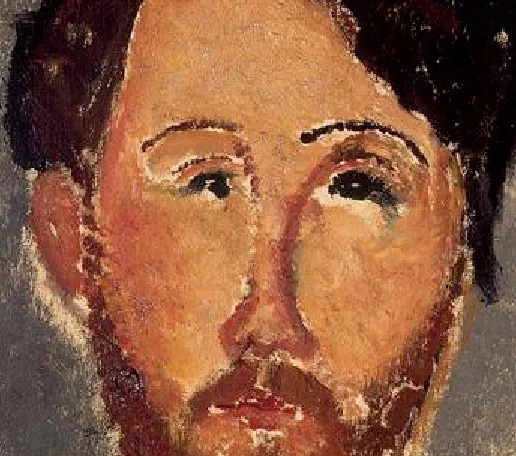
Amedeo Modigliani, Portrait of Leopold Zborowski (1917) (fragment)
By Vivianne Diaz
On November 19, 2025, collector Charles C. Cahn Jr. sued Sotheby’s in the Supreme Court of New York, alleging breach of a written agreement concerning a work sold to him by the auction house in 2003.[1]

“Portrait de Leopold Zborowski”
The dispute revolves around a piece attributed to an iconic Italian painter and sculptor Modigliani, famous for his particular style which drew upon elements of Fauvism and Expressionism while paving a path of its own. Created in 1917 and titled “Portrait de Leopold Zborowski,” the painting depicts Zborowski, known as “Modigliani’s primary dealer and confidant during the final years of the artist’s life before he died of tuberculosis at the age of 33.”[2] According to Sotheby’s catalog, the painting “appeared in a 1934 Modigliani retrospective at the Kunsthalle Basel” and the provenance indicates that “Zborowski himself once owned the work.”[3]
Background of the Dispute
In 2003, Sotheby’s sold the painting to Cahn for about $1.55 million, a shockingly low, and possibly disconcerting price, considering other Modigliani works have sold for up to $157.2 million.[4] In 2016, just over 10 years after the original sale, Cahn claims that Sotheby’s verbally informed him that the authenticity of the painting was being called into question; Cahn alleges that the auction house explained that the artwork failed to satisfy its criteria for an authentic Modigliani attribution and essentially had “no sale value in the international art market in which Sotheby’s operates.”[5] Cahn has provided no evidence of these claims and Sotheby’s has not confirmed these statements.[6] However, Cahn cites this interaction as the motive for his second written agreement with Sotheby’s regarding the work of art, signed in November 2016.[7]
This agreement, attached to Cahn’s Complaint, states that it intended to resolve ongoing discussions related to the painting; however, it does not disclose what those discussions entailed.[8] The agreement establishes that if Cahn wishes to resell the painting within 15 years of the 2016 agreement, he is to do so through consignment with Sotheby’s.[9] In the case this occurs, Sotheby’s would offer the painting at auction, guaranteeing Cahn the higher of either; his original purchase price plus 2.5% compound annual return from 2003, or whatever price the painting achieved at auction.[10] Additionally, Sotheby’s would waive any commissions and associated fees.[11] All of these very favorable terms rely on Cahn releasing the auction house from all claims related to the painting.[12]
The collector claims that he attempted to set this process in motion in June 2025, sending Sotheby’s several letters to which he received no response.[13] Cahn now seeks damages totaling $2.67 million, plus interest and attorneys’ fees, for breach of contract.[14]
Sotheby’s Acquisition of Orion Analytical and the Modigliani Forgery Epidemic
Several issues may have contributed to Sotheby’s alleged 2016 claims that the painting was not attributable to Modigliani. The most notable possible cause is the Modigliani forgery epidemic. Over a thousand forged Modigliani works exist in the world today, making him one of the most frequently forged artists.[15] As described by a Modigliani expert, “to say that the catalogue raisonné situation of works by Modigliani is a mess is an understatement.”[16] The artist’s prices have been increasing drastically, and with it, so have the forgeries.[17] In 2017, Vanity Fair reported that due to this growing issue, art experts were undertaking projects to better understand the particularities of Modigliani, in order to improve the attribution process.[18] This project was led by “a committee of prominent curators and conservators,” who were to test 27 paintings and three sculptures that had been attributed to Modigliani with certainty.[19] Around this same time, the largest Modigliani forgery came to light when 21 of his works exhibited at Genoa’s Ducal Palace were declared to be fakes.[20]
Cahn alleges that Sotheby’s claims regarding his Modigliani predated these incidents as they were made in 2016.[21] However, it is possible that the auction house, aware of the forgery epidemic, undertook additional cautionary steps. Notably, Sotheby’s allegedly made the claim around the same time that it made a major shift in its authentication procedures.[22] In 2016, Sotheby’s acquired Orion Analytical, a “specialist, high-tech scientific research firm with extensive expertise in provenance research and investigating high-level forgeries.”[23] While Cahn’s complaint does not reference Orion, the proximity of these events raises questions about whether the integration of Orion’s expertise prompted Sotheby’s to reassess its earlier authentifications.[24]
Sotheby’s Possible Responses
Based on the language of the 2016 agreement, Sotheby’s may choose from a variety of different defense strategies. Firstly, they may contest that a breach has not yet occurred, as the 2016 agreement does not specify a required timeframe to a consignment request.[25] Cahn brought the lawsuit only four months after his initial letter to Sotheby’s, therefore they might argue that this was insufficient time to action the request and begin the sale process. The agreement also established that the auction house would issue Cahn a valuation for the painting “upon receipt of a separate written valuation agreement executed by [Cahn] and Sotheby’s.”[26] It may be argued that the need for this “separate written valuation agreement” was the cause of its delayed action. Lastly, Cahn’s amount of requested damages could also be contested. While Sotheby’s has yet to file an answer to the art collector’s complaint, it will be interesting to see how the auction house’s legal team responds to these allegations.
Implications for Auction Houses
Assuming that Cahn’s claims are true – that Sotheby’s questioned the authenticity of one of their own sales – this dispute evidences that provenance and attributions are not immutable. Even a work whose provenance indicates to have appeared in the artist’s own retrospective and owned by the subject of the work himself can be fake.[27]
If the allegation proves to be true, Sotheby’s likely entered the 2016 contract with Cahn to avoid liability for misattributing the painting to Modigliani.[28] It is possible that the original 2003 purchase agreement contained warranties of authenticity of authorship or a provision allowing Cahn to rescind the purchase if the painting was later proven to be forged.[29] By promising to re-sell the painting, regardless of an authenticity determination, binding onr Cahn’s promise to not bring further claims regarding the painting, Sotheby’s possibly freed itself of being liable for breach of the warranties provided in the 2003 purchase agreement. Thus, the auction house’s failure to abide by its 2016 promise to Cahn would not be a good look for Sotheby’s. To a client, it may appear that Sotheby’s attempted a legal work-around for its failure to properly attribute a work. This could greatly decrease reduce buyer confidence in purchasing works sold through Sotheby’s, or on a larger scale auction houses in general.
The court’s interpretation of the agreement between Cahn and Sotheby’s may shape how auction houses structure future guarantees, disclosures, and settlement agreements. While courts have commonly resolved authenticity disputes in favor of auction houses, finding that art authentication is inherently subjective, a ruling in favor of Cahn would likely indicate that auction houses must be more cautious in their authentication claims and post-sale agreements.[30] If it is found that Sotheby’s had an obligation to act on Cahn’s re-sell request promptly, auction houses may be required to adopt clearer procedures and timelines in future agreements.
Conclusion
This dispute over “Portrait de Leopold Zborowski” underscores a larger issue in the art market. Not only is it representative of the larger Modigliani Epidemic, but shows how in the grand scheme of things, forgeries negatively affect both collectors and auction houses. Attribution, while inherently subjective, can be improved by expertise and scientific testing.[31] It also demonstrates the need for auction houses to be more careful, but most importantly, proactive in their authentication determinations.
Cahn’s lawsuit presents an important question; What legal obligations arise when auction houses promise to stand behind a work with contested attribution, and later fail to perform? It will be intriguing to see not only how Sotheby’s responds to Cahn’s claims, but also how the court resolves the dispute as a whole. The court’s holding could affect both the legal responsibilities of auction houses when entering authenticity related agreements and the trust that collectors and buyers place into these agreements.
About the Author:
Vivianne Diaz is a 2L at Brooklyn Law School, where she serves as the Vice President of the Art Law Association. Her research interests include artists moral rights and the Visual Artists Rights Act of 1990, copyright and fair use, and public art commissions.
Select References:
- Alex Greenberger, Collector Sues Sotheby’s Over Modigliani Painting with Authenticity Concerns, ARTnews (Nov. 21, 2025), https://www.artnews.com/art-news/news/collector-sues-sothebys-modigliani-painting-authenticity-1234762782/ ↑
- Eileen Kinsella, Lawsuit Accuses Sotheby’s of Reneging on Buy-Back Deal Over Modigliani Painting (Nov. 25, 2025),https://news.artnet.com/art-world/collector-sues-sothebys-modigliani-authenticity-2719506. ↑
- Greenberger, supra note 1. ↑
- Complaint, Cahn v. Sotheby’s, No. 659868/2025 (N.Y. Sup. Ct. filed Nov. 19, 2025); Greenberger, supra note 1. ↑
- Complaint, Cahn v. Sotheby’s, No. 659868/2025 (N.Y. Sup. Ct. filed Nov. 19, 2025). ↑
- https://artlyst.com/news/sothebys-sued-modigliani-painting-attributed-sold/ ↑
- Complaint, Cahn v. Sotheby’s, No. 659868/2025 (N.Y. Sup. Ct. filed Nov. 19, 2025). ↑
- Exhibit B to Complaint, Cahn v. Sotheby’s, No. 659868/2025 (N.Y. Sup. Ct. filed Nov. 19, 2025). ↑
- Exhibit B to Complaint, Cahn v. Sotheby’s, No. 659868/2025 (N.Y. Sup. Ct. filed Nov. 19, 2025). ↑
- Exhibit B to Complaint, Cahn v. Sotheby’s, No. 659868/2025 (N.Y. Sup. Ct. filed Nov. 19, 2025). ↑
- Exhibit B to Complaint, Cahn v. Sotheby’s, No. 659868/2025 (N.Y. Sup. Ct. filed Nov. 19, 2025). ↑
- Exhibit B to Complaint, Cahn v. Sotheby’s, No. 659868/2025 (N.Y. Sup. Ct. filed Nov. 19, 2025). ↑
- Complaint, Cahn v. Sotheby’s, No. 659868/2025 (N.Y. Sup. Ct. filed Nov. 19, 2025). ↑
- Complaint, Cahn v. Sotheby’s, No. 659868/2025 (N.Y. Sup. Ct. filed Nov. 19, 2025). ↑
- Tatyana Kalaydjian Serraino, Remembering Modigliani: Italy’s Ongoing Battle against Forgery, Center for Art Law (July 17, 2020), https://itsartlaw.org/case-review/remembering-modigliani-italys-ongoing-battle-against-forgery/. ↑
- Milton Esterow, The Art Market’s Modigliani Forgery Epidemic, VanityFair (May 3, 2017),https://www.vanityfair.com/style/2017/05/worlds-most-faked-artists-amedeo-modigliani-picasso. ↑
- Id. ↑
- Id. ↑
- Id. ↑
- Serraino, supra note 16. ↑
- Complaint, Cahn v. Sotheby’s, No. 659868/2025 (N.Y. Sup. Ct. filed Nov. 19, 2025). ↑
- Vivianne Diaz, On Duty of Auction Houses to Authenticate, Center for Art Law (Dec. 2, 2025),https://itsartlaw.org/art-law/on-duty-of-auction-houses-to-authenticate/; Sarah Cascone, Expert Forgery-Spotter James Martin to Head Sotheby’s Scientific Research Department, Artnet (Dec. 5, 2016) https://news.artnet.com/market/james-martin-sothebys-scientific-research-771905 ↑
- Ermanno Rivetti, Sotheby’s buys Orion Analytical lab in fight against art fraud, The Art Newspaper (Dec. 6, 2016) https://www.theartnewspaper.com/2016/12/06/sothebys-buys-orion-analytical-lab-in-fight-against-art-fraud ↑
- See Complaint, Cahn v. Sotheby’s, No. 659868/2025 (N.Y. Sup. Ct. filed Nov. 19, 2025). ↑
- See Exhibit B to Complaint, Cahn v. Sotheby’s, No. 659868/2025 (N.Y. Sup. Ct. filed Nov. 19, 2025); see . ↑
- Exhibit B to Complaint, Cahn v. Sotheby’s, No. 659868/2025 (N.Y. Sup. Ct. filed Nov. 19, 2025). ↑
- Greenberger, supra note 1. ↑
- See Diaz, supra note 23. ↑
- Id. ↑
- See Thwaytes v. Sotheby’s [2015] EWHC 36. ↑
- See Diaz, supra note 23. ↑
Disclaimer: This article is for educational purposes only and is not meant to provide legal advice. Readers should not construe or rely on any comment or statement in this article as legal advice. For legal advice, readers should seek a consultation with an attorney.


You must be logged in to post a comment.