• About
    • Mission
    • Team
    • Boards
    • Mentions & Testimonials
    • Institutional Recognition
    • Annual Reports
    • Current & Past Sponsors
    • Contact Us
  • Resources
    • Article Collection
    • Podcast: Art in Brief
    • AML and the Art Market
    • AI and Art Authentication
    • Newsletter
      • Subscribe
      • Archives
      • In Brief
    • Art Law Library
    • Movies
    • Nazi-looted Art Restitution Database
    • Global Network
      • Courses and Programs
      • Artists’ Assistance
      • Bar Associations
      • Legal Sources
      • Law Firms
      • Student Societies
      • Research Institutions
    • Additional resources
      • The “Interview” Project
  • Events
    • Worldwide Calendar
    • Our Events
      • All Events
      • Annual Conferences
        • 2025 Art Law Conference
        • 2024 Art Law Conference
        • 2023 Art Law Conference
        • 2022 Art Law Conference
        • 2015 Art Law Conference
  • Programs
    • Visual Artists’ Legal Clinics
      • Art & Copyright Law Clinic
      • Artist-Dealer Relationships Clinic
      • Artist Legacy and Estate Planning Clinic
      • Visual Artists’ Immigration Clinic
    • Summer School
      • 2025
    • Internship and Fellowship
    • Judith Bresler Fellowship
  • Case Law Database
  • 2025 Year-End Appeal
  • Log in
  • Become a Member
  • Donate
  • 2025 Year-End Appeal
  • Log in
  • Become a Member
  • Donate
Center for Art Law
  • About
    About
    • Mission
    • Team
    • Boards
    • Mentions & Testimonials
    • Institutional Recognition
    • Annual Reports
    • Current & Past Sponsors
    • Contact Us
  • Resources
    Resources
    • Article Collection
    • Podcast: Art in Brief
    • AML and the Art Market
    • AI and Art Authentication
    • Newsletter
      Newsletter
      • Subscribe
      • Archives
      • In Brief
    • Art Law Library
    • Movies
    • Nazi-looted Art Restitution Database
    • Global Network
      Global Network
      • Courses and Programs
      • Artists’ Assistance
      • Bar Associations
      • Legal Sources
      • Law Firms
      • Student Societies
      • Research Institutions
    • Additional resources
      Additional resources
      • The “Interview” Project
  • Events
    Events
    • Worldwide Calendar
    • Our Events
      Our Events
      • All Events
      • Annual Conferences
        Annual Conferences
        • 2025 Art Law Conference
        • 2024 Art Law Conference
        • 2023 Art Law Conference
        • 2022 Art Law Conference
        • 2015 Art Law Conference
  • Programs
    Programs
    • Visual Artists’ Legal Clinics
      Visual Artists’ Legal Clinics
      • Art & Copyright Law Clinic
      • Artist-Dealer Relationships Clinic
      • Artist Legacy and Estate Planning Clinic
      • Visual Artists’ Immigration Clinic
    • Summer School
      Summer School
      • 2025
    • Internship and Fellowship
    • Judith Bresler Fellowship
  • Case Law Database
Home image/svg+xml 2021 Timothée Giet AL Clippings image/svg+xml 2021 Timothée Giet Turkey Battles Museums for Return of Antiquities Following Arab Spring
Back

Turkey Battles Museums for Return of Antiquities Following Arab Spring

December 10, 2012
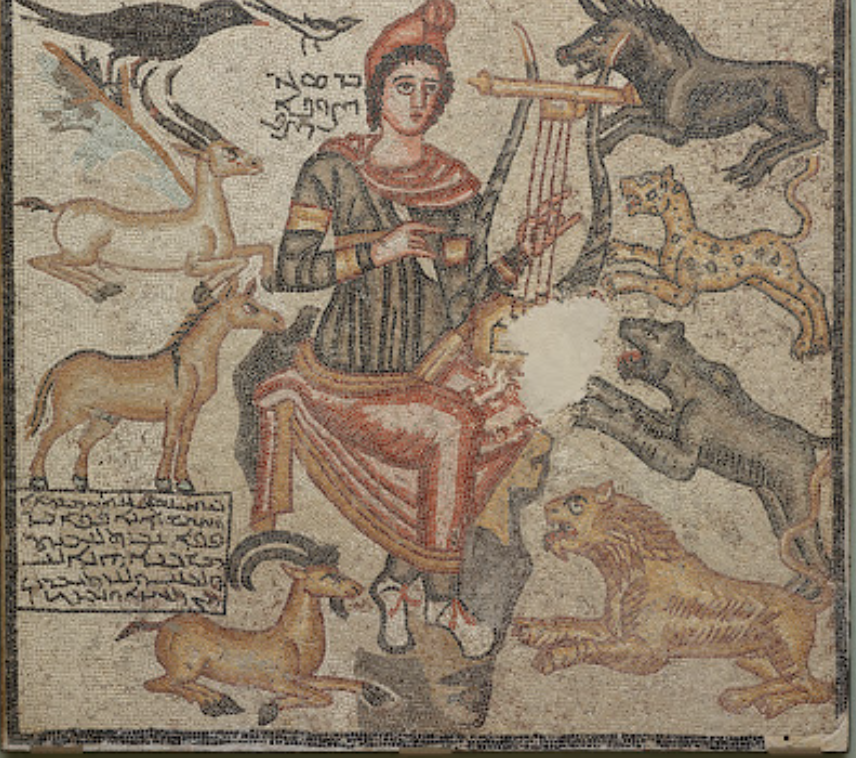
Orpheus mosaic from the 2nd Century AD repatriated by the Dallas Museum of Art to Turkey December 5th.

Orpheus mosaic from the 2nd Century AD repatriated by the Dallas
Museum of Art to Turkey December 5th.

Since the Arab Spring the new Turkish government is taking aggressive measures against American and European museums by demanding the return of antiquities.  In the renewed search for a national identity, Turkey is embarking on what some museums are calling “cultural blackmail.”  Under the leadership of Cultural Minister Ertugrul Gunay, Turkey is refusing to lend objects for exhibitions unless antiquities with a unknown provenance are returned to the country, delaying all licenses for archeological excavations, and publicly denouncing museums as enablers of illicit looting.  Gunay stated in The New York Times: “Artifacts, just like people, animals or plants, have souls and historical memories.  When they are repatriated to their countries, the balance of nature will be restored.”

Turkey has rejected the 1970 UNESCO agreement, even though they ratified the understanding in 1981 that allows antiquities already outside their home countries to remain outside without legal action.  Instead, the Turkish government is calling for the return of their antiquities under a 1906 Ottoman-era law that banned the export of artifacts.  They have had mixed success in their attack on museums.

Last month, the University of Pennslyvania Museum agreed to lend 24 artifacts from ancient Troy to Turkey indefinately.  Last year, the Pergamon Museum in Berlin reluctantly returned the 3,000 year old Bogazkoy Sphinx from the Hittite Empire.  Turkey claimed that the object was taken from the country for restoration in 1917 and never returned.  The Pergamon was threatened that if they failed to return the Sphinx that Turkey would block all future archeological excavations by German scholars.  Soon after, the Museum of Fine Arts, Boston returned the top-half of the second-century Weary Herakles that was noted in 1990 to match the lower portion of a statue excavated in Perge.

Turkish officials celebrate the return of the 2nd Century Weary
Herakles from the Boston Museum of Fine Arts, Boston in June.

Most recently on December 5th, the Dallas Museum of Art agreed to return the 2nd AD Orpheus Mosaic to Turkey.  They purchased the mosaic in 1999 from Christie’s for US$85,000.  Upon discovering that the mosaic was looted, Maxwell Anderson, the museum’s director, notified the Turkish government and negotiated an exchange: the mosaic will be returned to Turkey as long as they agree to loan objects to the Dallas Museum for temporary exhibitions.  This is the first pre-emptive move by an American museum, and provides the Dallas Museum with a monopoly on Turkish objects allowed for temporary display in the United States.

Turkey’s claims against numerous museums remain pending.  These include:

  • The Louvre: 1,577 tiles from the Hagia Sophia
  • The Pergamon Museum: The Pergamon Altar
  • The British Museum: A 1st Century BC Stele
  • The Victoria and Albert Museum: A 3rd Century BC child sarcophagus head
  • The J. Paul Getty Museum: Four 200 AD marble muses
  • The Cleveland Museum of Art: 21 objects, including a 2nd Century headless marble statue believed to represent March Aurelius
  • The Dumbarton Oaks Museum, Washington, DC: The 6th Century “Sion Treasure”
  • Bowling Green State University, Ohio: A Roman mosaic from Zeugma

The most outspoken museum fighting the repatriation of antiquities to Turkey is the Metropolitan Museum of Art in New York.  This summer, Turkey filed a criminal complaint against the museum in Turkish court demanding the return of 18 objects believed to be illegally excavated and now housed in the Norbert Schimmel Collection at the MET.  The complaint is the result of failed negotiations between Turkey and the MET.

At the moment, Turkey official refuses to lend any items to the MET, a stunning development after the opening of the Islamic Wing in November 2011.  The MET argues that the collection was acquired legally and that they are compliant with the 1970 UNESCO convention.  Thomas P. Campbell, director of the MET, acknowledged that if any illegal activity associated with their collection was discovered they will address the situation on a case-by-case basis.  He stated in an interview with The New York Times on October 1st: “We are in the business of celebrating Turkish culture, and it is the great displays in London, Paris and New York, more than anything else, that will encourage people to go to Turkey and explore their cultural heritage, and not just the sun and beach.”  The situation has yet to be resolved, but without doubt will be decided in court.

Turkey’s aggressive measures against large international museums has raised controversy in the art world.  It has returned the focus of repatriation again to the question: Who Owns Antiquity?  Turkey is portrayed in media reports as the aggressor and the museums as victims.  This seems to be the general consensus, but moral arguments continue to go back and forth without any sign of resolution in the near future.

Sources: The Art Newspaper, The Dallas News, The New York Times, images from Looting Matters and the Art Newspaper.

Disclaimer: This article is for educational purposes only and is not meant to provide legal advice. Readers should not construe or rely on any comment or statement in this article as legal advice. For legal advice, readers should seek a consultation with an attorney.

Post navigation

Previous Continued Production and Sale of Post-Mortem Salvador Dali Bronzes Violates Copyrights and Trademarks
Next Moon Rocks Return to Alaska after Theft in 1973 by Future "Deadliest Catch" Star

Related Posts

Afghanistan, Iraq, and the Limits of International Cultural Property Law

May 29, 2019

Federal Court Judge Rules That “$7.00” Renoir May Return to Baltimore Museum of Art

January 21, 2014
SEC No-Action Letter Request 2: The #NFT

How Two Artists are Challenging the SEC’s Role in Shaping the NFT Art Market

November 23, 2024
Center for Art Law
A Gift for You

A Gift for You

this Holiday Season

Celebrate the holidays with 20% off your annual subscription — claim your gift now!


Get your Subscription Today!
Guidelines AI and Art Authentication

AI and Art Authentication

Explore the new Guidelines for AI and Art Authentication for the responsible, ethical, and transparent use of artificial intelligence.

Download here
Center for Art Law

Follow us on Instagram for the latest in Art Law!

This summer, art dealer James White and appraiser This summer, art dealer James White and appraiser Paul Bremner pleaded guilty for their participation in the third forgery ring of Norval Morisseau works uncovered by Canadian authorities. Their convictions are a key juncture in Canda's largest art fraud scheme, a scandal that has spanned decades and illuminated deep systemic failures within the art market to protect against fraud. 

Both White and Bremner were part of what is referred to as the 'Cowan Group,' spearheaded by art dealer Jeffrey Cowan. Their enterprise relied on Cowan fabricating provenance for the forged works, which he claimed were difficult to authenticate. 

In June, White, 87, pleaded guilty to to creating forged documents and possessing property obtained by crime for the purpose of trafficking. Later, in July, Paul Bremner pleaded guilty to producing and using forged documents and possessing property obtained through crime with the intent of trafficking. While Bremner, White, and Cowan were all supposed to face trial in the Fall, Cowan was the only one to do so and was ultimately found guilty on four counts of fraud. 

🔗 Click the link in our bio to read more.

#centerforartlaw #artlaw #legalresearch #artfraud #artforgery #canada #artcrime #internationallaw
It's the season! It's the season!
In 2022, former art dealer Inigo Philbrick was sen In 2022, former art dealer Inigo Philbrick was sentenced to seven years in prison for committing what is considered one of the United States' most significant cases of art fraud. With access to Philbrick's personal correspondence, Orlando Whitfield chronicled his friendship with the disgraced dealer in a 2024 memoir, All that Glitters: A Story of Friendship, Fraud, and Fine Art. 

For more insights into the fascinating story of Inigo Philbrick, and those he defrauded, read our recent book review. 

🔗 Click the link in our bio to read more!

#centerforartlaw #legalresearch #artlaw #artlawyer #lawer #inigophilbrick #bookreview #artfraud
The highly publicized Louvre heist has shocked the The highly publicized Louvre heist has shocked the globe due to its brazen nature. However, beyond its sheer audacity, the heist has exposed systemic security weaknesses throughout the international art world. Since the theft took place on October 19th, the French police have identified the perpetrators, describing them as local Paris residents with records of petty theft. 

In our new article, Sarah Boxer explores parallels between the techniques used by the Louvre heists’ perpetrators and past major art heists, identifying how the theft reveals widespread institutional vulnerability to art crime. 

🔗 Click the link in our bio to read more!

#centerforartlaw #artlaw #legalresearch #artcrime #theft #louvre #france #arttheft #stolenart
In September 2025, 77-year old Pennsylvania reside In September 2025, 77-year old Pennsylvania resident Carter Reese made headlines not only for being Taylor Swift's former neighbor, but also for pleading guilty to selling forgeries of Picasso, Basquiat, Warhol, and others. This and other recent high profile forgery cases are evidence of the art market's ongoing vulnerability to fraudulent activity. Yet, new innovations in DNA and artificial intelligence (AI) may help defend against forgery. 

To learn more about how the art market's response to fraud and forgery is evolving, read our new article by Shaila Gray. 

🔗 Click the link in our bio to read more!

#centerforartlaw #artlaw #legalresearch #artlawyer #lawyer #AI #forgery #artforgery #artfakes #authenticity
Did you know that Charles Dickens visited America Did you know that Charles Dickens visited America twice, in 1842 and in 1867? In between, he wrote his famous “A Tale of Two Cities,” foreshadowing upheavals and revolutions and suggesting that individual acts of compassion, love, and sacrifice can break cycles of injustice. With competing demands and obligations, finding time to read books in the second quarter of the 21st century might get increasingly harder. As we live in the best and worst of times again, try to enjoy the season of light and a good book (or a good newsletter).

From all of us at the Center for Art Law, we wish you peace, love, and understanding this holiday season. 

🔗 Read more by clicking the link in our bio!

#centerforartlaw #artlaw #legalresearch #artlawyer #december #newsletter #lawyer
Is it, or isn’t it, Vermeer? Trouble spotting fake Is it, or isn’t it, Vermeer? Trouble spotting fakes? You are not alone. Donate to the Center for Art Law, we are the real deal. 

🔗 Click the link in our bio to donate today!

#centerforartlaw #artlaw #legalresearch #endofyear #givingtuesday #donate #notacrime #framingartlaw
Whether legal systems are ready or not, artificial Whether legal systems are ready or not, artificial intelligence is making its way into the courtroom. AI-generated evidence is becoming increasingly common, but many legal professionals are concerned that existing legal frameworks aren't sufficient to account for ethical dilemmas arising from the technology. 

To learn more about the ethical arguments surrounding AI-generated evidence, and what measures the US judiciary is taking to respond, read our new article by Rebecca Bennett. 

🔗 Click the link in our bio to read more!

#centerforartlaw #artlaw #legalresearch #artlawyer #lawyer #aiart #courtissues #courts #generativeai #aievidence
Interested in the world of art restitution? Hear f Interested in the world of art restitution? Hear from our Lead Researcher of the Nazi-Era Looted Art Database, Amanda Buonaiuto, about the many accomplishments this year and our continuing goals in this space. We would love the chance to do even more amazing work, your donations can give us this opportunity! 

Please check out the database and the many recordings of online events we have regarding the showcase on our website.

Help us reach our end of year fundraising goal of $35K.

🔗 Click the link in our bio to donate ❤️🖤
Make sure to grab your tickets for our discussion Make sure to grab your tickets for our discussion on the legal challenges and considerations facing General Counsels at leading museums, auction houses, and galleries on December 17. Tune in to get insight into how legal departments navigate the complex and evolving art world.

The panel, featuring Cindy Caplan, General Counsel, The Jewish Museum, Jason Pollack, Senior Vice President, General Counsel, Americas, Christie’s and Halie Klein, General Counsel, Pace Gallery, will address a range of pressing issues, from the balancing of legal risk management with institutional missions, combined with the need to supervise a variety of legal issues, from employment law to real estate law. The conversation will also explore the unique role General Counsels play in shaping institutional policy.

This is a CLE Event. 1 Credit for Professional Practice Pending Approval.

🎟️ Make sure to grab your tickets using the link in our bio! 

#centerforartlaw #artlaw #legalresearch #generalcounsel #museumissues #artauctions #artgallery #artlawyer #CLE
While arts funding is perpetually scarce, cultural While arts funding is perpetually scarce, cultural heritage institutions particularly struggle during and after armed conflict. In such circumstances, funds from a variety of sources including NGOs, international organizations, national and regional institutions, and private funds all play a crucial role in protecting cultural heritage. 

Read our new article by Andrew Dearman to learn more about the organizations funding emergency cultural heritage protection in the face of armed conflict, as well as the factors hindering effective responses. 

🔗 Click the link in our bio to read more! 

#centerforartlaw #artlaw #legalresearch #lawyer #artlawyer #culturalheritage #armedconflict #UNESCO
Join the Center for Art Law in welcoming Attorney Join the Center for Art Law in welcoming Attorney and Art Business Consultant Richard Lehun as our keynote speaker for our upcoming Artist Dealer Relationships Clinic. 

The Artist-Dealer Relationships Clinic helps artists and gallerists negotiate effective and mutually-beneficial contracts. By connecting artists and dealers to attorneys, this Clinic looks to forge meaningful relations and to provide a platform for artists and dealers to learn about the laws that govern their relationship, as well as have their questions addressed by experts in the field.

After a short lecture, attendees with consultation tickets will be paired with a volunteer attorney for a confidential 20-minute consultation. Limited slots are available for the consultation sessions.
  • About the Center
  • Contact Us
  • Newsletter
  • Upcoming Events
  • Internship
  • Case Law Database
  • Log in
  • Become a Member
  • Donate
DISCLAIMER

Center for Art Law is a New York State non-profit fully qualified under provision 501(c)(3)
of the Internal Revenue Code.

The Center does not provide legal representation. Information available on this website is
purely for educational purposes only and should not be construed as legal advice.

TERMS OF USE AND PRIVACY POLICY

Your use of the Site (as defined below) constitutes your consent to this Agreement. Please
read our Terms of Use and Privacy Policy carefully.

© 2025 Center for Art Law