• About
    • Mission
    • Team
    • Boards
    • Mentions & Testimonials
    • Institutional Recognition
    • Annual Reports
    • Current & Past Sponsors
    • Contact Us
  • Resources
    • Article Collection
    • Podcast: Art in Brief
    • AML and the Art Market
    • AI and Art Authentication
    • Newsletter
      • Subscribe
      • Archives
      • In Brief
    • Art Law Library
    • Movies
    • Nazi-looted Art Restitution Database
    • Global Network
      • Courses and Programs
      • Artists’ Assistance
      • Bar Associations
      • Legal Sources
      • Law Firms
      • Student Societies
      • Research Institutions
    • Additional resources
      • The “Interview” Project
  • Events
    • Worldwide Calendar
    • Our Events
      • All Events
      • Annual Conferences
        • 2025 Art Law Conference
        • 2024 Art Law Conference
        • 2023 Art Law Conference
        • 2022 Art Law Conference
        • 2015 Art Law Conference
  • Programs
    • Visual Artists’ Legal Clinics
      • Art & Copyright Law Clinic
      • Artist-Dealer Relationships Clinic
      • Artist Legacy and Estate Planning Clinic
      • Visual Artists’ Immigration Clinic
    • Summer School
      • 2026
      • 2025
    • Internship and Fellowship
    • Judith Bresler Fellowship
  • Case Law Database
  • Log in
  • Become a Member
  • Donate
  • Log in
  • Become a Member
  • Donate
Center for Art Law
  • About
    About
    • Mission
    • Team
    • Boards
    • Mentions & Testimonials
    • Institutional Recognition
    • Annual Reports
    • Current & Past Sponsors
    • Contact Us
  • Resources
    Resources
    • Article Collection
    • Podcast: Art in Brief
    • AML and the Art Market
    • AI and Art Authentication
    • Newsletter
      Newsletter
      • Subscribe
      • Archives
      • In Brief
    • Art Law Library
    • Movies
    • Nazi-looted Art Restitution Database
    • Global Network
      Global Network
      • Courses and Programs
      • Artists’ Assistance
      • Bar Associations
      • Legal Sources
      • Law Firms
      • Student Societies
      • Research Institutions
    • Additional resources
      Additional resources
      • The “Interview” Project
  • Events
    Events
    • Worldwide Calendar
    • Our Events
      Our Events
      • All Events
      • Annual Conferences
        Annual Conferences
        • 2025 Art Law Conference
        • 2024 Art Law Conference
        • 2023 Art Law Conference
        • 2022 Art Law Conference
        • 2015 Art Law Conference
  • Programs
    Programs
    • Visual Artists’ Legal Clinics
      Visual Artists’ Legal Clinics
      • Art & Copyright Law Clinic
      • Artist-Dealer Relationships Clinic
      • Artist Legacy and Estate Planning Clinic
      • Visual Artists’ Immigration Clinic
    • Summer School
      Summer School
      • 2026
      • 2025
    • Internship and Fellowship
    • Judith Bresler Fellowship
  • Case Law Database
Home image/svg+xml 2021 Timothée Giet Art law image/svg+xml 2021 Timothée Giet UK Copyright Amendment Provokes Controversy in the Art and Design World
Back

UK Copyright Amendment Provokes Controversy in the Art and Design World

July 16, 2015
By Christopher Visentin

Screen Shot 2015-07-16 at 9.59.46 AMThe British government has recently moved to repeal section 52 of the Copyright, Designs and Patents Act 1988 (the “CDPA”). Removing this section would increase the copyright duration for artistic designs—as opposed to traditional artistic works—from 25 years from the year the designs were first marketed, to the more common term of life of the author plus 70 years. In a report published February 18, 2015, the British government detailed provisions for implementing the change, set to take place April 6, 2020, and also published responses to comments made by those affected by the law. It seems, however, that the new arrangement has stirred up some controversy in the process.

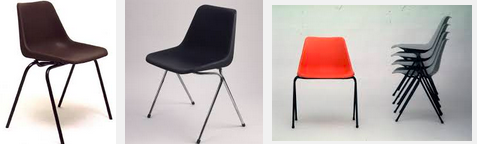
As in the United States, the United Kingdom has long grappled with what copyright protection—if any—should be available for functional, yet arguably artistic, designs (see Brandir International, Inc. v. Cascade Pacific Lumber Co. for a famous U.S. treatment of a similar issue, involving the design of ribbon bike racks). Such artistic designs can be hard to define, but certain iconic mass-produced pieces, such as Arne Jacobsen’s “Egg Chair,” or Robin Day’s “Polypropylene Chair,” serve as examples of the types of works implicated in this change.

Egg (1958)
Arne Jacobsen, “Egg Chair” (1958).

In such cases, there is a tension between rewarding an individual the full copyright protection for his or her work, and the public’s desire to access functional designs and articles. S. 52 of the CDPA offered a solution in the U.K. by limiting copyright protection for artistic designs to 25 years.

  1. 52 effectively carved out an exception for artistic designs. Instead of the standard ‘life of the author plus 70 years’ term of copyright protection, mass-produced artistic designs would receive a shorter term of protection. More specifically, designs “derived from…artistic work[s]” that have been made by “industrial process” and subsequently marketed to the public would enjoy protection of only 25 years from the date the design was first manufactured.
  2. 52 thus separates designs derived from artistic works from both pure ‘artistic works’ and pure utilitarian designs. Under this scheme, the CDPA seems to conceptualize the work in question as an intermediate work between utilitarian design and art, deserving of likewise intermediate copyright protection.

Admittedly, some might find that the fine lines s. 52 draws over-simplify the breadth of creation in the art world. Take, for example, works like Ingo Maurer’s “Bulb,” a playful design of a lightbulb within a lightbulb, created in 1966 and part of the Museum of Modern Art’s collection. With s. 52 in place, Maurer’s design would perhaps only enjoy 25 years of copyright protection because of its functional design, and because it has been industrially manufactured and marketed. The functional elements would thus render the piece no longer protectable by copyright. Conversely, one might argue that Maurer should enjoy the full copyright term of his life plus 70 years for his creative expression. This distinction between types of artistic expression might seem unfair to some in the art world and beyond.

One argument against the repeal is that a limited copyright term would encourage artist-designers to create new designs, while also ensuring that the more practical, utilitarian benefits conferred by the designs would not be kept from the broader public for too long. After 25 years, others could lawfully create copies or other articles based on the previously protected design. Furthermore, the economic advantage that mass-produced artistic designs have over other artistic works may be great enough to justify limiting the benefits of an exclusive right of ownership to only 25 years. Presumably, the limited copyright period would balance the public interest in new, improved designs with the designers’ interest in profiting off of their mass-produced work.

Now, however, this exception for artistic design is set to disappear come April 6, 2020. With the repeal of s. 52, designers of artistic works would enjoy the same length of copyright protection as other artists, writers, and musicians. The British government moved to repeal s. 52, claiming  “to update and clarify UK legislation in line with EU law.” The change is an effort to adhere to an interpretation of the EU Design Directive (71/98/EC), promulgated by the European Court of Justice. By repealing s. 52, the British government’s protection will no longer provide a shorter term of protection than other member states for industrially manufactured artistic designs.

Extending the duration of copyright from 25 years to 70 years further distinguishes artistic designs from those designs that are not “artistic works,” and thus can only enjoy protection according to the UK Registered Designs Act 1949 (the “RDA”). Under s. 52, artistic designs that were industrially produced only enjoyed the same amount of protection as other designs governed by the RDA, which had separate registration requirements.

The extension of copyright protection provides additional incentive to artistic designers to create and mass produce new designs. Baroness Neville-Rolfe, Minister for Intellectual Property, says that the repeal is “an important step, to bring about the fair treatment of all types of artistic works and to reward those that innovate and inspire.” She further states, “[t]he innovative work of designers will have the appropriate copyright protection, whilst ensuring that UK-based businesses can adapt and thrive.”

Others affected by the change, by some reports, are less than enthusiastic. Repealing s. 52 would require manufacturing companies to pay licensing fees to rights holders long after the previous 25-year period in order to produce replicas. The change would also require permission and possible licensing fees to reproduce the images of designs in books and other publications, as well as restrict what new designers could do if they wanted to build off of an existing, protected design.

One of the most controversial aspects of the reform is that it will have retroactive effect. This means that some artistic designs whose 25-year copyright protection term has expired will once again be covered under the more expansive 70-year term, assuming it did not already expire. Those that have lawfully reproduced or otherwise used designs after the old 25-year term of copyright expired may not have to pay for their prior reproductions, but they will have to pay licensing fees for future use.

This retroactive effect may prove to be a particular burden on museums. Like many others, museums that have displayed and sold replicas of artistic designs whose 25 years of copyright have since expired may now have to pay licensing fees to continue to do so. These extra fees would introduce much higher costs to museums and could end up being entirely prohibitive.The impact of the statement for the repeal of s. 52 in the government report includes one museum’s estimate of a loss over £850,000 a year.

Beyond the licensing costs, however, museums and publishers will have to survey their collections, including an inventory of books and photographs published therein to ensure that the photographs and publications do not contain any newly protected copyright works. Even images depicting a protected work may end up infringing on the newly revived copyright. Needless to say, the cost of reassessing collections and catalogues will add to the burden.

Some argue that another side effect of the change may occur within the design industry itself. As Ivan Macquisten of the Antique Gazette notes, “some of the leading intellectual property specialists in the country have argued that [repealing s. 52] will have a chilling effect on new design, because young designers must ensure that they do not fall foul of the law when inspired by earlier designers.” Inspired designers seeking to build off of prior work will either need to secure permission from the original designer, or take care that any work that they do will not infringe on the extended copyright of the prior work.

Ultimately, there is a chance that this bolstered protection may slow down the output of new designs, as well as threaten the manufacture of current designs that are adaptations (or ‘derivative works’) of works that will regain or have extended copyright. Of course, the counter argument would be that any chilling effect the extended copyright may have might be mitigated by the increased protection due to the same designers when they create an original work.

Despite protests and appeals to lawmakers by members of the intellectual property community—including efforts by Professor Lionel Bently of Cambridge, joined by faculty members of the University of Oxford, King’s College, London, and Edinburgh University, to name a few—the House of Lords has approved the reform. Originally, the government sought a three-year transition period, but due to feedback from commenters, the three years has been increased to the current five-year period—ending April of 2020—in order to give those affected by the change more time to prepare. It seems that designers, museums, publishers, and onlookers alike will have to sit down and wait until then to determine the true outcome of the change.

Robin Day, “Polypropylene Chair.”
Robin Day’s “Polypropylene Chair” (1963).

Sources:

  • Brandir International, Inc. v. Cascade Pacific Lumber Co., 834 F.2d 1142 (2d Cir. 1987)
  • Copyright, Designs and Patents Act, 1988, c. 48 (U.K), available at http://www.legislation.gov.uk/ukpga/1988/48/contents
  • Registered Designs Act, 1948 c. 88 (U.K.), available at http://www.legislation.gov.uk/ukpga/Geo6/12-13-14/88/contents
  • Intellectual Property Office, Transitional provisions for the repeal of Section 52 of the Copyright, Designs and Patents Act 1988, 2015, (U.K.), available at https://www.gov.uk/government/consultations/transitional-provisions-for-the-repeal-of-section-52-of-the-cdpa.
  • Copyright in Artistic Designs, CREATe, (Mar. 17, 2013) http://www.create.ac.uk/blog/2013/03/17/copyright-in-artistic-designs/
  • Museums Face Cash Crisis over Copyright, Antiques Trade Gazette: The Art Market Weekly (Feb. 23, 2015), http://www.antiquestradegazette.com/news/2015/feb/23/museums-face-cash-crisis-over-copyright/
  • UK Government Consults on Copyright Provision Removal, World Intellectual Property Review (Sept. 15 2014), available at http://www.worldipreview.com/news/uk-government-consults-on-copyright-provision-removal-7145
  • Paul Black, New Copyright Law Threatening to Put Artists and Publishers Behind Bars Is an Act of Censorship, Artlyst (Mar. 25, 2015), available at http://www.artlyst.com/articles/new-copyright-law-threatening-to-put-artists-and-publishers-behind-bars-is-an-act-of-censorship
  • Ivan Macquisten, Striking a Balance Between Artistic Merit and Function, Antiques Trade Gazette: The Art Market Weekly (Dec. 18, 2012), available at http://www.antiquestradegazette.com/news/2012/dec/18/striking-a-balance-between-artistic-merit-and-function/
  • Ivan Macquisten, Copyright Change a Threat to Arts Firms, Says Expert, Antiques Trade Gazette: The Art Market Weekly (Dec. 18, 2012), available at http://www.antiquestradegazette.com/news/2012/dec/18/copyright-change-a-threat-to-arts-firms-says-expert/
  • Cesare Galli, ECJ Ends Controversy Over Copyright Protection for Industrial Designs, International Law Office (Mar. 14, 2011), available at  http://www.internationallawoffice.com/newsletters/detail.aspx?g=2375fa61-1904-4516-b371-e9db6a8e30bb

About the Author: Christopher Visentin is a rising third-year law student at Boston University, where he concentrates his studies on intellectual property law, art law, and law and literature. He is also pursuing a master’s degree in English literature at Boston University.

Disclaimer: This article is for educational purposes only and is not meant to provide legal advice. Readers should not construe or rely on any comment or statement in this article as legal advice. For legal advice, readers should seek a consultation with an attorney.

Post navigation

Previous WYWH: “Managing Risk in Art Transactions” June 2015 (NYC)
Next Summertime and the Art Buyin’ is Easy: Asking Questions about Art Transactions

Related Posts

Appropriation Art on Trial: Oral Arguments before the Supreme Court in Warhol v. Goldsmith

October 22, 2022

Shaping History: Monument-Toppling, Racial Justice and the Law

December 2, 2019

Federal Judge Issues Restraining Order To Delay Destruction of Public Art at JFK Airport

April 24, 2012
Center for Art Law
Center for Art Law

Follow us on Instagram for the latest in Art Law!

Don't miss our up coming in-person, full-day train Don't miss our up coming in-person, full-day training aimed at preparing lawyers for working with art market participants and understanding their unique copyright law needs. The bootcamp will be led by veteran art law attorneys, Louise Carron, Barry Werbin, Carol J. Steinberg, Esq., Scott Sholder, Marc Misthal, specialists in copyright law. 

This Bootcamp provides participants -- attorneys, law students, law graduates and legal professionals -- with foundational legal knowledge related to copyright law for art market clients. Through a combination of instructional presentations and mock consultations, participants will gain a solid foundation in copyright law and its specificities as applied to works of visual arts, such as the fair use doctrine and the use of generative artificial intelligence tools.

🎟️ Grab tickets using the link in our bio! 

#centerforartlaw #artlaw #legal #research #lawyer #artlawyer #bootcamp #copyright #CLE #trainingprogram
In order to fund acquisitions of contemporary art, In order to fund acquisitions of contemporary art, The Phillips Collection sold seven works of art from their collection at auction in November. The decision to deaccession three works in particular have led to turmoil within the museum's governing body. The works at the center of the controversy include Georgia O'Keefe's "Large Dark Red Leaves on White" (1972) which sold for $8 million, Arthur Dove's "Rose and Locust Stump" (1943), and "Clowns et pony" an 1883 drawing by Georges Seurat. Together, the three works raised $13 million. Three board members have resigned, while members of the Phillips family have publicly expressed concerns over the auctions. 

Those opposing the sales point out that the works in question were collected by the museum's founders, Duncan and Marjorie Phillips. While museums often deaccession works that are considered reiterative or lesser in comparison to others by the same artist, the works by O'Keefe, Dove, and Seurat are considered highly valuable, original works among the artist's respective oeuvres. 

The museum's director, Jonathan P. Binstock, has defended the sales, arguing that the process was thorough and reflects the majority interests of the collection's stewards. He believes that acquiring contemporary works will help the museum to evolve. Ultimately, the controversy highlights the difficulties of maintaining institutional collections amid conflicting perspectives.

🔗 Click the link in our bio to read more.
Make sure to check out our newest episode if you h Make sure to check out our newest episode if you haven’t yet!

Paris and Andrea get the change to speak with Patty Gerstenblith about how the role international courts, limits of accountability, and if law play to protect history in times of war.

🎙️ Click the link in our bio to listen anywhere you get your podcasts!
Alexander Butyagin, a Russian archaeologist, was a Alexander Butyagin, a Russian archaeologist, was arrested by Polish authorities in Warsaw. on December 4th. Butyagin is wanted by Ukraine for allegedly conducting illegal excavations of Myrmekion, an ancient city in Crimea. Located in present-day Crimea, Myrmekion was an Ancient Greek colony dating to the sixth century, BCE. 

According to Ukrainian officials, between 2014 and 2019 Butyagin destroyed parts of the Myrmekion archaeological site while serving as head of Ancient Archaeology of the Northern Black Sea region at St. Petersburg's Hermitage Museum. The resulting damages are estimated at $4.7 million. Notably, Russia's foreign ministry has denounced the arrest, describing Poland's cooperation with Ukraine's extradition order as "legal tyranny." Russia invaded and annexed Crimea in 2014.

🔗 Read more by clicking the link in our bio

#centerforartlaw #artlaw #artcrime #artlooting #ukraine #crimea
Join us on February 18th to learn about the proven Join us on February 18th to learn about the provenance and restitution of the Cranach painting at the North Carolina Museum of Art.

A beloved Cranach painting at the North Carolina Museum of Art was accused of being looted by the Nazis. Professor Deborah Gerhardt will describe the issues at stake and the evidentiary trail that led to an unusual model for resolving the dispute.

Grab your tickets today using the link in our bio!

#centerforartlaw #artlaw #legal #legalresearch #museumissues #artwork
“In the depth of winter, I finally learned that wi “In the depth of winter, I finally learned that within me there lay an invincible summer."
~ Albert Camus, "Return to Tipasa" (1952) 

Camus is on our reading list but for now, stay close to the ground to avoid the deorbit burn from the 2026 news and know that we all contain invincible summer. 

The Center for Art Law's January 2026 Newsletter is here—catch up on the latest in art law and start the year informed.
https://itsartlaw.org/newsletters/january-newsletter-which-way-is-up/ 

#centerforartlaw #artlaw #lawyer #artlawyer #legalresearch #legal #art #law #newsletter #january
Major corporations increasingly rely on original c Major corporations increasingly rely on original creative work to train AI models, often claiming a fair use defense. However, many have flagged this interpretation of copyright law as illegitimate and exploitative of artists. In July, the Senate Judiciary Committee on Crime and Counterterrorism addressed these issues in a hearing on copyright law and AI training. 

Read our recent article by Katelyn Wang to learn more about the connection between AI training, copyright protections, and national security. 

🔗 Click the link in our bio to read more!
Join the Center for Art Law for an in-person, all- Join the Center for Art Law for an in-person, all-day  CLE program to train lawyers to work with visual artists and their unique copyright needs. The bootcamp will be led by veteran art law attorneys specializing in copyright law.

This Bootcamp provides participants -- attorneys, law students, law graduates and legal professionals -- with foundational legal knowledge related to copyright law for art market clients. Through a combination of instructional presentations and mock consultations, participants will gain a solid foundation in copyright law and its specificities as applied to works of visual arts, such as the fair use doctrine and the use of generative artificial intelligence tools. 

🎟️ Grab tickets using the link in our bio!
Our interns do the most. Check out a day in the li Our interns do the most. Check out a day in the life of Lauren Stein, a 2L at Wake Forest, as she crushes everything in her path. 

Want to help us foster more great minds? Donate to Center for Art Law.

🔗 Click the link below to donate today!

https://itsartlaw.org/donations/new-years-giving-tree/ 

#centerforartlaw #artlaw #legal #legalresearch #caselaw #lawyer #art #lawstudent #internships #artlawinternship
Paul Cassier (1871-1926 was an influential Jewish Paul Cassier (1871-1926 was an influential Jewish art dealer. He owned and ran an art gallery called Kunstsalon Paul Cassirer along with his cousin. He is known for his role in promoting the work of impressionists and modernists like van Gogh and Cézanne. 

Cassier was seen as a visionary and risk-tasker. He gave many now famous artists their first showings in Germany including van Gogh, Manet, and Gaugin. Cassier was specifically influential to van Gogh's work as this first showing launched van Gogh's European career.

🔗 Learn more about the impact of his career by checking out the link in our bio!

#centerforartlaw #artlaw #legalresearch #law #lawyer #artlawyer #artgallery #vangogh
No strike designations for cultural heritage are o No strike designations for cultural heritage are one mechanism by which countries seek to uphold the requirements of the 1954 Hague Convention. As such, they are designed to be key instruments in protecting the listed sites from war crimes. Yet not all countries maintain such inventories of their own whether due to a lack of resources, political views about what should be represented, or the risk of misuse and abuse. This often places the onus on other governments to create lists about cultures other than their own during conflicts. Thus, there may be different lists compiled by different governments in a conflict, creating an unclear legal landscape for determining potential war crimes and raising significant questions about the effectiveness of no strikes as a protection mechanism. 

This presentation discusses current research seeking to empirically evaluate the effectiveness of no strike designations as a protection mechanism against war crimes in Syria. Using data on cultural heritage attacks from the height of the Syrian Conflict (2014-2017) compiled from open sources, a no strike list completed in approximately 2012, and measures of underlying risk, this research asks whether the designations served as a protective factor or a risk factor for a given site and the surrounding area. Results and implications for holding countries accountable for war crimes against cultural heritage are discussed. 

🎟️ Grab your tickets using the link in our bio!

#centerforartlaw #artlaw #artlawyer #legalresearch #lawyer #culturalheritage #art #protection
What happens when culture becomes collateral damag What happens when culture becomes collateral damage in war?
In this episode of Art in Brief, we speak with Patty Gerstenblith, a leading expert on cultural heritage law, about the destruction of cultural sites in recent armed conflicts.

We examine the role of international courts, the limits of accountability, and whether the law can truly protect history in times of war.

We would like to also thank Rebecca Bennett for all of her help on this episode. 

 🎙️ Click the link in our bio to listen anywhere you get your podcasts.

#centerforartlaw #artlaw #legalresearch #artlawyer #lawyer #podcast #artpodcast #culturalheritage #armedconflict #internationallaw
  • About the Center
  • Contact Us
  • Newsletter
  • Upcoming Events
  • Internship
  • Case Law Database
  • Log in
  • Become a Member
  • Donate
DISCLAIMER

Center for Art Law is a New York State non-profit fully qualified under provision 501(c)(3)
of the Internal Revenue Code.

The Center does not provide legal representation. Information available on this website is
purely for educational purposes only and should not be construed as legal advice.

TERMS OF USE AND PRIVACY POLICY

Your use of the Site (as defined below) constitutes your consent to this Agreement. Please
read our Terms of Use and Privacy Policy carefully.

© 2026 Center for Art Law
 

Loading Comments...
 

You must be logged in to post a comment.