
Case Review: Distorted Image, Secret Dealings, and New York Artists Authorship Act (2020-2021)
May 26, 2021
By Marie Kessel.
Lipsky v. Spanierman Gallery, LLC et al, No. 154805/2020, N.Y. Slip Op. 30727 (N.Y. Sup. Ct. March 10, 2021).
When creating a visual artwork, the artist must make some key decisions from the conception of the work to its finished product. Such decisions can include the design of the artwork, the media used, the color scheme, and so much more. However, what happens when the artist sells the artwork to someone else, such as a gallery or an art dealer? Does the artist maintain any control over the artwork they have created, or is it completely out of their hands once the contract is signed?
Background
Plaintiff Pat Lipsky is a celebrated New York City-based visual artist, mainly known for her work in the Lyrical Abstraction and Color Field Painting artistic styles.[1] While Lyrical Abstraction is a style that can have different meanings depending on the artist’s interpretation, it generally refers to art “characterized by free, emotive, personal compositions unrelated to objective reality.”[2] Similarly, Color Field Painting focuses on the “expressive power of color by deploying it in large fields that might envelope the viewer when seen at close quarters.”[3] It derives from Abstract Expressionism and pioneers of the style—such as Mark Rothko, Clyfford Still, and Barnett Newman—aimed to create artwork without any suggestion of figuration.[4]
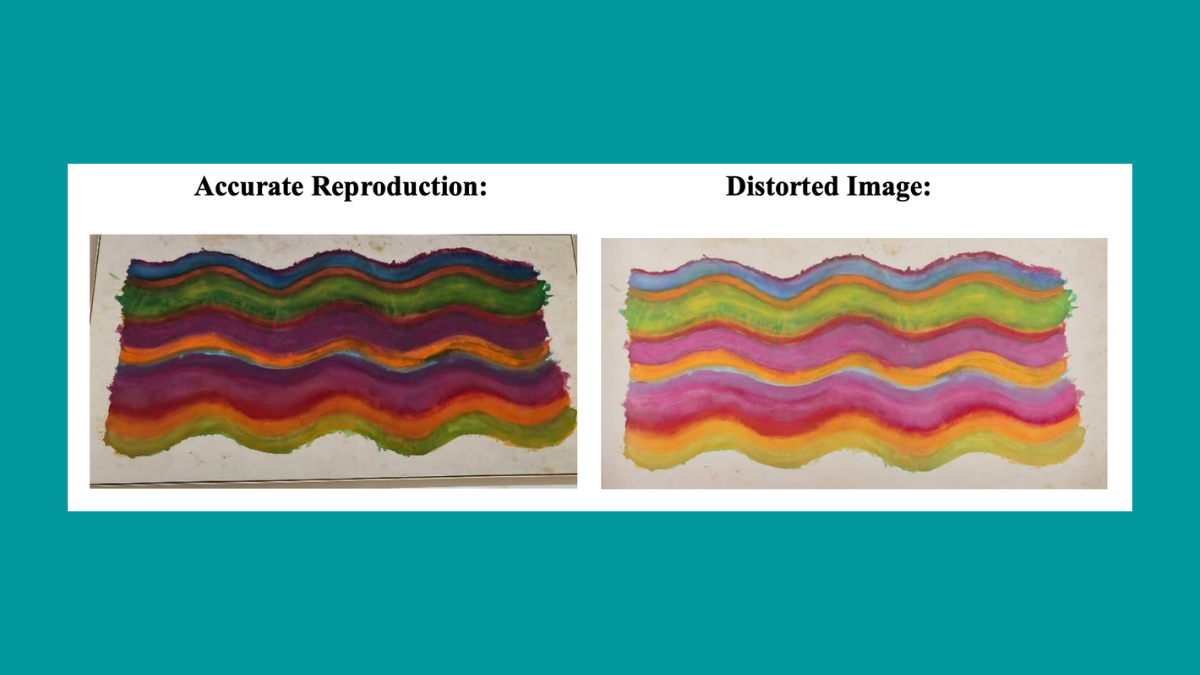
The artwork discussed in this case is Lipsky’s Bright Music II (1969) (“the Work”). Showing vibrant colors such as blue, green, orange, and red arranged in a wave-like pattern, the Work is part of Lipsky’s series called “Stain Paintings.”[5] Other artworks within this series involved the juxtaposition of rich pigments, applied onto a wet surface as a fluid medium through the form of energetic swaths.[6]
This individual style of Lipsky’s spanned from the late 1960s through the mid-1970s,[7] and this series is considered a hallmark of an important phase in her artistic career and what she is most known for by art critics and historians.[8] Many of Lipsky’s artworks within the “Stain Paintings” series are displayed today in notable art institutions such as the Whitney Museum of American Art, the Harvard Art Museum, the San Francisco Museum of Modern Art, and the Lowe Art Museum.[9] Lipsky’s career spans across five decades, marking her as a very established artist.[10]
Defendant Spanierman Gallery, also called Spanierman Modern (“Spanierman”), is an art gallery focused on nineteenth and twentieth century American painting and sculpture, and it is spearheaded by Gavin Spanierman, a dealer and consultant.[11] Artspace LLC (“Artspace”) is an art platform that partners with Spanierman Modern, and whose mission claims “to bring new attention to the work of accomplished, yet underappreciated and underrepresented artists; revealing how these artists have advanced ideas and lessons in powerful new directions.”[12]
Facts
Plaintiff Pat Lipsky created the Work in 1969, and it was sold years ago, most likely passing through the hands of several owners throughout the decades.[13] Because of the natural passage of time, and a history of several owners, the Work became slightly damaged over the years in certain raw areas of the canvas, but always maintained its original pigmentation, which corresponded to Lipsky’s well-known style.[14] In 2019, Lipsky learned that the owner of the Work wanted to sell it in its non-restored condition, and in the same year, Spanierman Gallery offered the damaged Work for sale on its website.[15]

Screenshot of Pat Lipsky’s Bright Music II (1969) and the Distorted Image taken from the Complaint filed in New York Supreme Court in PAT LIPSKY v. SPANIERMAN GALLERY, LLC et al..
According to Lipsky’s complaint, filed in June 2020 before the New York Supreme Court, Spanierman created a distorted version of the Work (“the Distorted Image”) which visibly changed the original Work’s brightness, contrast, and saturation. Most likely in order to conceal the extent of the Work’s damage, Lipsky argued that it greatly reduced the visibility of any damaged parts to the canvas, but also completely altered the overall color palette of the original Work, significantly muting the colors of the composition.[16]
To make matters worse, Lipsky argued that when displaying the Distorted Image, the gallery misleadingly associated it with Pat Lipsky, and falsely claimed that it was a painting “by” Lipsky.[17] The complaint alleged that such a misrepresentation was inherently harmful to Lipsky’s reputation and business.[18] The Distorted Image was the first one that popped up when searching up Lipsky’s name, which confused potential buyers on the nature of Lipsky’s art.[19] By attributing the Distorted Image to Lipsky’s name, her attorneys argued that the public is given the impression that Lipsky originally painted with muted, dull colors which is damaging to her artistic reputation, as the style that Lipsky is known for revolves around her using bright colors for dynamic effect.[20]
Lipsky Takes Action
Spanierman Gallery promoted the Distorted Image on their website from around April 2019 to December 2019/early 2020.[21] In 2019, Lipsky made overtures to Spanierman to remove the Distorted Image from their website, to which Spanierman never responded. In 2020, Lipsky renewed her efforts, and after a cease and desist letter that the Gallery still did not respond to, the image was finally removed around early 2020.[22]
Shortly after Spanierman Gallery removed the image, Artspace began to promote the same Distorted Work for sale on its own website, under an anonymous seller based in Miami, Florida.[23] Artspace also attributed the Distorted Image to Pat Lipsky. Upon further research, it was discovered that one of Artspace’s partners is Spanierman Modern, which is located in Miami.[24] It appears that Spanierman was working with Artspace to sell the Work, that Spanierman provided Artspace with the Distorted Image, and hoped that Lipsky would not notice that the Distorted Image was still being advertised throughout a “partner” platform located in Florida.[25]
On June 29, 2020, Lipsky filed a complaint within the New York State Supreme Court.[26] Shortly after, Artspace removed the Distorted Image from its website. While the Distorted Image is no longer publicly available, because of the Defendants’ seeming attempts to hide the Distorted Image’s circulation from Lipsky, the court held that “a preliminary injunction is warranted to ensure that Defendants will not continue to make any uses of the Distorted Image while this action is pending, either directly or through any other affiliates.”[27]
Court’s Decision and Legal Framework
According to New York State’s Civil Practice and Law Rules § 6301, a plaintiff who is seeking a preliminary injunction must demonstrate three key elements: “(1) a likelihood of ultimate success on the merits; (2) the prospect of irreparable injury if the provisional relief is withheld; and (3) a balance of equities tipping in its favor.”[28] The court found that Pat Lipsky satisfied all three requirements based on how the Defendants used the Distorted Image.[29]
On the first condition, the court held that Lipsky was likely to prevail on the merits of her claim under the New York Artists’ Authorship Rights Act (“AARA”).[30] This statute, which protects the moral rights of visual artists, provides that:
“[N]o person other than the artist or a person acting with the artist’s consent shall knowingly display. . . publish a work of fine art. . . by that artist or a reproduction thereof in an altered, defaced, mutilated or modified form if the work is displayed. . .as being the work of the artist. . . and damage to the artist’s reputation is reasonably likely to result therefrom.”[31]
Artists’ Authorship Rights Act of 1984, N.Y. ARTS. & CULTURAL AFF. LAW § 14.03(1).
Thus, AARA prohibits the non-ordinary defacement, mutilation, alteration or modification of a reproduction of an artwork, even if no change has been made to the original work itself.[32] The Distorted Image that Spanierman and Artspace were advertising on their platforms is a digitally altered reproduction of the original Work, which conceals any imperfections on the original Work’s canvas but also dilutes Lipsky’s color scheme and artistic style.
The court awarded Lipsky a preliminary injunction upon finding that Lipsky’s reputation was irreparably harmed by the circulation of the Distorted Image, as vibrant colors are an important component of the Original Work, and an artistic choice that Lipsky is very well-known for in her paintings.[33] By altering the Distorted Image so that it looks like the colors are muted, Spanierman has deceived the public about the true nature of Lipsky’s artwork. The amount that Lipsky has been harmed cannot be fully known, because we do not know how many people looked at the Distorted Image on Spanierman and Artspace’s website and were deceived about Lipsky’s artistic style. .
Finally, Lipsky fulfills the third prong in qualifying for a preliminary injunction: the court held that the injury Lipsky suffered is “more burdensome” than the harm that Spanierman and Artspace would suffer as a result of a preliminary injunction. The Defendants presented a false impression of Lipsky to the public, without legitimate reason.[34] However, Lipsky suffers more if the public is deceived about the nature of her work, as this could affect future sales of her work and public opinion of her as a visual artist, which could have lasting effects on her career. It is for these reasons that the court held that a preliminary injunction should be granted.
AARA v. VARA
One important topic to address is why Lipsky’s claim was held under the New York Artists’ Authorship Rights Act rather than the federal Visual Artists Rights Act (“VARA”).[35] After all, VARA was passed “to provide certain rights of attribution and integrity to authors of works of visual art.”[36] That law, notably, “grants artists the rights to prevent intentional modification to their art and the destruction of a work of ‘recognized stature.’”[37] Somewhat similarly, AARA declares that artists exhibiting work within the state have “the legal right to claim or disclaim authorship of a work of art and to object to the display of their work if it has been altered, defaced, mutilated, or modified without their consent.”[38]
To answer this question, we must look at the scope of AARA as compared to VARA. VARA’s scope of protection is limited to the original work of art itself; it does not include or protect against any alterations or mutilations of reproductions of artwork.[39] AARA applies not only to the original work, but to any reproductions. In this instance, Spanierman altered a digital version of Lipsky’s painting, so the false misrepresentation of Lipsky’s work was inflicted on a reproduction. Thus, the court held that AARA’s protection against the defacement of reproductions applied to this case, whereas VARA’s protection, which covers only original artworks, did not apply here.
Takeaways
In this case, the AARA was able to protect Pat Lipsky where VARA would not have had the power to do. The case is an important one for New York artists as it confirms that even when the artist’s original artwork has left their possession, the artist may maintain authority over how they want their work to be seen and passed on, whether this pertains to the original copy or a reproduction of the work. The artist is able to maintain some power in how they are seen by the public, and how their reputation is affected.
One could wonder whether the case would have been resolved differently had Spanierman and/or Artspace ever responded to Lipsky or any of her claims. However, regardless of their behavior during Lipsky’s proceedings, the court found a preliminary injunction for Lipsky was justified, and has successfully protected her reputation by having the Distorted Image removed from public view.
Further Reading:
- Alison Frankel, Art gallery can’t post post ‘distorted’ online image of artist’s work – N.Y. judge, Reuters (March 10, 2021).
- Cynthia Esworthy, A Guide to the Visual Artists Right Act, Harvard Law School.
- Daniel Grant, Colour balance: painter Pat Lipsky sues over digitally ‘distorted’ images of her work, The Art Newspaper (July 2, 2020).
- IdeelArt Blog Home, Defining the Lyrical Abstraction, IdeelArt (Dec. 5, 2016).
- Laura Gilbert, Why the Visual Artists Rights Act is Failing, Artsy (Sept. 29, 2015).
- Sarah Ann Smith, New York Artists’ Authorship Rights Act Increased Protection and Enhanced Status for Visual Artists, 70 Cornell L. Rev. 158 (1984).
Endnotes:
- Summons and Complaint at 2, Lipsky v. Spanierman Gallery, LLC, No. 154805/2020, N.Y. Slip Op. 30727 (N.Y. Sup. Ct. June 29, 2020). ↑
- Philip Barcio, Defining the Lyrical Abstraction, IdeelArt (Dec. 5, 2016). ↑
- The Art Story, Color Field Painting, The Art Story Foundation (2021). ↑
- Id.. ↑
- Memorandum of Law in Support at 8, Lipsky. ↑
- Id. ↑
- Complaint at 2, Lipsky. ↑
- Memorandum of Law in Support at 8, Lipsky. ↑
- Id. ↑
- Id. ↑
- Spanierman Modern Team, About, Spanierman Modern (last visited Apr. 27, 2021). ↑
- Artspace, Partner Spanierman Modern, Miami, Artspace LLC (last visited Apr. 27, 2021). ↑
- Summons and Complaint at 5, Lipsky. ↑
- Id. ↑
- Id. ↑
- Id. ↑
- Summons and Complaint at 6, Lipsky. ↑
- Id. ↑
- Id. ↑
- Memorandum of Law in Support at 9, Lipsky. ↑
- Id. ↑
- Memorandum of Law in Support at 10, Lipsky. ↑
- Id. ↑
- Id. ↑
- Id. ↑
- Id. ↑
- Id. ↑
- Memorandum of Law in Support at 11, Lipsky. ↑
- Id. ↑
- Artists’ Authorship Rights Act of 1984, N.Y. ARTS. & CULTURAL AFF. LAW § 14.03. ↑
- Id. at § 14.03(1). ↑
- Id. ↑
- Memorandum of Law in Support at 15 , Lipsky. ↑
- Memorandum of Law in Support at 17, Lipsky. ↑
- Visual Artists’ Rights Act of 1990, 17 U.S.C. § 106A. See, Cynthia Esworthy, A Guide to the Visual Artists Right Act, Harvard Law School. ↑
- Visual Artists’ Rights Act, H.R. 2690, 101st Cong. (1990). ↑
- Laura Gilbert, Why the Visual Artists Rights Act is Failing, Artsy (Sept. 29, 2015). ↑
- Sarah Ann Smith, New York Artists’ Authorship Rights Act Increased Protection and Enhanced Status for Visual Artists, 70 Cornell L. Rev. 158 (1984). ↑
- Memorandum of Law in Support at 14 , Lipsky. ↑
About the Author: Marie Kessel is a Spring 2021 Graduate Intern at the Center for Art Law. She is a B.A. graduate of the NYU Gallatin School of Individualized Study, where she created her own major in Art Law: Authentication, Valuation and Ethics, and minored in French. Marie is also interning for Tali Farhadian Weinstein’s campaign for Manhattan District Attorney and works as an academic tutor at Kweller Test Prep.
Acknowledgements: The Author wishes to thank Noor Kadhim, Partner at Armstrong Teasdale LLP (London, UK) and Member of the Center for Art Law’s Advisory Board, for reviewing this article.
Disclaimer: This article is for educational purposes only and is not meant to provide legal advice. Readers should not construe or rely on any comment or statement in this article as legal advice. For legal advice, readers should seek a consultation with an attorney.


You must be logged in to post a comment.