• About
    • Mission
    • Team
    • Boards
    • Mentions & Testimonials
    • Institutional Recognition
    • Annual Reports
    • Current & Past Sponsors
    • Contact Us
  • Resources
    • Article Collection
    • Podcast: Art in Brief
    • AML and the Art Market
    • AI and Art Authentication
    • Newsletter
      • Subscribe
      • Archives
      • In Brief
    • Art Law Library
    • Movies
    • Nazi-looted Art Restitution Database
    • Global Network
      • Courses and Programs
      • Artists’ Assistance
      • Bar Associations
      • Legal Sources
      • Law Firms
      • Student Societies
      • Research Institutions
    • Additional resources
      • The “Interview” Project
  • Events
    • Worldwide Calendar
    • Our Events
      • All Events
      • Annual Conferences
        • 2025 Art Law Conference
        • 2024 Art Law Conference
        • 2023 Art Law Conference
        • 2022 Art Law Conference
        • 2015 Art Law Conference
  • Programs
    • Visual Artists’ Legal Clinics
      • Art & Copyright Law Clinic
      • Artist-Dealer Relationships Clinic
      • Artist Legacy and Estate Planning Clinic
      • Visual Artists’ Immigration Clinic
    • Summer School
      • 2025
    • Internship and Fellowship
    • Judith Bresler Fellowship
  • Case Law Database
  • 2025 Year-End Appeal
  • Log in
  • Become a Member
  • Donate
  • 2025 Year-End Appeal
  • Log in
  • Become a Member
  • Donate
Center for Art Law
  • About
    About
    • Mission
    • Team
    • Boards
    • Mentions & Testimonials
    • Institutional Recognition
    • Annual Reports
    • Current & Past Sponsors
    • Contact Us
  • Resources
    Resources
    • Article Collection
    • Podcast: Art in Brief
    • AML and the Art Market
    • AI and Art Authentication
    • Newsletter
      Newsletter
      • Subscribe
      • Archives
      • In Brief
    • Art Law Library
    • Movies
    • Nazi-looted Art Restitution Database
    • Global Network
      Global Network
      • Courses and Programs
      • Artists’ Assistance
      • Bar Associations
      • Legal Sources
      • Law Firms
      • Student Societies
      • Research Institutions
    • Additional resources
      Additional resources
      • The “Interview” Project
  • Events
    Events
    • Worldwide Calendar
    • Our Events
      Our Events
      • All Events
      • Annual Conferences
        Annual Conferences
        • 2025 Art Law Conference
        • 2024 Art Law Conference
        • 2023 Art Law Conference
        • 2022 Art Law Conference
        • 2015 Art Law Conference
  • Programs
    Programs
    • Visual Artists’ Legal Clinics
      Visual Artists’ Legal Clinics
      • Art & Copyright Law Clinic
      • Artist-Dealer Relationships Clinic
      • Artist Legacy and Estate Planning Clinic
      • Visual Artists’ Immigration Clinic
    • Summer School
      Summer School
      • 2025
    • Internship and Fellowship
    • Judith Bresler Fellowship
  • Case Law Database
Home image/svg+xml 2021 Timothée Giet Art History image/svg+xml 2021 Timothée Giet Boston Raphael: Legal Art History
Back

Boston Raphael: Legal Art History

September 19, 2014
20140311143536713_0001

By Belinda Rathbone

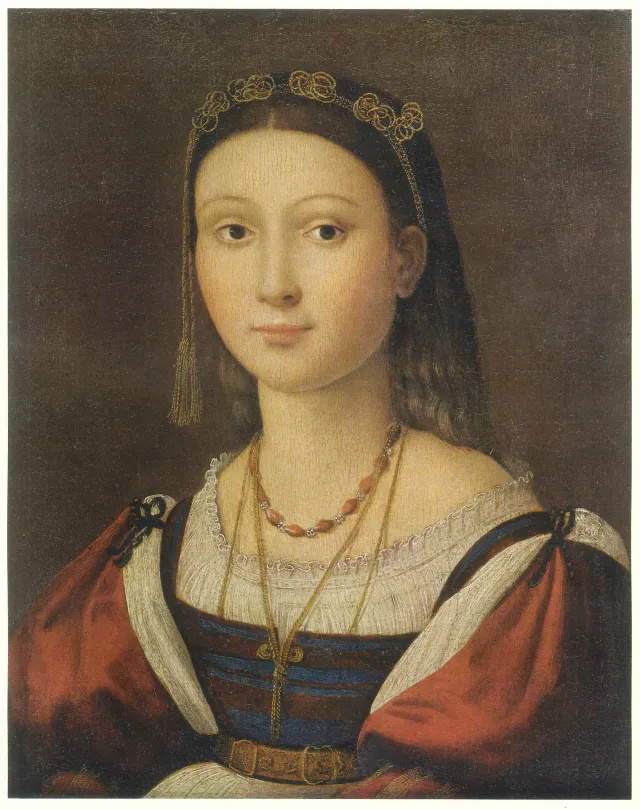
In 1969, my father, Perry T. Rathbone, then Director of the Museum of Fine Arts, Boston (the “MFA” or the “Museum”), bought a previously unknown painting by Raphael from an elderly art dealer in Genoa. Attributed to one of the great artists of the Italian Renaissance, this portrait of a young girl was to be the crown jewel of the MFA’s centennial year: 1970. But questions about the legitimacy of its exportation from Italy, compounded by widespread doubts about its attribution to Raphael, almost immediately turned this celebratory event into a tragic fiasco. For my father, it spelled the unraveling of his distinguished thirty-two year career as a museum director. In the then emerging field of art law, the Boston Raphael became a landmark case.

At the time, Italian export laws established in 1939 stipulated that any work of art considered an important piece of the nation’s cultural heritage could be exported only after the state itself was given a two-month option to acquire it.  Furthermore, if the right was not exercised, a hefty 30% export tax was imposed on any potential buyer from outside of Italy.  This law effectively paralyzed the Italian art trade for important works, and the Art Dealers Association of Italy fought the export tax for years, without success. However, an unknown or unpublished work stood a reasonable chance of legal export. Though technically speaking an important work of art, whether known or not, should have been registered with the Italian government, it was unusual for private owners to volunteer such information. The result was that countless works of art in private hands remained unregistered, including the Boston Raphael. Dealers and foreign collectors alike took advantage of this gray area of the law; while they weighed the odds, the only certainty they could rely on was that once the object was safely outside Italy, Italian law did not apply. As explained by art law specialist John Merryman in Law, Ethics, and the Visual Arts, “although the offended nation could punish the smuggler, if it could catch him, and might have the power to confiscate the illegally exported article if it should be returned to the national territory, it could not expect the foreign nation to punish the smuggler or seize and return the object.” With the Museum Board’s approval, Rathbone agreed to pay art dealer Ildebrando Bossi $600,000 for the painting, drawing on the previously untapped Charles Bayley Fund, which was earmarked for the purchase of an important painting.

Unfortunately for the MFA, contemporaneously with the acquisition, Italy’s top art sleuth, Rodolfo Siviero [1911-1983], was looking for a high profile export case to burnish his diminishing reputation before he retired. Almost as soon as the picture was unveiled in Boston, Siviero began his investigation into its source, working through a network of art historians in Italy. Before long he had traced the picture to Bossi in Genoa, who already had a reputation for illicit art smuggling. Siviero also began to question the U.S. Customs agents to track the painting’s recent arrival in Boston. At the same time, as if there was not enough for the Museum’s administration to worry about, experts on both sides of the Atlantic began questioning the painting’s attribution to Raphael.

With scandal looming, Rathbone and the trustees of the MFA were now faced with a dilemma: how to quell both Siviero’s accusations of smuggling, as well as questions from U.S. Customs agents who had been consequently alerted. Seeking legal counsel, they hired the Washington D.C. law firm of Covington & Burling (Covington), whose lawyers at first reassured them that they had operated within the law. What they did not know at that time was that MFA curator Hanns Swarzenski, who had hand carried the picture to Boston from Genoa, had neglected to declare it when he came through customs in September 1969. While there was and still is no import duty to pay on an object over 100 years old, the painting should have been declared. This technicality, which under regular circumstances would have been considered a minor omission, would end up costing MFA its first and only Raphael.

On the morning of 7 January 1971, U.S. Customs agents, armed with a search warrant, entered the Museum without warning and seized the painting. Because of its fragile nature and the below freezing temperatures outside, the MFA’s head conservator was able to persuade them to leave it in the Museum in a vault under the customs seal. One week later a registered letter arrived from U.S. Customs informing the Museum that it was liable for a penalty of $1,200,000 (the estimated domestic value of the painting, even though the penalty twice exceeded what MFA paid in the end) for Swarzenski’s  failure to declare the painting at Customs in violation of the provisions of section 1497, Title 19, United States Code. Soon afterward Rathbone and Swarzenski appeared before a grand jury in Boston to determine if they had conspired to defraud the U.S. government.

Meanwhile lawyers from Covington in collaboration with Ropes & Gray in Boston hammered out a nine-page petition for the mitigation of fines and release of the painting from Customs, arguing that “The penalty proposed is extremely severe, particularly when the government has no revenue at stake… such disastrous consequences should not be visited upon the museum because of the failure of one employee to declare a non-dutiable painting.”

The fine was reduced from $1.2 million to $5000, and no indictment was returned from the grand jury. No treaty existed requiring the U.S. to return the painting, an action that could only be considered as an act of generosity. The UNESCO convention of 1970, which the U.S. had joined other signatories in adopting, had broken ground on new agreements between nations on the means of prohibiting and preventing the illicit import, export, and transfer of ownership of cultural property, but these were far from codified when the picture left Italy in 1969. However, in a meeting called on short notice when Rathbone was traveling abroad in the summer of 1971, the MFA trustees voted to voluntarily return the painting to Italy.

Soon after a formal agreement between the MFA trustees and assistant U.S. Treasury secretary Eugene Rossides, the painting was escorted on a flight to Rome in September 1971, and received by the triumphant Siviero. The MFA was never reimbursed for the money they had already spent on the painting, about $350,000 USD, for another unfortunate piece of timing was that the elderly Genoese art dealer, Ildebrando Bossi, died in prison awaiting trial for illegally exporting the Raphael. The Italian government had seized his assets and apparently felt no obligation to refund the MFA.

Many questions remain about this curious case. Most importantly: was the painting an authentic Raphael, and therefore an important piece of Italy’s cultural heritage? Based on its consignment to storage in the Uffizi Gallery in Florence since the early 1980s, it would not seem so. Were the MFA Trustees meeting their fiduciary responsibility in returning the disputed painting with no promise of a return on their investment, and its attribution in question?

The case of the Boston Raphael served to heighten awareness of the need for more consistent policies between nations on the export of works of art. The UNESCO convention of 1970 sought to reconcile values of cultural property and the promotion of free trade, breaking ground for bilateral or multilateral agreements on the export laws pertaining to works of art and antiquity. In recent years high profile cases involving illegally excavated antiquities bought by American art museums have brought these issues to the foreground and led to a more vigilant regulatory environment. The Boston MFA is one of the few museums to employ a full time provenance researcher and earlier this year the Museum announced that it would be returning eight antique sculptures to Nigeria after confirming that they had been stolen before making their way onto the United States art market and acquired by the Museum.

About the Author: Belinda Rathbone is a biographer and fine arts journalist. She is the author of Walker Evans: A Biography, and The Guynd: A Scottish Journal.

For the full story of the Boston Raphael read her forthcoming book, The Boston Raphael, Boston: David R. Godine, which reviews the circumstances behind the acquisition and return of the painting, the various conflicting motivations behind the key players in the episode, and the questionable inevitability of its outcome.

Disclaimer: This article is for educational purposes only and is not meant to provide legal advice. Readers should not construe or rely on any comment or statement in this article as legal advice. For legal advice, readers should seek a consultation with an attorney.

Post navigation

Previous Case Review: Karlsson v. Mangan
Next Case Review: United States v. Twenty-Nine Pre-Columbian and Colonial Artifacts, From Peru

Related Posts

WYWH: Art Law Issue Spotting at the “New York Comic Con” (NYC)

October 26, 2015
logo

Seller’s beware — Landlords Never Sleep

January 20, 2011

Abramovic Victory

March 13, 2011
Center for Art Law
Sofia Tomilenko Let there be light!

A Gift for Us

this Holiday Season

Thank you to Sofia Tomilenko (the artist from Kyiv, Ukraine who made this Lady Liberty for us) and ALL the artists who make our life more meaningful and vibrant this year! Let there be light in 2026!


Last Gift of 2025
Guidelines AI and Art Authentication

AI and Art Authentication

Explore the new Guidelines for AI and Art Authentication for the responsible, ethical, and transparent use of artificial intelligence.

Download here
Center for Art Law

Follow us on Instagram for the latest in Art Law!

Let there be light! Center for Art Law is pleased Let there be light! Center for Art Law is pleased to share with you a work of art by Sofia Tomilenko, an illustration artist from Kyiv, Ukraine. This is Sofia's second creation for us and as her Lady Liberty plays tourist in NYC, we wish all of you peace and joy in 2026! 

Light will overcome the darkness. Світло переможе темряву. Das Licht wird die Dunkelheit überwinden. La luz vencerá la oscuridad. 

#artlaw #peace #artpiece #12to12
Writing during the last days and hours of the year Writing during the last days and hours of the year is de rigueur for nonprofits and what do we get?

Subject: Automatic reply: Thanks to Art Law! 

"I am now on leave until January 5th. 
. . .
I will respond as soon as I can upon on my return. For anything urgent you may contact ..."

Well, dear Readers, Students, Artists and Attorneys, we see you when you're working, we know when you're away, and we promise that in 2026 Art Law is coming to Town (again)!

Best wishes for 2026, from your Friends at the Center for Art Law!

#fairenough #snowdays #2026ahead #puttingfunback #fundraising #EYO2025
Less than a week left in December and together we Less than a week left in December and together we have raised nearly $32,000 towards our EOY fundraising $35,000 goal. If we are ever camera shy to speak about our accomplishments or our goals, our work and our annual report speak for themselves. 

Don’t let the humor and the glossy pictures fool you, to reach our full potential and new heights in 2026, we need your vote of confidence. No contribution is too small. What matters most is knowing you are thinking of the Center this holiday season. Thank you, as always, for your support and for being part of this community! 

#artlaw #EOYfundraiser #growingin2026 #AML #restitution #research #artistsright #contracts #copyright #bringfriends
This summer, art dealer James White and appraiser This summer, art dealer James White and appraiser Paul Bremner pleaded guilty for their participation in the third forgery ring of Norval Morisseau works uncovered by Canadian authorities. Their convictions are a key juncture in Canda's largest art fraud scheme, a scandal that has spanned decades and illuminated deep systemic failures within the art market to protect against fraud. 

Both White and Bremner were part of what is referred to as the 'Cowan Group,' spearheaded by art dealer Jeffrey Cowan. Their enterprise relied on Cowan fabricating provenance for the forged works, which he claimed were difficult to authenticate. 

In June, White, 87, pleaded guilty to to creating forged documents and possessing property obtained by crime for the purpose of trafficking. Later, in July, Paul Bremner pleaded guilty to producing and using forged documents and possessing property obtained through crime with the intent of trafficking. While Bremner, White, and Cowan were all supposed to face trial in the Fall, Cowan was the only one to do so and was ultimately found guilty on four counts of fraud. 

🔗 Click the link in our bio to read more.

#centerforartlaw #artlaw #legalresearch #artfraud #artforgery #canada #artcrime #internationallaw
It's the season! It's the season!
In 2022, former art dealer Inigo Philbrick was sen In 2022, former art dealer Inigo Philbrick was sentenced to seven years in prison for committing what is considered one of the United States' most significant cases of art fraud. With access to Philbrick's personal correspondence, Orlando Whitfield chronicled his friendship with the disgraced dealer in a 2024 memoir, All that Glitters: A Story of Friendship, Fraud, and Fine Art. 

For more insights into the fascinating story of Inigo Philbrick, and those he defrauded, read our recent book review. 

🔗 Click the link in our bio to read more!

#centerforartlaw #legalresearch #artlaw #artlawyer #lawer #inigophilbrick #bookreview #artfraud
The highly publicized Louvre heist has shocked the The highly publicized Louvre heist has shocked the globe due to its brazen nature. However, beyond its sheer audacity, the heist has exposed systemic security weaknesses throughout the international art world. Since the theft took place on October 19th, the French police have identified the perpetrators, describing them as local Paris residents with records of petty theft. 

In our new article, Sarah Boxer explores parallels between the techniques used by the Louvre heists’ perpetrators and past major art heists, identifying how the theft reveals widespread institutional vulnerability to art crime. 

🔗 Click the link in our bio to read more!

#centerforartlaw #artlaw #legalresearch #artcrime #theft #louvre #france #arttheft #stolenart
In September 2025, 77-year old Pennsylvania reside In September 2025, 77-year old Pennsylvania resident Carter Reese made headlines not only for being Taylor Swift's former neighbor, but also for pleading guilty to selling forgeries of Picasso, Basquiat, Warhol, and others. This and other recent high profile forgery cases are evidence of the art market's ongoing vulnerability to fraudulent activity. Yet, new innovations in DNA and artificial intelligence (AI) may help defend against forgery. 

To learn more about how the art market's response to fraud and forgery is evolving, read our new article by Shaila Gray. 

🔗 Click the link in our bio to read more!

#centerforartlaw #artlaw #legalresearch #artlawyer #lawyer #AI #forgery #artforgery #artfakes #authenticity
Did you know that Charles Dickens visited America Did you know that Charles Dickens visited America twice, in 1842 and in 1867? In between, he wrote his famous “A Tale of Two Cities,” foreshadowing upheavals and revolutions and suggesting that individual acts of compassion, love, and sacrifice can break cycles of injustice. With competing demands and obligations, finding time to read books in the second quarter of the 21st century might get increasingly harder. As we live in the best and worst of times again, try to enjoy the season of light and a good book (or a good newsletter).

From all of us at the Center for Art Law, we wish you peace, love, and understanding this holiday season. 

🔗 Read more by clicking the link in our bio!

#centerforartlaw #artlaw #legalresearch #artlawyer #december #newsletter #lawyer
Is it, or isn’t it, Vermeer? Trouble spotting fake Is it, or isn’t it, Vermeer? Trouble spotting fakes? You are not alone. Donate to the Center for Art Law, we are the real deal. 

🔗 Click the link in our bio to donate today!

#centerforartlaw #artlaw #legalresearch #endofyear #givingtuesday #donate #notacrime #framingartlaw
Whether legal systems are ready or not, artificial Whether legal systems are ready or not, artificial intelligence is making its way into the courtroom. AI-generated evidence is becoming increasingly common, but many legal professionals are concerned that existing legal frameworks aren't sufficient to account for ethical dilemmas arising from the technology. 

To learn more about the ethical arguments surrounding AI-generated evidence, and what measures the US judiciary is taking to respond, read our new article by Rebecca Bennett. 

🔗 Click the link in our bio to read more!

#centerforartlaw #artlaw #legalresearch #artlawyer #lawyer #aiart #courtissues #courts #generativeai #aievidence
Interested in the world of art restitution? Hear f Interested in the world of art restitution? Hear from our Lead Researcher of the Nazi-Era Looted Art Database, Amanda Buonaiuto, about the many accomplishments this year and our continuing goals in this space. We would love the chance to do even more amazing work, your donations can give us this opportunity! 

Please check out the database and the many recordings of online events we have regarding the showcase on our website.

Help us reach our end of year fundraising goal of $35K.

🔗 Click the link in our bio to donate ❤️🖤
  • About the Center
  • Contact Us
  • Newsletter
  • Upcoming Events
  • Internship
  • Case Law Database
  • Log in
  • Become a Member
  • Donate
DISCLAIMER

Center for Art Law is a New York State non-profit fully qualified under provision 501(c)(3)
of the Internal Revenue Code.

The Center does not provide legal representation. Information available on this website is
purely for educational purposes only and should not be construed as legal advice.

TERMS OF USE AND PRIVACY POLICY

Your use of the Site (as defined below) constitutes your consent to this Agreement. Please
read our Terms of Use and Privacy Policy carefully.

© 2026 Center for Art Law
 

Loading Comments...
 

You must be logged in to post a comment.